
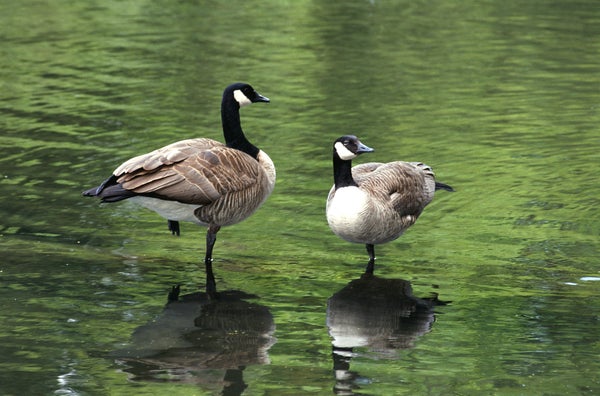

“Over the last few decades, Canada geese have been wintering further and further north, which was interesting, because the winters have gotten a little more mild over the last few years, but still it’s pretty cold out there and there’s still snow.”
University of Illinois ornithologist Mike Ward.
“So you would wonder why these geese are deciding to spend the winter in Chicago, when they could have the opportunity to fly down to Arkansas, Louisiana, somewhere warmer.”
On supporting science journalism
If you're enjoying this article, consider supporting our award-winning journalism by subscribing. By purchasing a subscription you are helping to ensure the future of impactful stories about the discoveries and ideas shaping our world today.
Geese who continue south often land in agriculture fields and other wide open areas. Which makes them visible to hunters in those states, who can bag the birds until the end of January.
“There’s definitely a lot of geese not just staying in Chicago, but lots of urban areas throughout the Midwest and one reason they are doing that is they are trying to avoid hunters, it looks like.”
Of course, staying in cities is no easy life either.
“It probably would be easier to find food if they would fly somewhere else, to go to cornfields or somewhere else, but they are hanging out in the city but they are acting very strangely.”
“We found that they were using parks like you might expect, but when the weather got bad and it snowed, they were hanging out on top of roofs, so large factories with flat roof tops, they’d spend large amounts of time just sitting there. We also found that they would go to areas like transfer stations or rail cars that had spilled grains, so they would be walking around railroad tracks to find spilled grain.”
And the effects of that changed behavior are significant.
“They are a lot skinner. The ones that go onto ag fields, all the spilled corn and soybeans- they can really fatten up really well. The birds that we have caught later in the year in the city are a lot skinnier. Of course, the ones we have caught earlier in the year in ag fields, couldn’t have been much fatter, so some of these ag fields are just ideal places for them to just go out and load up on corn and really put on the fat.”
The study by Ward and his colleagues is in the journal The Condor: Ornithological Applications.
There’s no way to know for sure if Canada geese are wintering in Chicago to avoid hunters—the Illinois goose hunting season also ends in late January—or if warmer winters account for their staycations. But it looks like Canada geese—which are said to taste like beef and not chicken—are going to get tougher for Midwesterners and Southerners alike to put on their tables.
—Emily Schwing
[The above text is a transcript of this podcast.]
