
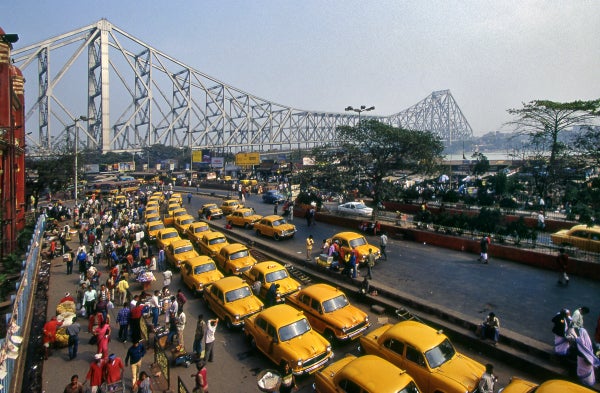

[Busy street sounds.]
This is the sound of a neighborhood in Kolkata, India, in December, 2016. It was recorded by resident Sukanta Majumdar.
[Quiet area, birds singing.]
And this is what that same neighborhood sounded like on April 1st of this year, after the COVID-19 lockdown.
On supporting science journalism
If you're enjoying this article, consider supporting our award-winning journalism by subscribing. By purchasing a subscription you are helping to ensure the future of impactful stories about the discoveries and ideas shaping our world today.
“It’s like a unique place in time that we have to document for the future, for sure.” 00:07
Amandine Gasc is a soundscape ecologist with the French National Research Institute for Sustainable Development. She’s supposed to be in the field, recording nocturnal sounds in Southern France to evaluate the effect of light pollution on animals there. Instead she’s at home. But she’s still recording--now from her balcony, where normally she’d mostly be hearing traffic.
“In my neighborhood, there’s like amphibians, I think it’s frogs that are like in this very located space in the neighborhood that’s very loud. So at night there’s like the frog chorus and in the morning we have the bird choruses. And you also hear the sound of people in their gardens, slight music in the back. It’s very relaxing.”
When the pandemic hit, Gasc and three other colleagues put a call out to volunteers all over the globe. Currently, roughly 300 people are recording one minute of outdoor sound every ten minutes for what has become the “Silent Cities Project.”
“The goal is to build this huge dataset and make it available.”
All the data collected will be stored by the Open Science Foundation as a public dataset. The recordings, says Gasc, offer opportunities in the future to understand how we share our space with other creatures and how we impact our outdoor spaces.
“Not only the acoustic space, but also the space in general. We are seeing a lot of animals in the streets - so taking back this actual space for themselves. And even people, people were just walking all over the streets and suddenly the streets were like this huge space we could use. So, I think it will help us to understand that maybe another way of living in the city is possible. I hope so.”
—Emily Schwing
(The above text is a transcript of this podcast)
