
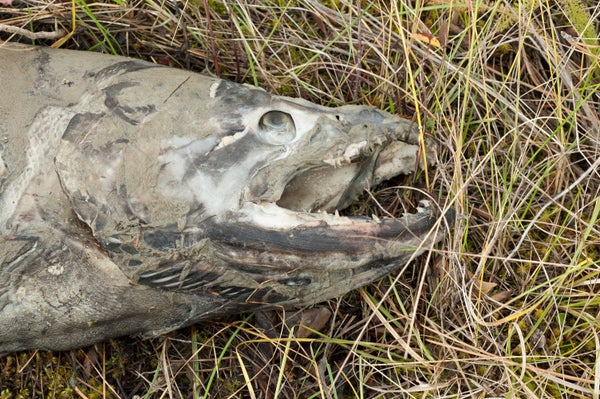

Each fall, thousands of coho salmon flock to Northwest rivers to spawn. But many never get the chance, especially near big cities like Seattle. “And in some of these urban areas, up to 90 percent of the females were dying before they spawned, which is not a good thing for a population long term.” Julann Spromberg, a toxicologist affiliated with the Northwest Fisheries Science Center.
Researchers suspected these deaths were partly a matter of bad timing. The fish often reach streams during the first showers of the rainy season, which flush chemicals from roads and parking lots into the water. Now, Spromberg and her colleagues have produced the first direct evidence that this runoff kills coho salmon. Their study is in the Journal of Applied Ecology. [Julann A. Spromberg et al, Coho salmon spawner mortality in western US urban watersheds: bioinfiltration prevents lethal storm water impacts]
The researchers found that fish exposed to storm water from Seattle-area highways quickly grew sick and died. Surprisingly, though, the salmon did not seem to mind taking a dip in a cocktail of common road pollutants, including hydrocarbons and metals. That detail suggests the killer ingredient in runoff may be a different kind of chemical or a lethal combination of several compounds.
On supporting science journalism
If you're enjoying this article, consider supporting our award-winning journalism by subscribing. By purchasing a subscription you are helping to ensure the future of impactful stories about the discoveries and ideas shaping our world today.
“There’s a whole lot of stuff in here that we haven’t been able to measure or don’t have the capabilities of measuring at this point.”
However, Spromberg says there’s a way to help the fish even before scientists hunt down the culprit. Her team also found that filtering runoff through just a few feet of soil made storm water safe for salmon. Cities can implement this simple form of clean water technology by building more systems, including roadside rain gardens, to collect runoff from paved areas and pass it through soil before it enters urban waterways. Literally a quick and dirty solution.
—Julia Rosen
[The above text is a transcript of this podcast.]
