

Hi, I’m Scientific American podcast editor Steve Mirsky. And here’s a short piece from the October 2019 issue of the magazine, in the section called Advances: Dispatches from the Frontiers of Science, Technology and Medicine.
The article is titled “Quick Hits,” and it’s a rundown of some science and technology stories from around the globe, compiled by editorial intern Jennifer Leman.
From India:
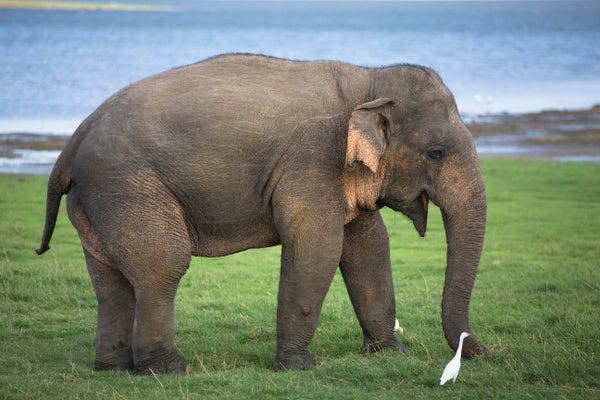
Wildlife biologists found that adolescent male Asian elephants, usually solitary, are forming large, all-male herds, possibly to help them survive in human-dominated areas.
On supporting science journalism
If you're enjoying this article, consider supporting our award-winning journalism by subscribing. By purchasing a subscription you are helping to ensure the future of impactful stories about the discoveries and ideas shaping our world today.
From Guatemala:
Archaeologists studying charred lake sediments found evidence confirming a cryptic historical record saying the ancient Mayan city of Bahlam Jol burned on May 21, A.D. 697. The research suggests it was an act of war, which included civilian as well as military targets.
From Hong Kong:
Hong Kong’s government revealed plans to build an artificial island to alleviate the nation’s housing crisis, triggering concerns from activists and residents about nearby marine ecosystems.
From Papua New Guinea:
The government of Papua New Guinea aims to build more than 3,700 miles of road through its rugged landscape by 2022, which a team of scientists cautioned could impact species across the country.
From Australia:
Researchers rediscovered two fern species—both thought to be extinct—on the mountaintops of Queensland. Hymenophyllum whitei and Oreogrammitis leonardii had last been spotted in the wild more than 50 years ago.
From Brazil:
President Jair Bolsonaro fired the head of the Brazilian National Institute of Space Research after the agency reported that deforestation in the Amazon this summer increased significantly from 2018.
That was Quick Hits, by Jennifer Leman.
