New Issue: Orbital Catastrophe Ahead? Read Now

Sharks Make a Splash in Brooklyn

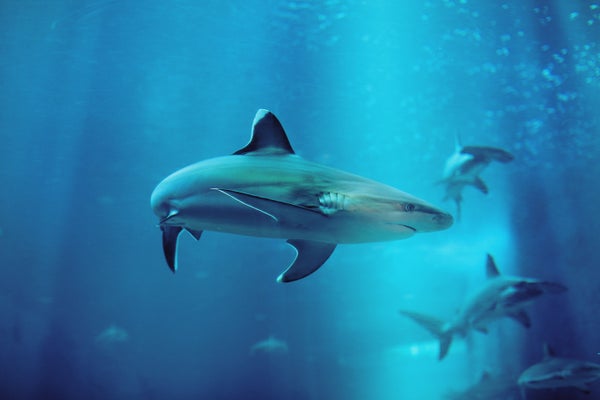
Visitors can see and learn about sharks and their environment in the new "Ocean Wonders: Sharks!" facility at the Wildlife Conservation Society's New York Aquarium.

Illustration of a Bohr atom model spinning around the words Science Quickly with various science and medicine related icons around the text

Join Our Community of Science Lovers!

“The nine incredible galleries will feature 115 species of marine life held in 800,000 gallons of water. And this includes 18 species of sharks and rays.”

Cristián Samper, president and CEO of the Wildlife Conservation Society. He spoke June 28th at the opening of the Ocean Wonders: Sharks! building and exhibit at the society’s New York Aquarium. Because we’re at the Aquarium, you may notice the sounds of sea lions in the background. And because the facility is at Coney Island in Brooklyn, you’ll also hear sirens—police or ambulance sirens, not the mythological sea temptresses or the real-life amphibians. Samper talked about what visitors might take away from their experience.

“Sharks are keystone species in the world’s oceans. And as top predators they help regulate the populations of other species and bring balance to the ocean. We also know that sharks are in trouble and need our help. Second, this exhibit features the waters right here in New York, what we call the New York seascape…this area is the home to hundreds of marine species, including 25 species of sharks, eight species of whales, six species of sea turtles, and thousands of fish, bird, and invertebrate species. And the third message is that the future of the ocean is in our hands. The choices that each of us will make, today, this week and next year—whether it’s the sustainable seafood that we do, whether we use plastic straws—every choice we make will impact the future of the oceans.”


On supporting science journalism

If you're enjoying this article, consider supporting our award-winning journalism by subscribing. By purchasing a subscription you are helping to ensure the future of impactful stories about the discoveries and ideas shaping our world today.


—Steve Mirsky

[The above text is a transcript of this podcast.]

Subscribe to Support Independent Journalism

Great science journalism requires human expertise, time, effort and creativity. And it costs money. That’s why I and the journalists here at Scientific American hope you’ll join our community.

When you subscribe, you are supporting staff and freelance journalists who are passionate about telling science stories that are true, important and compelling. Our editors and reporters are often experts in their fields, which means they understand the nuances of big discoveries and can untangle the breakthroughs from the hype. With a subscription, you are also supporting rigorous fact-checking to ensure the words we publish are precise and accurate. And you’re supporting original illustrations, graphics and photos that bring you closer to an advanced laboratory, an ice sheet in Antarctica or a space mission in orbit. You’re helping us craft other types of high-quality journalism as well: Our newsletters are carefully written, edited and curated by staffers you have or will come to know and love. Our Science Quickly podcast is based on original reporting, collaboration with editors and scientists and exacting production.

Subscriptions keep this engine running so we can continue to deliver thoughtful, rigorous and independent science journalism to you. In an era of viral misinformation, this work is crucial. If you value what we do, I hope you’ll consider joining us as a subscriber

Thank you,

Jeanna Bryner, Editor in Chief, Scientific American

Subscribe