

Large oceangoing vessels like oil tankers and cruise ships produce noise that travels long distances underwater. That audio pollution can disrupt the sounds that marine mammals, fish and other animals use to communicate.
“When there’s lots of noise from ship traffic, it basically masks those sounds so they just can’t hear each other.”
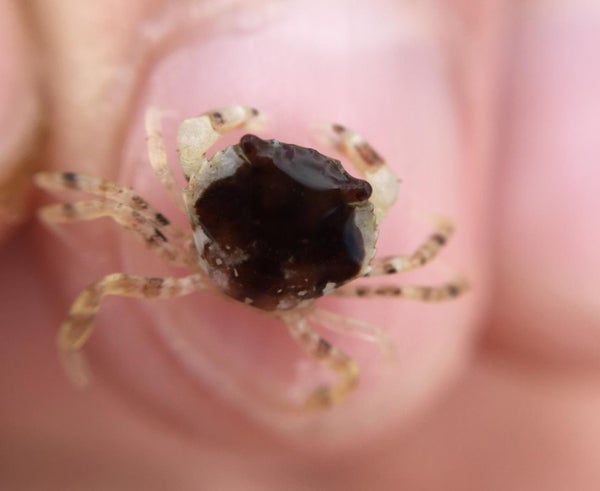
University of Exeter sensory ecologist Emily Carter. She wondered whether ship noise might also be detrimental to animals that don’t rely on sound for communication. For example, young shore crabs that use camouflage to hide from predators.
On supporting science journalism
If you're enjoying this article, consider supporting our award-winning journalism by subscribing. By purchasing a subscription you are helping to ensure the future of impactful stories about the discoveries and ideas shaping our world today.
“So they can actually change their color to match whatever it is that they're sitting on, basically to make it harder for predators to find them.”
Carter suspected that stress from ship noise might hinder the change process. To find out, she and her colleagues collected juvenile shore crabs with dark shells and brought them back to the lab. They placed the crabs in tanks full of white gravel. An underwater speaker in each tank played quiet natural sounds at all times. One group of crabs also heard loud natural sounds every hour. But another group was subjected to hourly recordings of large ships.
Carter says shorebirds—which eat the crabs—can see UV light, so she used ultraviolet photography to determine how well the crabs blended into their new habitat over time.
“Through the eyes of a shorebird—so through a bird’s perspective—were they camouflaged? Weren’t they camouflaged? How obvious would they be?”
After eight weeks, the crabs that heard only natural sounds had become much lighter and were well camouflaged. “But the ones that were exposed to the ship noise didn’t change color as much. And then, as a result, they weren’t as camouflaged at the end of the experiment. So they’d be much more noticeable to a predator.”
>What’s more, in another experiment, crabs failed to flee when they heard ship noise during a simulated predator attack.
“They either didn’t respond at all, or they did respond, but they were much, much slower to do so. So in a real life setting, they would have been captured much more easily.
Carter says the stress caused by ship noise may interfere with hormones that regulate color change in crabs or sap the energy needed to make the change efficiently. The study is in the journal Current Biology [Emily E. Carter et al., Ship noise inhibits colour change, camouflage, and anti-predator behaviour in shore crabs]
The research not only puts a spotlight on the unintended consequences of noise pollution, but is a reminder that too much stress isn’t just bad for people—it can also be deadly to wildlife that needs some peace and quiet.
—Susanne Bard
[The above text is a transcript of this podcast.]
