
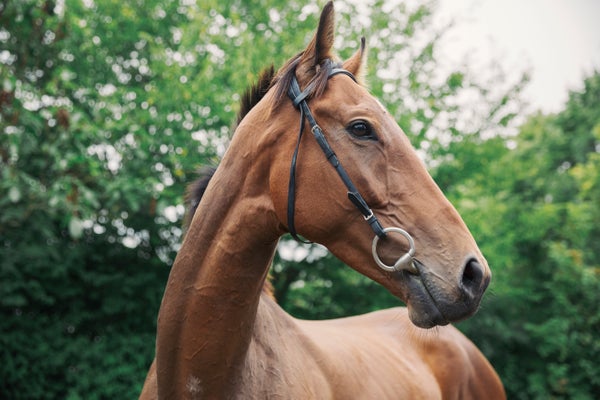

Every Thoroughbred horse alive today is descended from three stallions and a larger selection of mares in 17th- and 18th-century England. Since then, no horses outside this lineage have been permitted to enter the bloodline. That’s a problem.
“We analyzed genetic diversity at thousands of genetic markers across the entire genome in more than 10,000 Thoroughbred horses from all of the major breeding regions of the world. This is the largest set of horses that’s been examined in this way to date.”
Emmeline Hill, professor at University College Dublin and chief scientist, with an ownership stake, at an equine science company called Plusvital.
On supporting science journalism
If you're enjoying this article, consider supporting our award-winning journalism by subscribing. By purchasing a subscription you are helping to ensure the future of impactful stories about the discoveries and ideas shaping our world today.
“And what we found was that there has been a highly significant increase in inbreeding in the population over the last 45 years and probably the greatest increase in inbreeding is seen in the last 10 or 15 years.”
Thoroughbred horse production is tightly controlled. Artificial insemination is not permitted, which means that breeding stallions get moved around a lot for meetups with females. These so-called shuttle stallions can mate with hundreds of mares per mating season. And there are two mating seasons: one in the northern hemisphere and the other in the southern.
“In our study, 97 percent of the horses traced back to a single horse called Northern Dancer, arguably the most successful stallion of the 20th century. And his descendants have been the dominant sire lines in Australia and Europe for the last 25 years.”
Northern Dancer won the Kentucky Derby in 1964.
Breeding pairs are chosen for their athletic prowess and competitive behavior, leading to strong selection for genes related to muscle performance and behavior ...
“Traits that all have to come together in the optimal fashion to produce an elite athlete.”
But without genetic diversity, you can get health and behavior issues related to inbreeding.
“The Thoroughbred is unusual in that most managed animal and even plant-production systems have genetic monitoring in place. But the Thoroughbred has no genomic selection or population management that is addressed at an industry-wide level.”
The study by Hill and her colleagues is in the journal Scientific Reports. [Beatrice A. McGivney et al., Genomic inbreeding trends, influential sire lines and selection in the global Thoroughbred horse population]
Hill’s genetic testing system is available through her company.
“With the DNA of a mare and the DNA of a stallion, we can make in silico predictions about the likely level of inbreeding in the hypothetical foal that might arise from that mating.”
—Eliene Augenbraun
[The above text is a transcript of this podcast.]
