
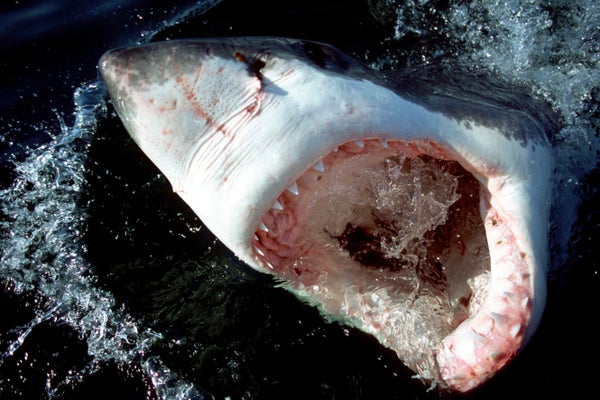

The image of a dorsal fin cutting through the sea surface is iconic. But scientists studying the stomach contents of young great white sharks off the coast of Australia were in for a surprise when they learned that the predators seem to spend a lot of time patrolling the seafloor.
“They have a predominantly fish-based diet, which is not unexpected for juvenile white sharks. The most important prey species we identified was eastern Australian salmon.”
University of Sydney graduate student Richard Grainger. He and his team sorted through the stomach contents of more than 50 juvenile white sharks that died after being entangled in shark exclusion nets meant to protect swimmers.
On supporting science journalism
If you're enjoying this article, consider supporting our award-winning journalism by subscribing. By purchasing a subscription you are helping to ensure the future of impactful stories about the discoveries and ideas shaping our world today.
“The overall unexpected finding was just the diversity and importance of bottom-dwelling fishes. Things like stargazers—which bury themselves in the sand, they're quite strange-looking fish—and flathead but also stingrays.”
People actually did not have a good idea of the particulars of great white shark diets. As Grainger points out, the sharks enjoy protections throughout the world. So most researchers estimated their diets through the chemical markers that they can ethically access by taking small skin samples. These measurements indicate at what level of the food chain the predator is feeding but not the actual critters that make up their meals.
“There’s quite a lot of evidence that lots of different animals, so even carnivores, omnivores, herbivores self-select different prey or food based on a particular balance of nutrients.”
Grainger hopes that by further understanding what juvenile white sharks like to eat, he can begin to piece together how and why they make their predatory choices. The study was published in the journal Frontiers in Marine Science. [Richard Grainger et al., Diet composition and nutritional niche breadth variability in juvenile white sharks (Carcharodon carcharias)]
“Understanding and predicting when sharks might be more abundant in certain areas would be an ultimate end goal of all of this.”
Avoiding or mitigating human-shark conflicts means understanding the sharks’ nutritional goals. And if researchers can anticipate where and when sharks are likely to spend their time hunting, they can better protect humans from getting bitten—and sharks from getting killed.
—Jason G. Goldman
[The above text is a transcript of this podcast.]
