Space & PhysicsApril 1, 2021
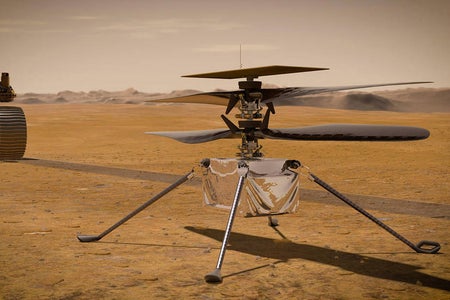
Ingenuity’s ‘Wright Stuff’: A Piece of the Wright Flyer Will Soar on Mars
The first powered atmospheric flight on another planet will honor its roots with a payload drawn from the dawn of aviation itself
Ingenuity’s ‘Wright Stuff’: A Piece of the Wright Flyer Will Soar on Mars
The first powered atmospheric flight on another planet will honor its roots with a payload drawn from the dawn of aviation itself

Poem: ‘Picture a Clerihew’
Science in meter and verse

How to Be an Effective Science Communicator
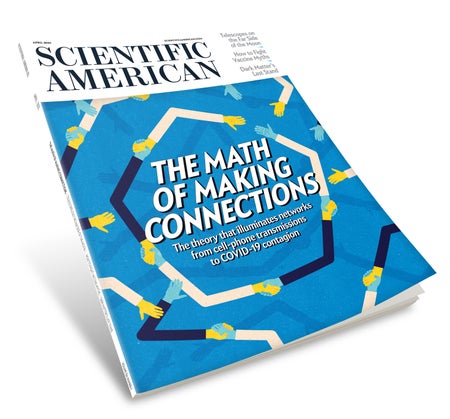
Telescopes on the moon, the mathematics of connections, new hope for dark matter, and realistic mythical beings

The Mathematics of How Connections Become Global
Percolation theory illuminates the behavior of many kinds of networks, from cell-phone connections to disease transmission
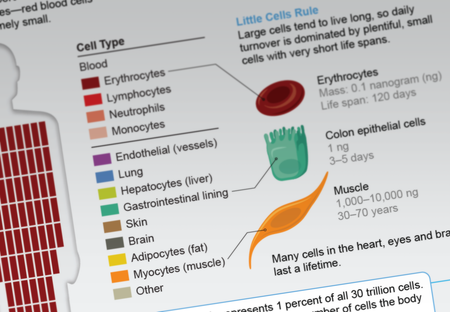
Our Bodies Replace Billions of Cells Every Day
Blood and the gut dominate cell turnover
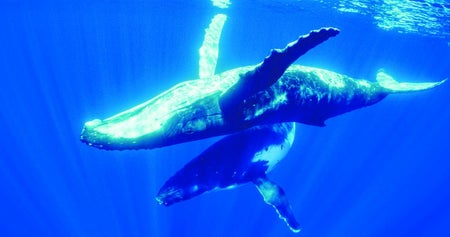
Sweeping Whale Streaming Series, Profile of CRISPR Discoverer and an Examination of Future Realities
Recommendations from the editors of Scientific American
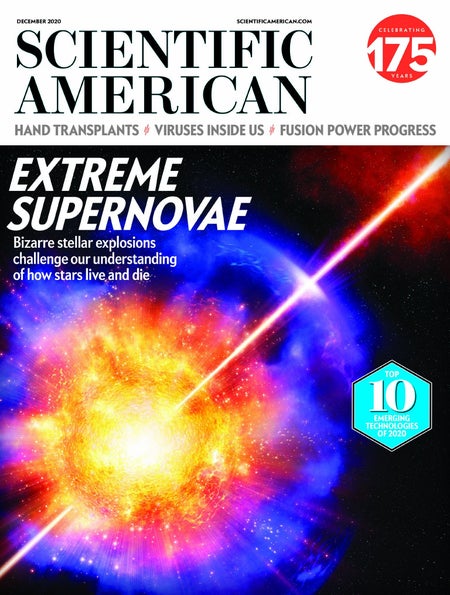
Readers Respond to the December 2020 Issue
Letters to the editor from the December 2020 issue of Scientific American

In Case You Missed It
Top news from around the world
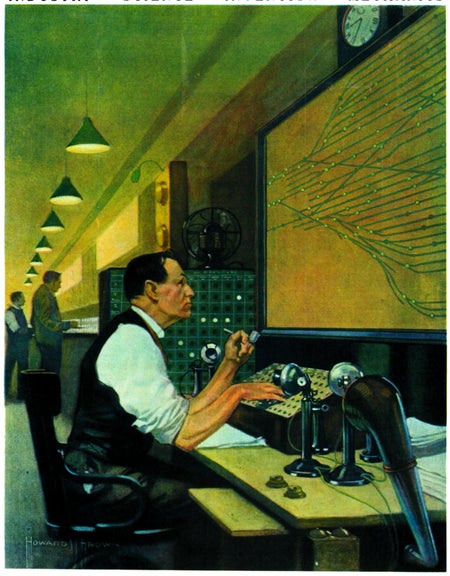
50, 100 & 150 Years Ago: April 2021
Modern glass arrives; a canine workforce

Scientists Should Admit They Bring Personal Values to Their Work
Value neutrality among researchers is a myth that hurts the public trust of science
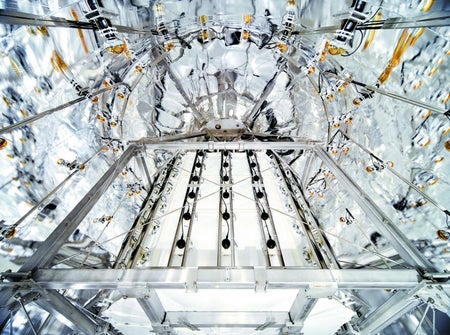
Dark Matter’s Last Stand
A new experiment could catch invisible particles that previous detectors have not
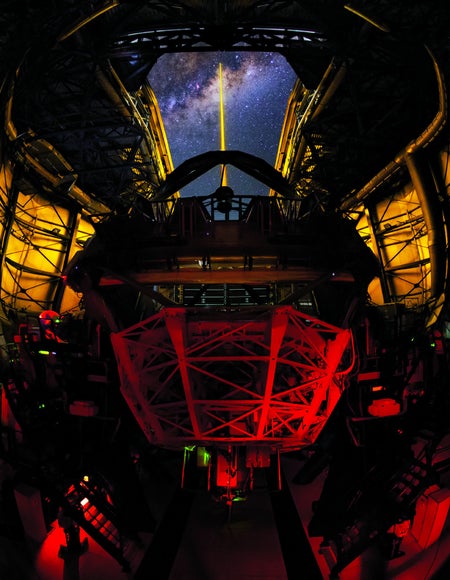
Adaptive Optics Branches Out
A tool built for astronomy finds new life combating space debris and enabling quantum encryption