
Space & PhysicsFebruary 8, 2021
The United Arab Emirates’ Hope Probe Approaches Mars
Stakes are high for the Arab world’s first ever interplanetary mission as it prepares to enter Martian orbit
The United Arab Emirates’ Hope Probe Approaches Mars
Stakes are high for the Arab world’s first ever interplanetary mission as it prepares to enter Martian orbit
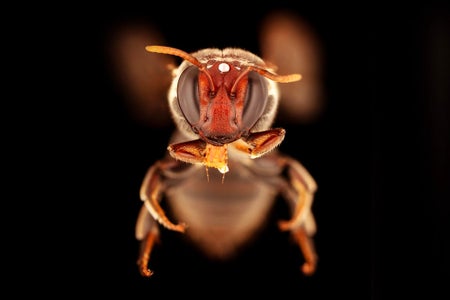
Australian Bees Were Seen Foraging at Twilight for First Time
Bee morphological features can predict their nighttime feeding behaviors


A Heroic Effort to Measure Helium
After an intense game of cat and mouse with different particles, atomic physicists have measured the radius of the helium nucleus five times more precisely than before. Christopher Intagliata reports.

Remembering the Extraordinary Scientist Paul Crutzen (1933–2021)
Among other things, he explored the concept of nuclear winter, won a Nobel for his role in helping understand atmospheric ozone depletion and coined the term “Anthropocene”
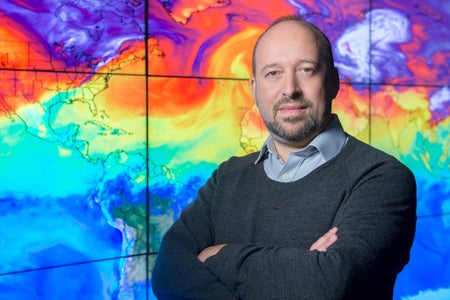
NASA Names Its First Climate Advisor
Gavin Schmidt, an expert in climate modeling, will help ensure the Biden Administration has crucial data to inform its emissions reduction goals
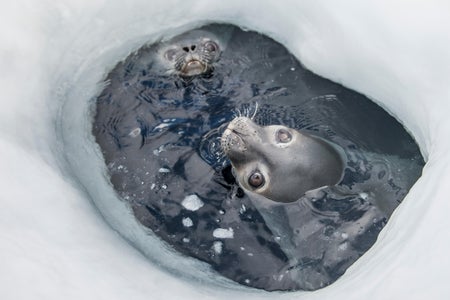
Antarctic Seals Vocalize in Ultrasonic—but Not for the Usual Reason
Nearly one fifth of the underwater vocalizations produced by Antarctica’s Weddell seals occur at pitches above the limits of human hearing, according to a recent study

On Finding Yourself in a Butterfly’s Wings
Today on the Science Talk podcast, Alexis Gambis, a New York University biologist and independent filmmaker, speaks about making Son of Monarchs,which won the 2021 Alfred P. Sloan Feature Film Prize at the Sundance Film Festival.
The film is about a Mexican scientist who studies the evolution of monarch butterfly wings. It is a cultural piece about the politics of immigration, spirituality and shifting identities.
Gambis talks about science beyond the lab bench, bringing CRISPR technology to the big screen and how he is usually given to bold, innovative features that focus on science or technology and that depict a scientist as a central character.
In one scene in Son of Monarchs, the main character stands in a rowdy bar and raises his glass to “CRISPR and the genetic revolution.” There are several allusions throughout the film to how gene editing fascinates and terrifies us. Evolutionary science is the thread that ties the human story together.
From script to screen, the scientist-director meditates on the long journey to the finish line, securing funding and how science’s big stories can be weaved into art.
Gambis has been running a science film festival for 13 years and making science films for longer. His next project, El Beso, is a plunge into the life and science-fiction writings of Santiago Ramón y Cajal, an early 20th-century Spanish neuroscientist who won the 1906 Nobel Prize in Physiology or Medicine.

Life on Venus Claim Faces Strongest Challenge Yet
New studies knock down a controversial report observing phosphine in the planet’s atmosphere

Pathogen Discovered That Kills Endangered Chimps: Is It a Threat to Humans?
An Ebola outbreak and a few false leads slowed a 15-year search for bacteria that attack the nerves and gut
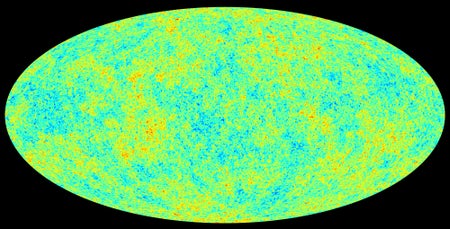
Hints of Twisted Light Offer Clues to Dark Energy’s Nature
Cosmologists suggest that an exotic substance called quintessence could be accelerating the Universe’s expansion—but the evidence is still tentative
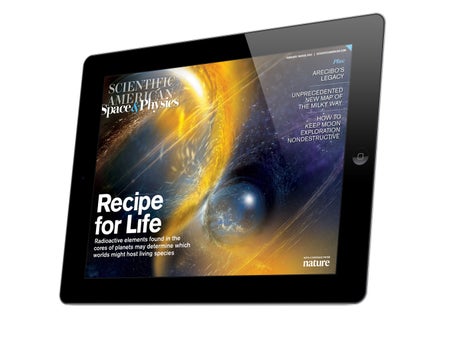
Journeywork of the Stars
Radioactive elements found in the cores of planets may determine which worlds might host living species

Science Meets Magical Realism in Son of Monarchs
A new film that just premiered at Sundance tells of migration, loss and transformation on the wing