
In December I was in Stockholm, Sweden, for the Nobel Prize award ceremony, a celebration of science and discovery that feels like a national holiday in that country. The week leading up to the awards is stacked with lectures, concerts, exhibitions and discussions, and Stockholm is decorated with light displays and video shows.
The whole thing feels like the Oscars. People line up on the street to catch a glimpse of celebrities as they leave the Stockholm Concert Hall. National public television dedicates more than five hours to a live broadcast of the ceremony and subsequent banquet. Huge numbers of Swedes tune in not just for the glamour but to hear interviews with researchers, learn about medical breakthroughs, and explore advances in fields such as materials science and quantum physics.
It’s inspiring. It gives me hope that a general populace can still get excited about science and support it. That’s a stark contrast to what we’ve seen in the U.S., where science has endured an annus horribilis: research funding slashed, government support dwindling, and growing segments of the population embracing misinformation and rejecting scientific consensus.
On supporting science journalism
If you're enjoying this article, consider supporting our award-winning journalism by subscribing. By purchasing a subscription you are helping to ensure the future of impactful stories about the discoveries and ideas shaping our world today.
At the banquet, one of my tablemates—a vice chancellor from a major Swedish university—expressed concern about these trends. She told me she had a meeting planned with other European university leaders in the new year, where they would discuss how to respond to future attacks on science, using the U.S. and Hungary as their cautionary examples.
Yet the work honored in 2025 offers a profound counternarrative to that despair. It has given us tools to reshape our reality. The physics prize recognized research into macroscopic quantum-mechanical tunneling, paving the way for quantum computing. The chemistry laureates developed porous materials capable of capturing carbon dioxide and storing hydrogen—vital technologies for our climate future. And the prize in physiology or medicine paid tribute to the discovery of mechanisms to prevent the immune system from attacking healthy organs, offering hope for autoimmune and cancer therapies.
These breakthroughs remind us that science is, as Astrid Söderbergh Widding, chair of the Nobel Foundation, stated in her opening address, “a lingua franca for humankind” that transcends borders and divisions. The Nobel awards remind us that science is what will make it possible to address and come to terms with the many global challenges we face.
The prizes also remind us of our responsibilities. The Nobel lights in the dark Scandinavian winter tell us we cannot be passive spectators. We must be active contributors in defending the freedom of research. If annual science awards can hold the attention of a European nation, then surely we can work to rekindle that same spirit of possibility here at home.
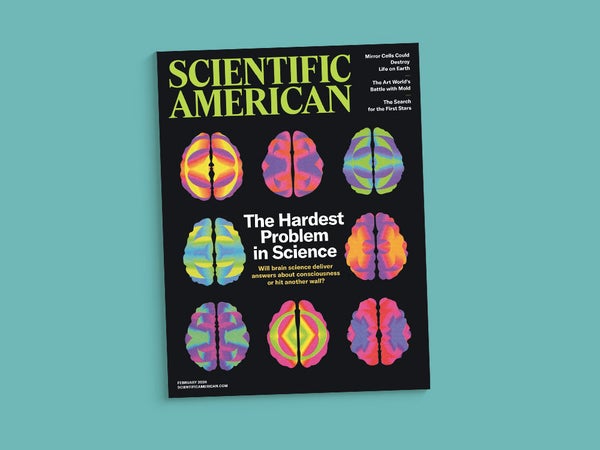
This issue’s cover story, written by Scientific American associate editor Allison Parshall, illustrates one opportunity for science to light the way for society: scouring the brain for the origins of consciousness. As artificial-intelligence models claim sentience and researchers increasingly scrutinize the minds of animals, the abstract debates of philosophy are being transformed into urgent questions. Although the field currently faces an “uneasy stasis” marked by bruised theories and heated debates, the commitment to solving these mysteries stays fierce.
This pursuit mirrors the spirit I witnessed in Stockholm. Whether we are peering into the universe inside a human brain or developing materials to protect our climate, science remains our best tool for navigating the unknown. As we celebrate the tangible breakthroughs of the Nobel laureates, we must also champion the messy, difficult and vital work of those attempting to explain the one experience we all share: the “singular sense of awareness” that makes us who we are.