
Fiction
Review by Robin MacArthur
How High We Go in the Dark
by Sequoia Nagamatsu
William Morrow, 2022 ($27.99)
On supporting science journalism
If you're enjoying this article, consider supporting our award-winning journalism by subscribing. By purchasing a subscription you are helping to ensure the future of impactful stories about the discoveries and ideas shaping our world today.
Sometimes a novel comes along that feels so prescient—so startlingly aligned with the happenings of the real world—it seems plausible that the author was attuned not just to scientific foreshadowing but to some divinatory reading of the stars.
I felt this reading Sequoia Nagamatsu's How High We Go in the Dark, a dystopian narrative set in the near future about an ancient virus that is uncovered by a scientist named Clara while she is researching melting permafrost in the Arctic. Tragically, Clara and her peers, while working tirelessly to slow the climate crisis, unwittingly spark the kind of global suffering they were hoping to avoid.
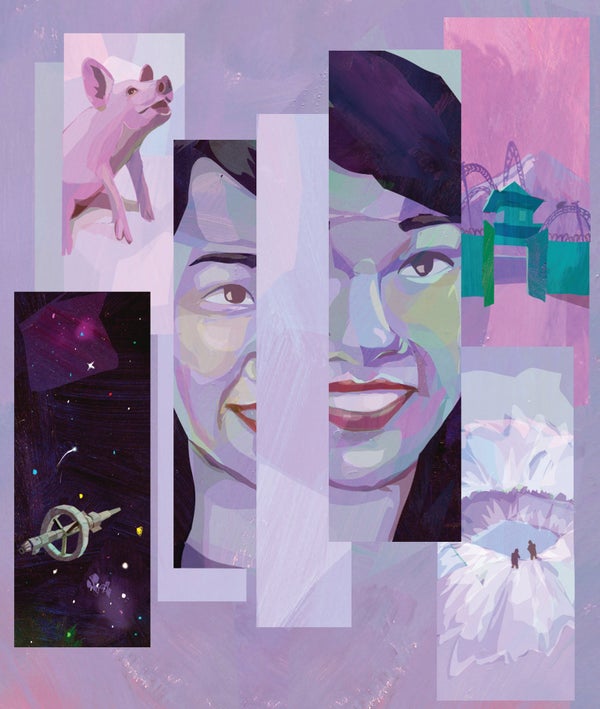
This Arctic plague soon causes widespread panic, death and grief, and Nagamatsu imagines the ways sorrow, technology and art might align in such a fathomable future. In a series of interconnected stories told from multiple points of view, we encounter a euthanasia theme park for dying children, a surreal version of the afterlife, a talking pig, a black hole implanted in the brain of a scientist, a funerary skyscraper, a dysfunctional repair shop for robotic dogs, and an interstellar spaceship. Woven throughout are flickers of starlight, myth and humanity's age-old connection with the natural world. Humming beneath the fantastical, scientific and mystical imaginings of this book are quiet and tender stories of love, family and belonging.
Although the glitter of Nagamatsu's imaginative renderings was what first caught my attention, it was these personal stories that lingered. Set in the future amid a pandemic far worse than our own, this polyphonic novel reflects our human desire to find meaning within tragedy. To feel our innate interconnection with all things, to care for one another—strangers, even—during times of immense loss, to learn how to say goodbye, to make things of beauty, and, most essentially, to inhabit and tend a livable planet for all.
In Brief
Dark and Magical Places: The Neuroscience of Navigation
by Christopher Kemp
W. W. Norton, 2022 ($26.95)
Navigation is the one of the most complex cognitive tasks humans engage in daily. In this fascinating dive into the brain, neurobiology researcher Christopher Kemp explores how we orient where we're going, why we lose our way, and what scientists know about how we do both these things. Kemp's explanations of concepts such as grid cells are clear and engaging, but the book shines brightest in his entertaining descriptions of his own chronic lost-ness, as well as in surprisingly moving stories about people who have wandered perilously off route. Some make it home, but others don't. —Tess Joosse
The High House
by Jessie Greengrass
Scribner, 2022 ($27)
In Jessie Greengrass's lush novel, set on the flood-ravaged English coast, a climate activist named Francesca has prepared a shelter but dies in a hurricane before she can reach it.* Following her survival plan, Francesca's young son and stepdaughter flee to the “high house,” where they are met by Grandy—a resourceful steward of sorts for the emptying vacation town—and his granddaughter. This unlikely quartet holes up, struggling to adjust to new circumstances. As the water rises, threatening to reach even them, Greengrass explores what it is like to grow up amid an escalating catastrophe and what remains after so much is swept away. —Ian Battaglia
This Boy We Made: A Memoir of Motherhood, Genetics, and Facing the Unknown
by Taylor Harris
Catapult, 2022 ($26)
Taylor Harris's gripping memoir is about medicine in the same way it is about race: completely and not at all. When her second child, Tophs, starts experiencing inexplicable symptoms, even the most seasoned specialists are baffled. At each turn in their medical journey, Harris and her husband demand to exist and to be taken seriously in a system that would rather ignore them. With tender, evocative prose, the author executes a daunting undertaking: to floodlight the intersection of two “burdens—Black and undiagnosed—in a world that is comfortable with neither.” The result is alternately heartwarming and enraging. —Maddie Bender
*Editor’s Note (12/16/21): This sentence was edited after posting to correct the description of the novel’s setting.