If intelligent life is out there, it probably resides in a solar system with many planets. The more planets a star has, a recent study found, the more circular the orbits tend to be. Because planets on circular orbits do not move toward or away from their star, their climates may be stable enough to foster advanced life.
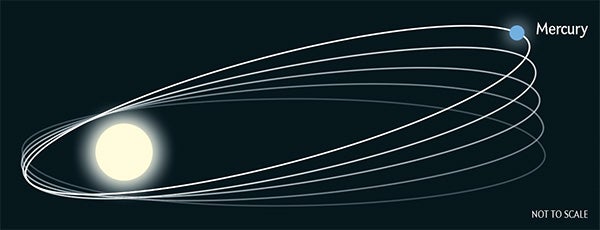
Our own solar system fits that pattern. The sun has eight or nine planets (depending on how you count), and most of them have fairly circular paths. Earth's orbit, for example, has an eccentricity of just 1.7 percent. (Eccentricity ranges from 0 percent for a perfect circle to nearly 100 percent for extreme ellipses.) Mercury and Pluto pursue oval-shaped orbits, with eccentricities of 21 and 25 percent, respectively, but even Pluto—whose planetary status is controversial—seems tame when compared with many of the planets orbiting other stars, where eccentricities can exceed 60, 70, even 80 percent.
As far as we know, such wild worlds exist only in solar systems with one or two planets, say astronomers Mary Anne Limbach and Edwin L. Turner of Princeton University, who conducted the study. In contrast, solar systems with four or more planets feature moderately round orbits. The conclusions, based on 403 planets with previously measured orbital eccentricities in hundreds of solar systems, appeared in January in the Proceedings of the National Academy of Sciences USA.
On supporting science journalism
If you're enjoying this article, consider supporting our award-winning journalism by subscribing. By purchasing a subscription you are helping to ensure the future of impactful stories about the discoveries and ideas shaping our world today.
Jack Lissauer, a planetary scientist at the nasa Ames Research Center, notes that the newfound correlation makes sense because planets on circular orbits do not interfere much with one another. A planet on an elongated path, on the other hand, can “mess up the orbits of the other planets and kick them out [of the system],” Limbach says.
These planetary road hogs do not make good abodes themselves. When near their sun, they fry; when far away, they freeze. Thus, intelligent beings are more likely to prosper on planets with circular orbits. Such beings would see many other worlds orbiting their star, just as we do—and may even bicker over which ones are truly planets.