
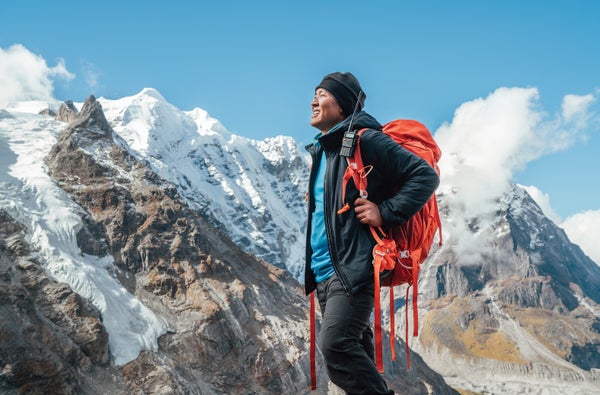
For most mountaineers, some level of altitude sickness is inevitable. But Indigenous highlanders living on the Tibetan Plateau, known as Sherpas, have inhabited the high Himalaya long enough to have an evolutionary edge at tolerating elevation compared with lowlanders born and raised farther down. For a study in the Proceedings of the National Academy of Sciences USA, researchers compared Sherpa and lowlander blood samples during a Himalayan trek to investigate the Sherpas’ aptitude for altitude—and they found a crucial clue in the kidney.
The thinner atmosphere up high can lead to hypoxia, a dangerous lack of oxygen. This condition, which often occurs during medical events such as heart failure, can also cause acute altitude sickness; mountaineers can become nauseated, dizzy and disoriented, in severe cases developing deadly fluid buildup in the lungs and brain. Studying the physical responses of altitude-adapted people reveals how their bodies keep them healthy during hypoxia.
Hypoxic people breathe faster to bring more oxygen into their lungs. But extra breathing also empties the lungs of more carbon dioxide than usual, which in turn reduces the production of carbonic acid in the blood. And even tiny changes in acidity risk damaging the proteins and enzymes that keep our cells functioning. Once blood acidity shifts, “the only thing that can fix it is the kidneys,” says study co-author Trevor Day, a physiologist at Mount Royal University in Alberta.
On supporting science journalism
If you're enjoying this article, consider supporting our award-winning journalism by subscribing. By purchasing a subscription you are helping to ensure the future of impactful stories about the discoveries and ideas shaping our world today.
To examine highlanders’ blood acidity at altitude, Day and his colleagues recruited 14 Sherpas and 15 lowlanders from among university students in Kathmandu, Nepal, and ran initial blood tests at 4,200 feet. Next came a nine-day journey to 14,000 feet to take another blood sample. The lowlanders’ blood became more alkaline as they ascended, but Sherpas’ blood acidity didn’t change; their kidneys’ filtering action balanced the alkaline and acidic ions.
All study participants lived in lowland areas in the months before the expedition. This window left plenty of time to undo temporary altitude acclimation from spending time higher up, so the Sherpas’ improved blood-acidity regulation is most likely from permanent differences between highlander and lowlander kidneys, the researchers say. “We think there are genetic changes that drive differences in kidney function,” says Day, who hopes to isolate them.
These results complement earlier findings that Sherpas have more blood plasma than other people. This watery liquid thins their blood so it can flow faster and deliver oxygen throughout the body more quickly. “The kidney is really involved in regulating plasma volume,” says biological anthropologist Cynthia Beall of Case Western Reserve University, who was not involved with Day’s study. Together, these findings highlight the kidneys as unsung heroes during hypoxia and as a key focus for future research on the effects of high altitudes.