
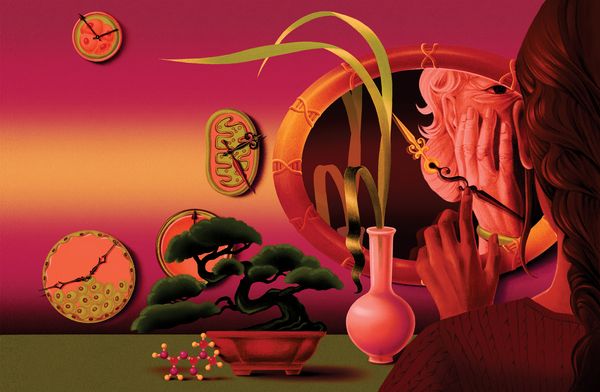
Humans may be the only creatures that areaware of their mortality. There is no evidence that other animals know their time on Earth is finite. The realization that we and everyone we know will someday die must be one of the more unsettling discoveries of childhood.
Ever since humans recognized we have a limited lifespan, that knowledge has shaped our cultures, religions and philosophies. Although we make plans, pursue careers and behave as though we will live indefinitely, the fear of death and the desire to transcend it remain.
As a species, we have made some major strides against mortality. In modern times, death from violence, disease and famine has become less common than it once was. At the same time, medical advances and a dramatic decline in fertility rates have produced aging societies. The proportion of people older than 65 is rising rapidly, while the working-age population that supports them shrinks. Understanding aging is therefore an urgent practical challenge. If we can delay its effects, older people may remain healthy, independent and productive for longer.
On supporting science journalism
If you're enjoying this article, consider supporting our award-winning journalism by subscribing. By purchasing a subscription you are helping to ensure the future of impactful stories about the discoveries and ideas shaping our world today.
But alongside this public health imperative is an enduring dream. A growing number of tech billionaires are funding efforts not merely to slow aging but to defeat it altogether. Their goal is radical life extension and, ultimately, something approaching immortality. But is that even possible? These efforts have scientists chasing one of the biggest mysteries of life itself: Is there a biological reason that humans must die? And if not, could we one day live forever?
The diversity of lifespans in nature suggests that aging isn’t fixed. Despite being constructed from the same chemical building blocks, species can have dramatically different lengths of life. Mayflies may live only days, mice about two years, and bowhead whales and Greenland sharks for centuries. Galapagos tortoises live so long that one of them hobbling around today could have encountered Charles Darwin in 1835.
These differences are not random. Lifespan is closely related to metabolism. Smaller animals generally have higher metabolic rates and shorter lives; larger animals tend to metabolize energy more slowly and live longer.
Natural selection doesn’t care how long an organism lives. It favors traits that increase reproductive success. Every species makes trade-offs in how it allocates resources among growth, reproduction and maintenance. A mouse doesn’t improve its ability to produce more offspring by investing in longevity if starvation or predators are likely to kill it first. For a mouse, investing in rapid growth and reproduction is more advantageous. But larger animals, such as whales, mature slowly and reproduce later. Their bigger size also reduces the risk of predation, making long-term maintenance more worthwhile.
The same logic explains some notable exceptions. Birds and bats often live much longer than similarly sized terrestrial mammals because flight reduces the risk of predation and also allows them to forage over a wide area, cutting the chances of starvation. When surviving longer increases reproductive success, evolution favors slower aging.
Evolution can also reward genes that are beneficial early in life even when they become harmful later. For example, the same genes that promote rapid growth or prevent cancer during youth can contribute to aging later on. This evolutionary theory of aging is known as antagonistic pleiotropy. “Pleiotropy” simply means a gene can have more than one effect, and “antagonistic” means some of those effects can be harmful. The theory suggests that aging is not an adaptation in itself but an unintended consequence of evolutionary compromises. The upshot is that each species has a maximum natural lifespan.
Human life expectancy has roughly doubled over the past 150 years.
What about us? Human life expectancy has roughly doubled over the past 150 years because of improvements in public health, nutrition and medicine. Maximum lifespan is a different matter. Even centuries ago some individuals lived remarkably long lives. Michelangelo lived to be almost 90 years old. The longest documented human life is that of Jeanne Calment, who died at 122 in 1997. No one since then has lived past 120. Under current biological constraints, humans appear unlikely to live much longer than that. Moving much beyond it would require altering the biology of aging itself.
As people age, our muscle mass declines, reducing strength, mobility and balance. We suffer from fatigue and exhaustion and have difficulty carrying out everyday activities. Chronic diseases become more common, and resistance to infection weakens. Cognitive function declines as well. These symptoms are merely external manifestations of a gradual loss of cellular and tissue function, which themselves are a result of changes and damage to the molecules of life and their regulation by our genes.
Aging was once viewed as simple wear and tear, like a machine slowly breaking down, but modern biology has revealed a more complicated picture. Cells possess sophisticated systems for repairing damage, maintaining our repertoire of proteins, recycling components and regulating metabolism. Aging occurs not merely because damage accumulates but because these protective systems themselves become less effective over time.
The hallmarks of biological aging appear in multiple body systems. They include damage or changes to our DNA, deterioration of the quality and distribution of proteins, dysfunction of mitochondria, decline in our response to external nutrients, chronic inflammation, and reductions in stem cells. These systems are deeply interconnected—a disturbance in one often affects many others.
The encouraging news is that there is no physical or chemical law preventing us from modifying these processes. The challenge is that aging is extraordinarily complex.
Among the most powerful interventions discovered so far is caloric restriction. Animals given just enough calories to maintain adequate nutrition often remain healthier and live significantly longer. Caloric restriction reduces protein synthesis and stimulates autophagy, the cellular recycling process that removes damaged molecules and organelles. In species ranging from worms and flies to rodents and primates, caloric restriction produces animals that appear biologically younger than their age. The drawbacks, however, are considerable. Constant hunger, sensitivity to cold, impaired wound healing and reduced libido make strict caloric restriction difficult to sustain.
Scientists have searched for drugs that mimic some of the effects of caloric restriction without the side effects. One that appears promising is rapamycin, originally discovered in soil samples from Easter Island, also known as Rapa Nui by its native people. This compound affects a cellular pathway called TOR (or mTOR) that is involved in growth and metabolism. In mice, it extends lifespan and improves several measures of health. Yet rapamycin is also an immunosuppressant, raising concerns about infection and long-term safety. Current research focuses on whether lowering the dose or synthesizing chemical analogs of rapamycin can produce its beneficial effects without the problems.

Ada Zejun Shen
Metformin, a widely used diabetes drug, has likewise attracted interest. It acts on a protein in mitochondria involved in respiration, which indirectly influences caloric-restriction pathways. Evidence for benefits in healthy individuals, though, is mixed. The recent GLP-1 drugs developed for diabetes and obesity also appear to have beneficial effects on multiple organs, including the brain. Yet they, too, have side effects, including muscle loss. For use as antiaging therapies, both metformin and GLP-1 drugs will require careful clinical trials.
Another major target of antiaging science is cellular senescence. Cells experiencing damage or stress sometimes enter a senescent state in which they stop dividing and begin secreting inflammatory molecules. Early in life this response is beneficial, aiding development, wound healing and cancer prevention. With age, however, senescent cells accumulate faster than the body can remove them.
The resulting inflammation contributes to tissue dysfunction throughout the body. In mice, eliminating senescent cells can improve many features of aging. This finding has sparked intense interest in so-called senolytic drugs designed to remove such cells selectively. Several candidates are now being tested against age-related diseases such as osteoarthritis and fibrosis. Apart from making sure the drugs are safe, the challenge is achieving the right balance: senescent cells serve a biological purpose, and eliminating them indiscriminately could lead to new problems.
Another, somewhat bizarre experiment has raised the prospect of a different antiaging strategy. In a process called parabiosis, researchers physically joined pairs of rats so they shared circulatory systems. Old rats paired with younger ones outlived those paired with animals their own age. Such findings went on to inspire a slew of companies offering transfusions of plasma from young donors. There is no convincing evidence that such procedures slow aging in humans. Nevertheless, the work has set off a major search for factors in blood that change with age and may eventually prove therapeutically useful.
Most of these approaches aim to slow down aging. A more radical goal is to reverse it.
This possibility emerged from a series of discoveries, spanning decades, involving the cells of the early embryo, which possess remarkable flexibility. These so-called pluripotent stem cells can generate any tissue in the body. In later stages, the stem cells become progressively more specialized, and each class generates specific types of tissue such as nervous system cells or blood.
In 1958 British biologist John Gurdon showed that the nucleus from a cell in a tadpole could be transplanted into an egg cell to create an entirely new frog. Later, in 1997, Dolly the sheep served as a demonstration that cloning was possible in mammals. The exact process for reverting adult cells back to an early embryonic stage, however, wasn’t clear.
A major breakthrough came in 2006, when Japanese biologist Shinya Yamanaka discovered that activating just four genes could convert adult cells into pluripotent stem cells. These Yamanaka factors effectively induce cells to return to an earlier embryonic stage by genetically reprogramming them. The discovery raised the possibility that if we can reset cellular age, perhaps we can reverse aging itself.
Applying the full reprogramming process to an adult organism would be dangerous because the resulting pluripotent cells could form tumors known as teratomas. Researchers therefore began exploring partial reprogramming, briefly activating the Yamanaka factors in ways that appear to rejuvenate cells while maintaining their specialized identities.
Results in mice have been striking. Treated animals often show improvements in tissue function and markers of biological age. In one experiment, scientists reportedly regenerated a damaged optic nerve by injecting Yamanaka factors via a viral carrier into the eye. Researchers are now conducting clinical trials to see whether the procedure can reverse degeneration in the retina or optic nerve.
Most antiaging approaches aim to slow down the process. A more radical goal is to reverse it.
Yet formidable obstacles remain. Current methods typically rely on gene-delivery systems that are not ideal for widespread human use. Reprogramming is often uneven, affecting clusters of cells and leaving others in the same organ unchanged. Different organs age at different rates and may require specific targeting. Researchers are pursuing safer and more controllable methods, including small molecules that might produce reprogramming without the introduction of new genes.
Despite these challenges, cellular reprogramming represents the most compelling route yet toward genuine rejuvenation, rather than merely slowing decline.
Even if such interventions succeed, translating them into medicine will be difficult. Antiaging therapies face a higher bar than treatments for life-threatening diseases. Patients with advanced cancer may accept substantial risks in experimental medicines because the alternative is death. Healthy individuals are unlikely to tolerate serious side effects from drugs they may have to take for decades. And clinical trials present another obstacle. Regulatory agencies generally approve therapies for specific diseases, not for aging itself. As a result, scientists often test antiaging interventions indirectly through research on age-related disorders.
Much antiaging research is motivated by the idea of extending “healthspan”—the number of healthy years we enjoy—without necessarily extending lifespan. According to this philosophy, people should aim to remain healthy and independent for longer and then experience a relatively brief period of decline before death. It is an attractive idea, but there is little evidence that it’s possible. In many countries, people are living longer, yet the fraction of life spent with multiple chronic illnesses has increased. On the other hand, there are striking differences between individual countries in the proportion of life spent in good health. People in Sweden, for example, have a considerably shorter period of late-life disability than those in the U.K. Such differences suggest that public health policies, lifestyle factors and medical care can influence not only how long we live but how well we live.
Ultimately, though, will any of these findings allow us to significantly extend the human lifespan? There is no scientific law against the idea, but nor is there any reason interstellar travel must be impossible. It’s just that the practical complexities are immense. Aging involves countless interacting processes operating across cells, tissues and organs. Extending lifespan dramatically would require mastering many of them simultaneously. It is unlikely that a single intervention could simply switch aging off without affecting us in other ways.
In the meantime, as we await major medical advances, basic strategies allow us all to play the antiaging game on a personal scale. Scientists know a moderate diet with a healthy intake of fruits and vegetables affects caloric-restriction pathways. Much of our body’s repair and recycling work is carried out during our sleep cycle, and exercise helps to regenerate tissue, including muscle and mitochondria. For now, the best-supported tools for healthy aging remain the trio of diet, exercise and sleep. In addition, there is good evidence that avoiding social isolation and having a sense of purpose are associated with better health and longevity.
As long as accidents, natural disasters, disease and wars can kill us, true immortality is out of the question. And living for hundreds of years is unlikely anytime soon. Instead we can think of life as an eternal banquet that individuals enter and eventually leave. We should consider ourselves lucky to be part of it at all and enjoy the feast while we can.