
Ocean heatwaves will become more frequent and extreme as the climate warms, scientists report on August 15 in Nature. These episodes of intense heat could disrupt marine food webs and reshape biodiversity in the world’s oceans.
Scientists analysed satellite-based measurements of sea surface temperature from 1982 to 2016 and found that the frequency of marine heatwaves had doubled. These extreme heat events in the ocean's surface waters can last from days to months and can occur across thousands of kilometres. If average global temperatures increase to 3.5 °C above pre-industrial levels by the end of the century, as researchers currently project, the frequency of ocean heatwaves could increase by a factor of 41. In other words, a 1-in-100-day event at pre-industrial levels of warming could become a 1-in-3-day event.
“Marine heatwaves have already become more long-lasting, frequent, intense and extensive than in the past,” says lead study author Thomas Frölicher, a climatologist at the University of Bern in Switzerland. He adds that these changes are already well outside what could be expected on the basis of natural swings in Earth’s climate: the study’s analysis determined that 87% of heatwaves in the ocean are the result of human-induced global warming.
On supporting science journalism
If you're enjoying this article, consider supporting our award-winning journalism by subscribing. By purchasing a subscription you are helping to ensure the future of impactful stories about the discoveries and ideas shaping our world today.
Going global
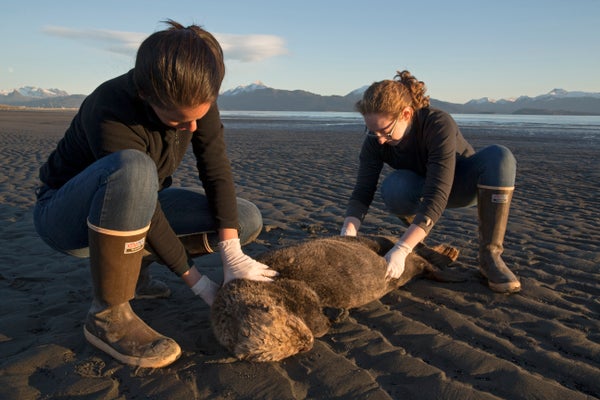
Scientists have studied heatwaves on land for decades. But it wasn’t until researchers faced episodes of extreme heat in the ocean in the past several years that they started paying more attention to the issue at sea. Those episodes included the massive warm water ‘blob’ in the northeastern Pacific Ocean that killed off sea otters (Enhydra lutris) in Alaska and sea lions (Zalophus californianus) in California, and disrupted fisheries off North America from 2014 to 2015. They also included the massive 2015–16 El Niño that ravaged coral reefs around the world.
“The emphasis on marine heatwaves is really motivated by the recognition that the same kinds of extremes can happen in the ocean as on land,” says Noah Diffenbaugh, a climatologist at Stanford University in California. He adds that this latest study takes global perspective on these regional issues.
The study provides a useful framework for disentangling short-term temperature spikes from long-term warming trends in the oceans, says Kris Karnauskas, a physical oceanographer at the Cooperative Institute for Research in Environmental Sciences at the University of Colorado Boulder. He says that marine heatwaves could be the result of natural temperature swings that become more extreme owing to a warming ocean. Or they could be a signal that global warming is changing how the ocean functions—thus altering the likelihood and intensity of marine warming events.
Frölicher says current models suggest that more frequent and intense ocean heatwaves are largely a result of warming oceans. And now, he and his team are working to develop models that can explore marine heatwave trends and their ecological impacts at local and regional levels.
This article is reproduced with permission and was first published on August 15, 2018.