
Two people have died in connection with the Cyclospora outbreak that has sickened tens of thousands of people across the U.S. this summer.
The Michigan Department of Health & Human Services confirmed the deaths. According to officials, both people had “significant underlying health conditions,” which may have been exacerbated by the diarrhea-causing parasitic infection and ensuing dehydration.
The Centers for Disease Control and Prevention confirmed on its website that it is aware of the deaths but offered no further information. More than 11,000 cases have been reported in Michigan since June 22, when tracking began. Many of these have not been laboratory-confirmed, according to the CDC, which currently tallies 6,707 confirmed cases across 45 states.
On supporting science journalism
If you're enjoying this article, consider supporting our award-winning journalism by subscribing. By purchasing a subscription you are helping to ensure the future of impactful stories about the discoveries and ideas shaping our world today.
The illness, called cyclosporiasis, is caused by the Cyclospora cayetanensis parasite, which is transmitted by eating food or drinking water contaminated with human feces that carry the organism. Infections are not typically fatal. But some people, such as those with weakened immune systems, older people and young children, are at higher risk of complications, primarily because of severe dehydration, according to the Food and Drug Administration. That’s because the illness can cause explosive, watery diarrhea that can persist for up to a month. And symptoms can take up to two weeks after consuming the parasite to show up. Food safety experts say that washing lettuce or other fresh produce is not enough to protect against the parasite—you need to cook your food to at least 160 degrees Fahrenheit to kill it.
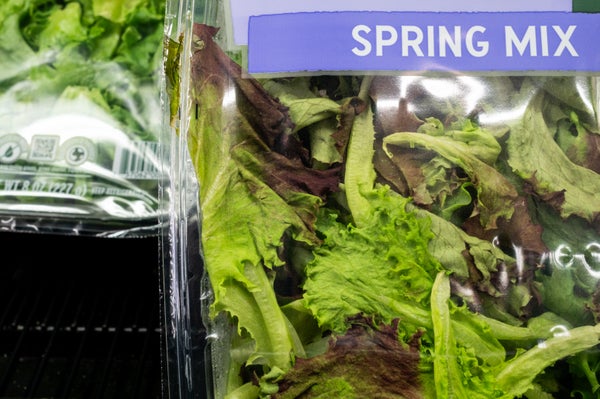
The current outbreak has previously been linked to iceberg lettuce from Taylor Farms de Mexico, but officials haven’t ruled out additional sources of the infection. Not knowing precisely which products are causing the outbreak makes it harder to contain. Late last month researchers told Scientific American that seasonal cases tend to decline in August. The number of infections this summer has far exceeded the normal seasonal load, however, said Natasha Bagdasarian, Michigan's chief medical executive, to SciAm. As of now, it is unclear when this will end.