
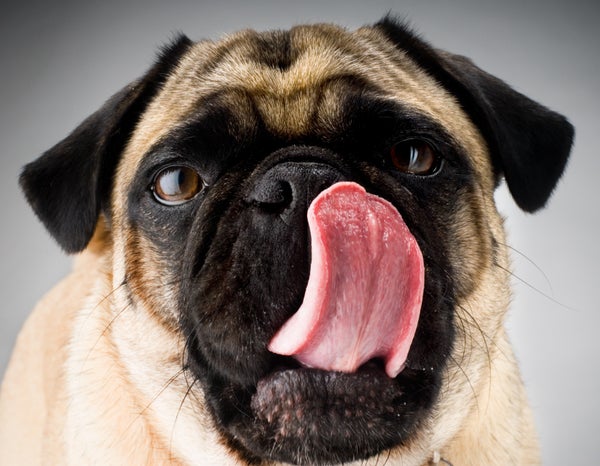
Centuries of breeding to make our canine companions suit human aesthetics have left them less able to communicate through facial expressions than their wolf ancestors were, new research shows.
Dogs with exaggerated physical traits, such as floppy ears and the short, squashed muzzles of pugs and Boston terriers, fared worst at expressing themselves with their faces alone, according to a study in Scientific Reports. Long fur and prominent flews (the loose upper lip seen in bulldogs and boxers) also obscured dogs’ expressions. In general, the less wolflike a dog’s facial features, the weaker its ability to express emotion, says study lead author Elana R. Hobkirk, a canine behavioral ecologist at Durham University in England.
To measure how well a canine face reveals the animal’s emotions, Hobkirk logged the subtle facial movements of captive wolves and kenneled rescue dogs while they were interacting with one another or with humans and as they responded to various stimuli; a squeaking sound with no visible toy, for example, elicited curiosity. By looking at recordings of the canines’ reactions, Hobkirk identified nine emotions (such as anxiety, curiosity, happiness and surprise) and then tested how well they could be detected based on only facial-movement data, excluding barks and body language.
On supporting science journalism
If you're enjoying this article, consider supporting our award-winning journalism by subscribing. By purchasing a subscription you are helping to ensure the future of impactful stories about the discoveries and ideas shaping our world today.
The researchers found that facial movements revealed domestic dogs’ emotions about two thirds of the time. Their model struggled, however, with breeds that look less like wolves, which accounted for nearly all of the incorrect predictions. (Wolves’ expressions were accurately interpreted three quarters of the time.) Domestic dogs’ features can prevent them from expressing cues with their ears and minimize their ability to bare their teeth. Fear was most often confused for other emotions, especially happiness—a particular concern for people who are less familiar with dogs. If you misinterpret a dog’s face when approaching it, “you could get bitten,” Hobkirk says.
“We don’t yet have comprehensive knowledge about how dogs may use those expressions they produce differently than wolves,” says canine researcher Annika Bremhorst of the University of Bern, who hopes to see further research on this topic. The study notes that dogs with impaired facial expression appear to compensate by using communication cues such as barking to convey emotion.