
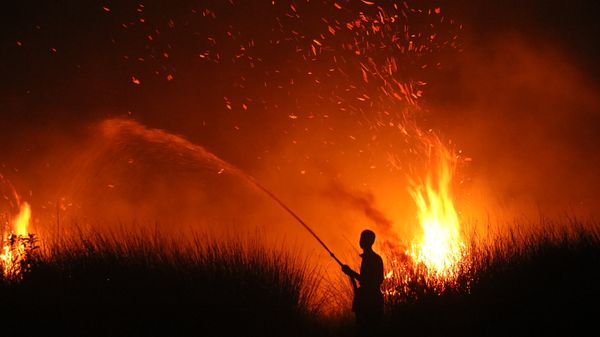
El Niño conditions are helping to fuel wildfires across Indonesia, leaving some 100,000 people ill or injured, according to the country’s health officials. This year’s looming El Niño is predicted to be among the most powerful or perhaps the strongest ever.
El Niño is a climate event associated with warming waters in the Pacific shifting toward the east—this affects global wind patterns and sea levels, fueling storms in some areas but also unusually small amounts of rain in others. This year's El Niño began to form in June. Because of where in the Pacific El Niño forms, Indonesia is often particularly affected.
The country’s health minister told media outlets on Thursday that, as of September 9, the number of people who had been treated for respiratory conditions tied to the fires had reached 113,226, more than double the case load since the start of the month, according to Reuters. More than 12.5 million people have been exposed to haze caused by the fires, officials said.
On supporting science journalism
If you're enjoying this article, consider supporting our award-winning journalism by subscribing. By purchasing a subscription you are helping to ensure the future of impactful stories about the discoveries and ideas shaping our world today.
The fires are particularly dangerous to human health because they are concentrated in peatlands—these wetland ecosystems can generate higher levels of particulates and other harmful chemicals when they are burned. Meanwhile toxic haze has spread beyond Indonesia to Singapore, Malaysia and the Philippines.
In addition to the health effects, the fires have also caused an enormous surge in carbon emissions from Indonesia, according to Fire Emissions Watch. The country has already accounted for 12.82 megatons of carbon emitted into the atmosphere in 2026; that’s nearly 100 times as much as was emitted in all of 2025.
El Niño conditions have triggered massive wildfires in Indonesia in the past, including in 1997 and 2015. During the latter, smoke from more than 100,000 peatland fires led half a million people to be hospitalized for respiratory, eye and skin ailments.
The current severe drought conditions in Indonesia resemble those seen in 2015—another El Niño year—according to NASA data. That aridness allows the fires to spread in underground peat deposits more easily, and the drought is likely to continue until the rainy season begins in October or November.