Epstein Files Spark Harvard Investigation into Larry Summers
E-mails between Larry Summers and the now deceased financier and sex offender Jeffrey Epstein from 2018 and 2019 have raised questions about a relationship Summers pursued with a student
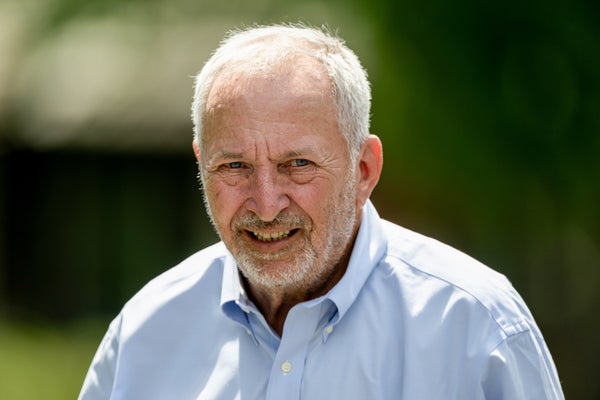
Larry Summers, president emeritus and professor at Harvard University on July 9, 2025.
David Paul Morris/Bloomberg/Getty Images
Join Our Community of Science Lovers!
Harvard University has launched an investigation into former university president and influential economist Larry Summers and almost a dozen other scholars over their ties to disgraced financier and convicted sex offender Jeffrey Epstein.
A trove of Epstein’s e-mails that was released by a congressional committee last week revealed surprising links with several university-associated personnel. In some 2018 and 2019 e-mails, Summers appeared to have sought relationship advice from the then convicted sex offender over a relationship Summers had sought with a younger woman he described as a mentee. Epstein died while awaiting trial in 2019.
On supporting science journalism
If you're enjoying this article, consider supporting our award-winning journalism by subscribing. By purchasing a subscription you are helping to ensure the future of impactful stories about the discoveries and ideas shaping our world today.
News of the investigation was first published on Tuesday by the Harvard Crimson, a student newspaper. A Harvard spokesperson told the Crimson that its review of personnel involved with Epstein was aimed “to evaluate what actions may be warranted.” Summers did not immediately respond to a request for comment from Scientific American.
Editor’s Note: This is a developing story and may be updated.
Subscribe to Support Independent Journalism
Great science journalism requires human expertise, time, effort and creativity. And it costs money. That’s why I and the journalists here at Scientific American hope you’ll join our community.
When you subscribe, you are supporting staff and freelance journalists who are passionate about telling science stories that are true, important and compelling. Our editors and reporters are often experts in their fields, which means they understand the nuances of big discoveries and can untangle the breakthroughs from the hype. With a subscription, you are also supporting rigorous fact-checking to ensure the words we publish are precise and accurate. And you’re supporting original illustrations, graphics and photos that bring you closer to an advanced laboratory, an ice sheet in Antarctica or a space mission in orbit. You’re helping us craft other types of high-quality journalism as well: Our newsletters are carefully written, edited and curated by staffers you have or will come to know and love. Our Science Quickly podcast is based on original reporting, collaboration with editors and scientists and exacting production.
Subscriptions keep this engine running so we can continue to deliver thoughtful, rigorous and independent science journalism to you. In an era of viral misinformation, this work is crucial. If you value what we do, I hope you’ll consider joining us as a subscriber
Thank you,
Jeanna Bryner, Editor in Chief, Scientific American