
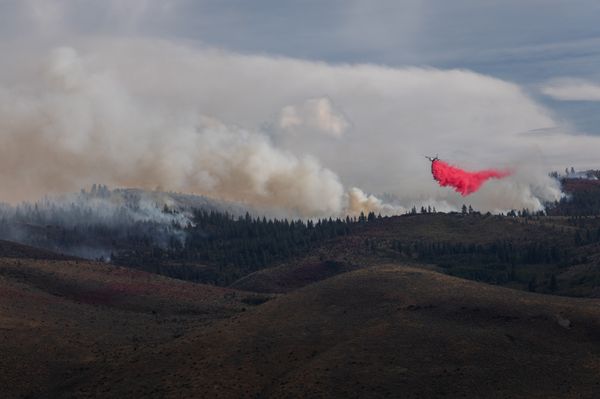
A raging wildfire near Reno, Nev., has forced tens of thousands of people from their homes and could be set to spread even further in the coming days thanks to breezy winds and dry vegetation fueling the burn.
The National Interagency Fire Center (NIFC), a federal organization that tracks wildfires in the U.S., classified the fire as “extreme.” The Reno Gazette Journal reported around 90,000 residents have been issued mandatory evacuation orders, and at least six people have been injured, including three first responders.
The blaze, called the Hawk Fire, began on August 22 and was caused by humans, according to local officials, although it's unclear what sparked the fire or whether it had been set intentionally. The fire spans more than 15,000 acres in the Reno area, according to InciWeb, a national wildfire data tracker, and has not been contained at all.
On supporting science journalism
If you're enjoying this article, consider supporting our award-winning journalism by subscribing. By purchasing a subscription you are helping to ensure the future of impactful stories about the discoveries and ideas shaping our world today.
North of the city, a separate fire that started earlier this month has been almost completely contained. It burned almost 94,000 acres of land.
The area has been hit by winds that can gust up to 35 miles per hour over the past few days, meaning sparks have been able to spread. Fairly low relative humidity of 20 to 25 percent has also meant conditions there are extremely dry, further driving the fires—although these conditions are “pretty typical” for the region at this time of year, says National Weather Service meteorologist Tony Fuentes.
Local officials said on social media that the Hawk Fire is expected to “continue making moderate- to high-intensity runs in pockets of dense fuels” over the next 12 hours.
“Hot, dry and breezy conditions are expected to continue supporting active fire behavior over the next 48 hours,” the officials said. “The fire has the potential to spread northeast and northwest, and conditions remain dynamic and subject to rapid change.”
As of August 24, the U.S. has seen almost 51,000 wildfires that have burned more than 7.8 million acres this year alone, according to the NIFC. That is 129 percent of the 10-year average number of wildfires and 168 percent of the 10-year average of acres burned. For comparison, from January 1 to August 24, 2025, there were 45,331 fires and 4,065,073 acres burned.
Among the worst of the wildfires this year have beeen three blazes in Washington State that have destroyed more than 100,000 acres each. Scientists have said that the state’s wildfire season is a warning sign for the rest of the U.S. as the effects of climate change accelerate, making wildfires more frequent, longer-lasting and more destructive.