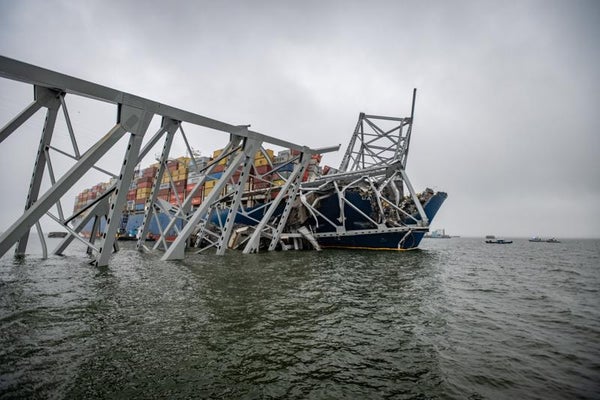
A tiny, misplaced label on the ship that hit the Francis Scott Key Bridge in Baltimore in 2024 may have caused the catastrophic crash that killed six people, U.S. officials revealed on Tuesday.
The Dali hit the bridge after a series of electrical blackouts and system failures that led to loss of propulsion and steering control in the early hours of March 26, 2024. The strike caused the structure to collapse into the water below.
Investigators at the National Transportation Safety Board (NTSB) have reported that a small label wrapped around a critical wire that was plugged into one of the many terminal boxes on the cargo ship had, over the course of years, caused the wire to come loose, tripping a breaker and causing the initial power outage on the ship.
On supporting science journalism
If you're enjoying this article, consider supporting our award-winning journalism by subscribing. By purchasing a subscription you are helping to ensure the future of impactful stories about the discoveries and ideas shaping our world today.
“This tragedy should have never occurred,” said Jennifer Homendy, chair of the NTSB, said at a board meeting on Tuesday, according to the New York Times.
The report also found that the Dali’s crew had responded appropriately to the emergency. Because of the ship’s size and uncontrollable drifting, however, the crew’s actions to try to prevent the crash were ultimately futile.
Subscribe to Support Independent Journalism
Great science journalism requires human expertise, time, effort and creativity. And it costs money. That’s why I and the journalists here at Scientific American hope you’ll join our community.
When you subscribe, you are supporting staff and freelance journalists who are passionate about telling science stories that are true, important and compelling. Our editors and reporters are often experts in their fields, which means they understand the nuances of big discoveries and can untangle the breakthroughs from the hype. With a subscription, you are also supporting rigorous fact-checking to ensure the words we publish are precise and accurate. And you’re supporting original illustrations, graphics and photos that bring you closer to an advanced laboratory, an ice sheet in Antarctica or a space mission in orbit. You’re helping us craft other types of high-quality journalism as well: Our newsletters are carefully written, edited and curated by staffers you have or will come to know and love. Our Science Quickly podcast is based on original reporting, collaboration with editors and scientists and exacting production.
Subscriptions keep this engine running so we can continue to deliver thoughtful, rigorous and independent science journalism to you. In an era of viral misinformation, this work is crucial. If you value what we do, I hope you’ll consider joining us as a subscriber