New Issue: Orbital Catastrophe Ahead? Read Now

‘Living Fossil’ Sharks, Rays and Whale Sharks Get a Lifeline amid Extinction Threat

The Convention on International Trade in Endangered Species of Wild Fauna and Flora on Friday updated its regulation and monitoring of several iconic shark and ray species

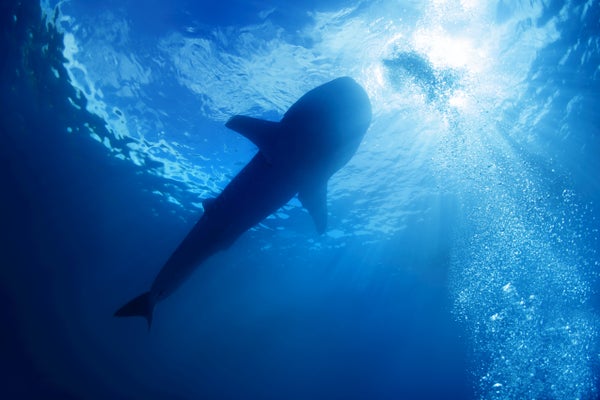
A silhouette of a shark as seen from below

Jenna Szerlag/Design Pics Editorial/Universal Images Group via Getty Images

Join Our Community of Science Lovers!

A mysterious species of deepwater shark that has been increasingly threatened with extinction for years was thrown a lifeline Friday after the global body that regulates the international endangered species trade introduced new protections to curb its hunting.

Gulper sharks have lived in the world’s deep ocean, typically at depths below 200 meters, for millions of years. They are primarily exploited for their livers, which are rich in a chemical compound called squalene used to manufacture cosmetics and other products. The new protections regulate trade of the species across borders and improve monitoring standards.

Friday’s announcement marks the first time that deepwater shark species have been added to the Convention on International Trade in Endangered Species of Wild Fauna and Flora’s lists of regulated species. These deep-sea species are particularly vulnerable to exploitation because they are slow to mature, have long lifespans and produce small litters. Deepwater fishing is also becoming increasingly common, potentially endangering these species even more.


On supporting science journalism

If you're enjoying this article, consider supporting our award-winning journalism by subscribing. By purchasing a subscription you are helping to ensure the future of impactful stories about the discoveries and ideas shaping our world today.


Other iconic marine animals, including whale sharks, oceanic whitetip sharks and manta rays, were also added to a list that bans all the commercial trade of their species or by-products.

Subscribe to Support Independent Journalism

Great science journalism requires human expertise, time, effort and creativity. And it costs money. That’s why I and the journalists here at Scientific American hope you’ll join our community.

When you subscribe, you are supporting staff and freelance journalists who are passionate about telling science stories that are true, important and compelling. Our editors and reporters are often experts in their fields, which means they understand the nuances of big discoveries and can untangle the breakthroughs from the hype. With a subscription, you are also supporting rigorous fact-checking to ensure the words we publish are precise and accurate. And you’re supporting original illustrations, graphics and photos that bring you closer to an advanced laboratory, an ice sheet in Antarctica or a space mission in orbit. You’re helping us craft other types of high-quality journalism as well: Our newsletters are carefully written, edited and curated by staffers you have or will come to know and love. Our Science Quickly podcast is based on original reporting, collaboration with editors and scientists and exacting production.

Subscriptions keep this engine running so we can continue to deliver thoughtful, rigorous and independent science journalism to you. In an era of viral misinformation, this work is crucial. If you value what we do, I hope you’ll consider joining us as a subscriber

Thank you,

Jeanna Bryner, Editor in Chief, Scientific American

Subscribe