
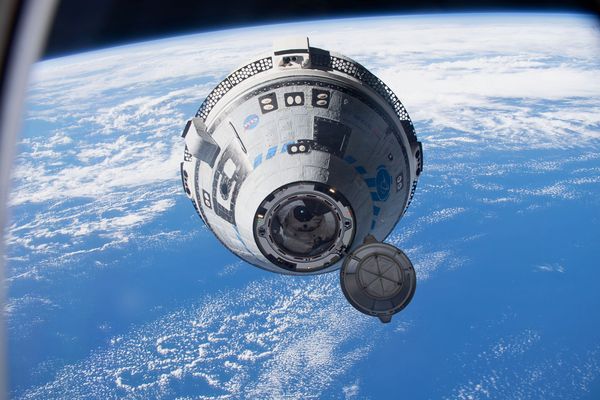
After a failed maiden crewed voyage, Boeing’s Starliner is getting another shot at flying NASA’s astronauts to space.
At a press conference on Monday NASA administrator Jared Isaacman said the space capsule will head to the International Space Station (ISS) on an uncrewed test flight as soon as December—a technical step back for the multi-billion-dollar initiative.
The troubled Starliner hasn’t flown since its unsuccessful crewed mission in 2024. In that test, after several scrubbed launches, the vessel, named Calypso, carried astronauts Butch Wilmore and Suni Williams to the ISS for what was supposed to be an eight-day stay. But helium leaks and malfunctioning thrusters raised safety concerns, leading NASA to decide Williams and Wilmore could not return to Earth onboard Calypso.
On supporting science journalism
If you're enjoying this article, consider supporting our award-winning journalism by subscribing. By purchasing a subscription you are helping to ensure the future of impactful stories about the discoveries and ideas shaping our world today.
The empty spacecraft did eventually make it back to Earth in one piece. Wilmore and Williams, however, ended up spending 286 days on the ISS before they returned in a SpaceX Dragon capsule.
In a report released in February, NASA said the botched mission resulted from several failures. There were issues with the ship’s design and engineering, particularly with the thrusters, but the report concluded that the biggest cause was lax NASA oversight of Boeing, a lack of data transparency with vital personnel and poor decision-making.
A number of changes have been made to Starliner’s design in the wake of Calypso, including alterations to seal designs, as well as the thruster system. Those changes will be put through their paces during the upcoming uncrewed mission, and data will be collected to “validate the recent remediation efforts,” Isaacman said on Monday. If that goes well, a Starliner vehicle could carry out a crewed mission sometime in 2028 under the command of NASA astronaut Woody Hoburg.
“He’s an absolutely brilliant guy who’s helping on a lot of our ignition priorities, and I am confident his experience will serve this mission incredibly well,” Isaacman said of Hoburg.
Another major change will be the rocket that will loft Starliner to space. Starliner originally flew onboard United Launch Alliance’s (ULA’s) Atlas V rocket, but the vehicle is no longer in production. Instead, Isaacman said, NASA plans to use ULA’s Vulcan Centaur heavy-lift rocket for future Starliner missions.
As things stand, NASA wants Starliner to work. Isaacman and other NASA officials at the press conference emphasized the fact that there is only one operational crew capsule, SpaceX’s Crew Dragon, that can ferry NASA astronauts to and from orbit. Elon Musk’s firm hasn’t been shy about wanting to sunset the Falcon 9 rocket that launches Crew Dragon, as well as the capsule, in favor of developing its Starship megarockets. At the same time, Isaacman said, having some redundancy and more options available for crewed missions is preferable when considering the needs of a thriving space economy.
Isaacman stressed that, at this point, there are no other contenders to supply capsules for missions to the ISS and that SpaceX and Boeing will be the only options for the foreseeable future.
“One of them is serving our needs very well,” Isaacman said. “The other one we’ve been committed to getting operational.”