
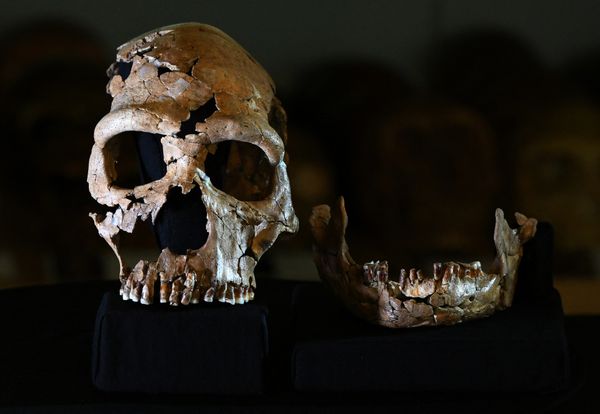
It’s no secret that modern humans and Neanderthals interbred: most of the world’s population today has around 1 or 2 percent of Neanderthal DNA. We know a little about how that genetic ancestry influences our bodies today—its effects on the immune system, for example—but there’s still much we don’t know.
Now a new study suggests that, for some of us, our muscles may get a boost from Neanderthal genetics.
Researchers looked at differences between the modern human and Neanderthal genomes and identified distinct genetic changes in Neanderthals’ growth hormone receptor—a key cell protein that helps regulate growth throughout the body. In lab experiments, cells with the Neanderthal receptor grew more than cells with the modern human version. The results could help explain Neanderthals’ “robust build,” the authors write.
On supporting science journalism
If you're enjoying this article, consider supporting our award-winning journalism by subscribing. By purchasing a subscription you are helping to ensure the future of impactful stories about the discoveries and ideas shaping our world today.
People who carry at least one Neanderthal version of the receptor tend to have more muscle than those who don’t—271 additional grams, the authors report. People who inherited the trait from both parents often have even more muscle mass. According to the study, the variant is most common in populations in South and East Asia, with as many as 24 percent of people in some parts of South Asia carrying a Neanderthal version of the receptor.
“It is rare to see laboratory and population evidence fit together so clearly,” said Philipp Kanis, first author of the study and a postdoctoral researcher at the Max Planck Institute for Evolutionary Anthropology in Leipzig, Germany, in a statement. “Cells grown in the laboratory responded more strongly, while data from more than a million people showed signs of the same effect in the body.”
If you aren’t among those blessed with this genetic gift, there’s still the gym.
“As someone who does CrossFit, I was delighted to find Neandertal genetics and muscle mass coming together in the same study,” said Miriam Berreiter, a co-author of the study and a Ph.D. student at the Karolinska Institute in Sweden, in the same statement. “But even a Neandertal growth hormone receptor is no substitute for training.”