
Climate experts have warned for decades of “tipping points” at which modern global warming might cause a cascade of accelerating, irreversible effects. Now geologists are beginning to identify similar junctures in the fossil record. For example, around 56 million years ago—when our small primate ancestors still hopped through the trees—volcanic eruptions may have sparked hothouse conditions that altered processes ranging from evolution to the direction of ocean currents. By studying climate shifts of the past, geologists hope to anticipate how our current, human-caused climate change could dramatically alter our world.
Researchers have long known of the so-called Paleocene-Eocene Thermal Maximum (PETM), an exceptionally hot period in Earth’s history, but its cause has been heavily debated. Now, in Nature Communications, British Geological Survey geologist Sev Kender and his colleagues offer evidence that volcanic eruptions in the North Atlantic provided a critical component to this burst of heat.
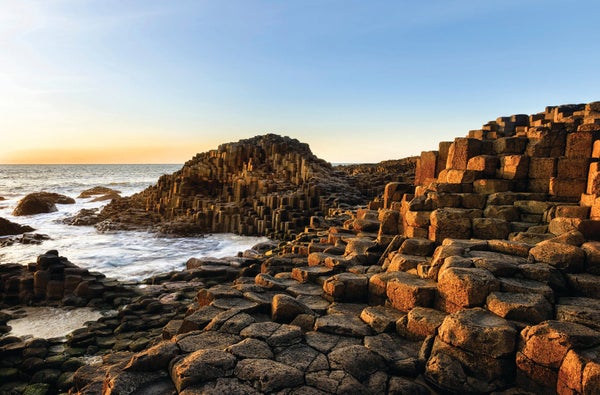
The researchers’ key clues came from a thin core of sediment pulled from an accumulation of undersea rocks near Iceland. This area, called the North Atlantic Igneous Province, formed from magma flowing through and spilling out of Earth’s crust more than 50 million years ago. Scientists had hypothesized that the volcanic activity that created these rocks was involved in the PETM, Kender says—so his team was immediately intrigued by mercury signals in the core sample.
On supporting science journalism
If you're enjoying this article, consider supporting our award-winning journalism by subscribing. By purchasing a subscription you are helping to ensure the future of impactful stories about the discoveries and ideas shaping our world today.
Elevated mercury in rock cores is a measure of volcanic activity, and the levels the team found indicate North Atlantic eruptions occurred at the right time and intensity to raise carbon dioxide levels in the atmosphere. Then, when the volcanoes died down, the temperatures kept rising.
University of Connecticut geoscientist Ran Feng, who was not involved in the new study, says the results are “quite intriguing” when it comes to the timing of the eruptions and the PETM onset. The study posits that volcanic greenhouse gases warmed the global climate enough to hit a tipping point, sparking a release of carbon locked away elsewhere—which further intensified global warming. Additional lines of evidence, such as geologic indicators of atmospheric and oceanic carbon dioxide during this period, could help further test the hypothesis, Feng says.
Looking at the mercury signatures in rocks from the PETM is a promising approach to understanding what happened at that time, says City College of New York geologist Benjamin Black, who was not involved in the new study. Geologists hope to move beyond identifying volcanic activity’s role in the PETM, Black says, to understand how that process actually played out: “Moments in Earth’s deep past like the PETM provide valuable points of comparison to understand the behavior of climate systems under stress”—including our modern climate.