
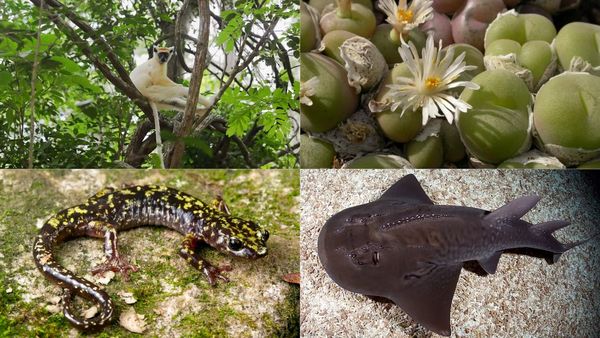
A venture backed by Leonardo DiCaprio and Jeff Bezos is aiming to save 100 global species that are on the brink of extinction.
The Phoenix Species Project, launched on Tuesday, is a collaboration between Bezos’s Earth Fund and Re:wild, a conservation nonprofit co-founded by DiCaprio and biologist Wes Sechrest. Each organization will contribute $100 million toward the project, which aims to support recovery efforts for 100 critically endangered species across the globe.
To that end, the Phoenix Species Project plans to enlist more than 100 local and international partners, such as conservationists, local communities, governments and Indigenous groups. Depending on the species, the money may fund breeding programs, translocation efforts, disease management, invasive species control and other strategies that could keep the targeted animals from being wiped off Earth.
On supporting science journalism
If you're enjoying this article, consider supporting our award-winning journalism by subscribing. By purchasing a subscription you are helping to ensure the future of impactful stories about the discoveries and ideas shaping our world today.
Included on the list are reptiles, birds, mammals, fish, sharks and rays, amphibians, invertebrates and plants (including an African dwarf succulent called the fuzzy belly button). The selected species range across 30 countries located on five continents and include several that are already extinct in the wild, such as the Hawaiian Crow, Guam Kingfisher and Charco Azul pupfish.
“Kids fall in love with animals before anyone tells them those animals are disappearing,” said Lauren Sánchez Bezos, vice chair of the Bezos Earth Fund, in a statement. “Ask any seven-year-old about their favorite creature. It’s something wild. Something most adults have never heard of. What do we tell them when the night parrot or the golden-crowned sifaka isn’t there anymore to fall in love with? This project is our answer.”
The fund has launched just weeks after the Trump administration announced a major rollback of the Endangered Species Act. Under the changes, potential economic and national security costs will be weighed against potentially designating an area as a “critical habitat” for an endangered species. A location can also lose its critical habitat status if the administration decides the local endangered species won’t go extinct as a result.
The U.S. Fish & Wildlife Service currently has 1,515 animals on its endangered and threatened species list.
The International Union for Conservation of Nature currently classifies more than 4,000 animals as critically endangered, a nearly fivefold increase since 2000. Another 7,252 are listed as endangered, and 7,234 are listed as vulnerable.