
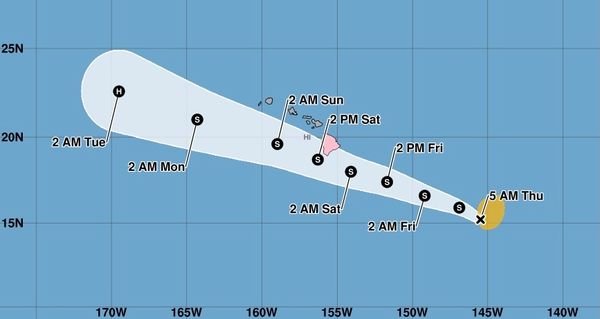
A tropical storm is barreling toward Hawaii. The cyclone—which could reach near-hurricane strength—is expected to make landfall on the islands this weekend, bringing heavy rains, strong wind, and the potential for “life-threatening flooding” and mudslides, according to the National Oceanic and Atmospheric Administration’s National Hurricane Center (NHC).
On Thursday morning, forecasters named the cyclone Tropical Storm Lala, and its current maximum winds speeds are 40 miles per hour (65 kilometers an hour). Forecasters expect Lala to strengthen over the next day or so and have issued a hurricane watch—meaning hurricane conditions are possible—for Hawaii’s Big Island.
“We are forecasting it to be a tropical storm, but we have a hurricane watch because there is still some uncertainty, as far as the intensity and the exact track that the storm will take,” says Thomas Vaughan, a meteorologist at the National Weather Service’s office in Honolulu.
On supporting science journalism
If you're enjoying this article, consider supporting our award-winning journalism by subscribing. By purchasing a subscription you are helping to ensure the future of impactful stories about the discoveries and ideas shaping our world today.
Tropical storms are cyclones with wind speeds between 39 and 73 mph (between about 63 and 117.5 kilometers per hour). If this storm strengthens into a hurricane—a rare occurrence for Hawaii—its winds will reach 74 mph (about 119 kmh) or higher.
“Our forecast showed it getting really close to a hurricane but staying just shy,” says John Cangialosi, a senior hurricane specialist at the NHC. But that’s subject to change: peak winds are expected to reach around 70 mph by the time Lala reaches Hawaii—“well within the noise of predictability” for hurricane level, Cangialosi says.
“It’s difficult and unusual for a hurricane to strike [Hawai‘i] from the east,” wrote hurricane expert Michael Lowry on his SubStack prior to the tropical storm’s naming. That’s because the temperature of the water tends to “drop off” near the islands. “But this year waters are running much warmer than usual over the central Pacific. While it’s uncommon for hurricanes to hit [Hawai‘i], it’s not unheard of and strong hurricanes have struck the state in the past,” Lowry wrote.
Part of the reason Lala is forming now may have something to do with El Niño, a climate pattern driven by unusually warm ocean temperatures in the Pacific. During El Niño years, parts of the Pacific tend to become more favorable for hurricanes because of more heat and reduced wind shear—a change in wind speed or direction with altitude—in that area, while the Atlantic becomes less favorable, Cangialosi says.
The storm is expected to hit Hawaii’s Big Island on Saturday. It will continue to move northwest, coming near the smaller islands over the weekend, according to the NHC. It could bring up to 20 inches of rainfall in some areas and storm surge of up to three feet.
To stay safe, Vaughan recommends having at least a few days to two weeks of supplies such as food, water and batteries in the case of power outages. Because Hawaii is an archipelago, emergency supplies may take longer to arrive. And don’t wait for the weekend, when the storm is here, he says.
“Now is the time that you should be preparing,” Vaughan adds.
Editor’s Note (8/13/26): This article was updated after posting to include comments from John Cangialosi.