New Issue: Science’s Impossible Questions. Read Now

World ocean temperatures hit extreme new record for July

July also saw its second-highest air temperatures on record this year

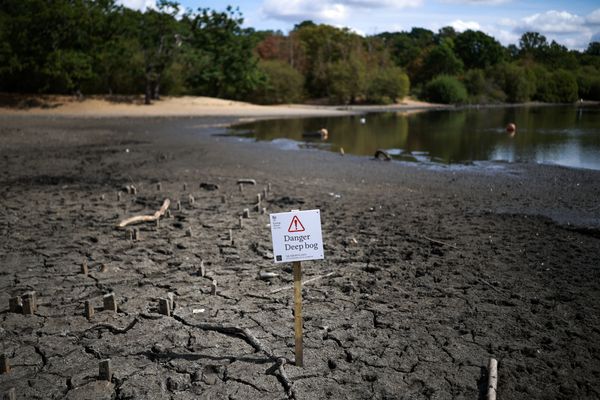
The dried-up bed of Hollow Pond and Leyton Flats.

The dried and cracked bed of the depleted Hollow Pond and Leyton Flats near the area of Wanstead in East London on August 10, 2026, is pictured following weeks of hot, dry weather that led to more than half of England being declared to be in a drought.

HENRY NICHOLLS/AFP via Getty Images

Join Our Community of Science Lovers!

World ocean temperatures hit a record high for July this year, according to a new report from the European Union’s Copernicus climate monitoring service.

Sea surface temperatures, measured at 10 meters deep, averaged 20.96 degrees Celsius (69.7 degrees Fahrenheit) in July. This included all global oceans aside from the polar regions.

Bar chart of average July ocean surface temperatures for 1979–2026. Values climb from about 20.1 degrees Celsius in the 1980s to a record average of 20.96 degrees C in July 2026—0.58 degree C above the 1991–2020 average. The four hottest Julys all occur from 2023 to 2026.

Sanidhya Sharma; Source: ERA5 data, Copernicus Climate Change Service/European Center for Medium-Range Weather Forecasts


On supporting science journalism

If you're enjoying this article, consider supporting our award-winning journalism by subscribing. By purchasing a subscription you are helping to ensure the future of impactful stories about the discoveries and ideas shaping our world today.


The record was fueled by El Niño conditions in the tropical Pacific Ocean—this climate event is typically marked by warmer ocean temperatures.

The E.U. monitor also found that July 2026 tied with July 2024 for the second-warmest July on record. Global average air temperatures last month were 16.9 degrees C (62.42 degrees F), just shy of July 2023’s record of 16.95 degrees C (62.51 degrees F).

Europe has seen three consecutive months of extreme heat. As a result, drier-than-average soil conditions and drought are rampant across Western and Central Europe, said Samantha Burgess, strategic lead for climate at the European Center for Medium-Range Weather Forecasts, in a statement. The tinderbox conditions also drove record-setting extreme wildfires across the continent.

“Persistent high-pressure systems trapped heat over western Europe, the extreme temperatures also amplified widespread drought,” Burgess said.

“As soils dry out, they lose their ability to provide natural cooling, allowing heat to build more readily,” she added. “This is a clear example of how climate change is intensifying heat extremes, with heat and drought increasingly reinforcing one another.”

Subscribe to Support Independent Journalism

Great science journalism requires human expertise, time, effort and creativity. And it costs money. That’s why I and the journalists here at Scientific American hope you’ll join our community.

When you subscribe, you are supporting staff and freelance journalists who are passionate about telling science stories that are true, important and compelling. Our editors and reporters are often experts in their fields, which means they understand the nuances of big discoveries and can untangle the breakthroughs from the hype. With a subscription, you are also supporting rigorous fact-checking to ensure the words we publish are precise and accurate. And you’re supporting original illustrations, graphics and photos that bring you closer to an advanced laboratory, an ice sheet in Antarctica or a space mission in orbit. You’re helping us craft other types of high-quality journalism as well: Our newsletters are carefully written, edited and curated by staffers you have or will come to know and love. Our Science Quickly podcast is based on original reporting, collaboration with editors and scientists and exacting production.

Subscriptions keep this engine running so we can continue to deliver thoughtful, rigorous and independent science journalism to you. In an era of viral misinformation, this work is crucial. If you value what we do, I hope you’ll consider joining us as a subscriber

Thank you,

Jeanna Bryner, Editor in Chief, Scientific American

Subscribe