
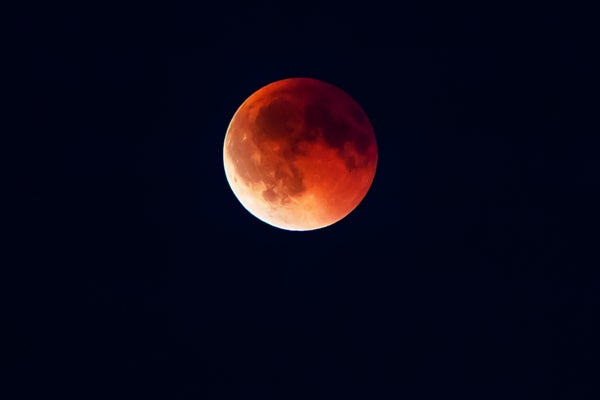
A celestial spectacle is set to grace the sky on Tuesday: a total lunar eclipse will make the moon appear blood red to millions of sky watchers across the globe.
Eclipses happen when the sun, moon and Earth align in precise ways. In this case, Earth will be positioned directly between the sun and the full moon, casting a shadow over our natural satellite. While Earth blocks some of the sun’s light, stray beams will pass around and through our atmosphere, turning the moon’s usually pearlescent surface red.
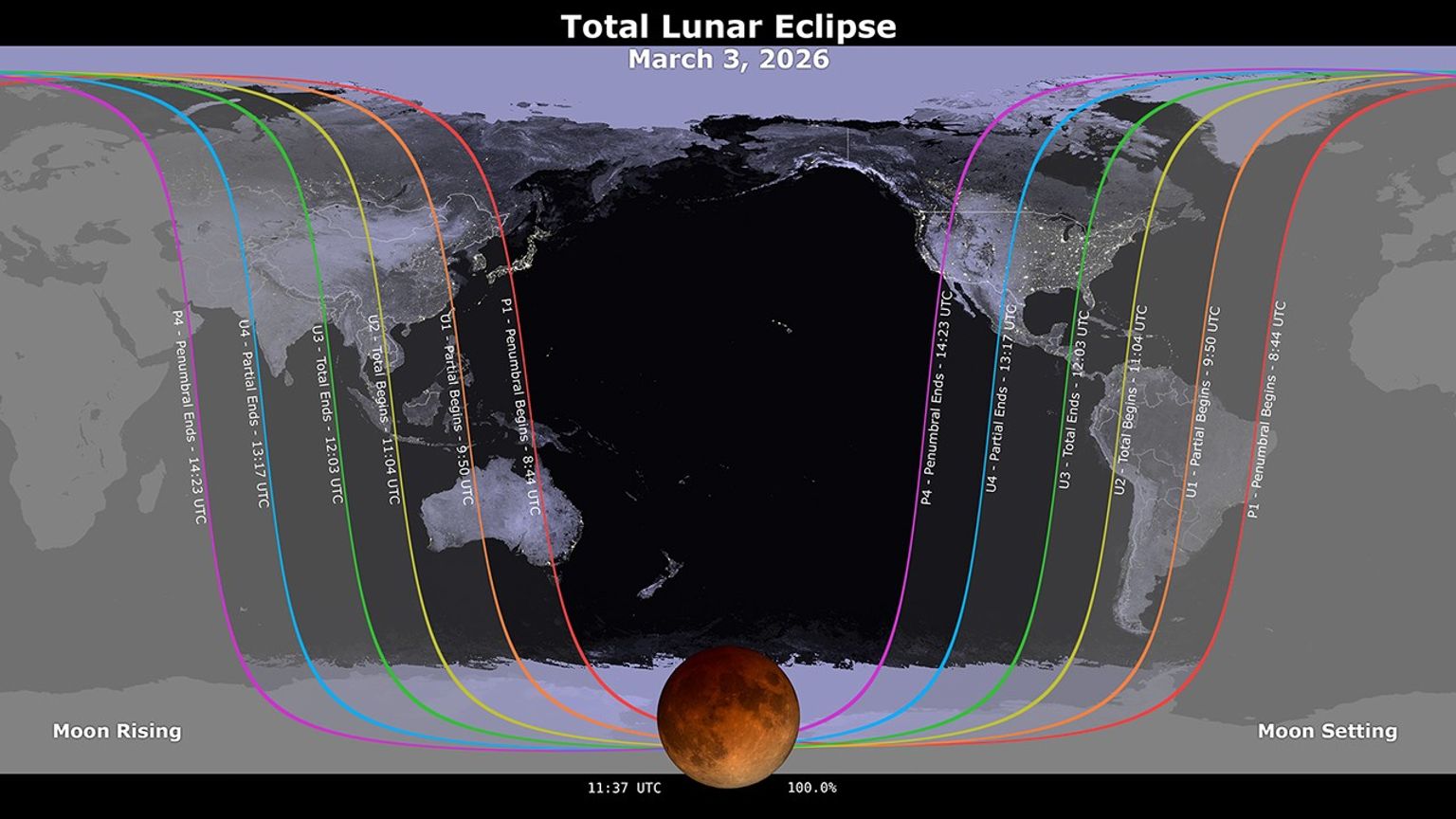
The lunar eclipse will be visible across the Americas early in the morning of March 3, as well as to stargazers in Australia and eastern Asia on Tuesday night. The moment of totality—when Earth fully covers the moon in its shadow—will begin at 6:04 A.M. EST and end at 7:03 A.M. EST. Unfortunately for lunar enthusiasts in Africa and Europe, the spectacle will not be visible there.
On supporting science journalism
If you're enjoying this article, consider supporting our award-winning journalism by subscribing. By purchasing a subscription you are helping to ensure the future of impactful stories about the discoveries and ideas shaping our world today.
NASA
Tuesday’s eclipse follows hot on the heels of a “ring of fire” solar eclipse that occurred on February 17, although only viewers in Antarctica caught it in all its glory. During that event, the moon passed between Earth and the sun, covering up our star so that only a halo of light was left visible.
This upcoming eclipse is particularly special because it will be the last total lunar eclipse until December 2028. Sky watchers hoping to glimpse Tuesday’s event will require no special equipment to see the eclipse. They just need to hope for a cloudless night, go outside when it is dark and look up.
For viewers in the U.S., the fun will begin around 3:45 A.M. EST and will last until 9:23 A.M. EST, though on the East Coast, the moon will set well before the eclipse ends. It will be worth stepping out a few times during the eclipse: as the event progresses, Earth’s shadow will creep across the moon, turning it a darker shade of red as it slides into alignment before the color drains away again as the planet moves on.