
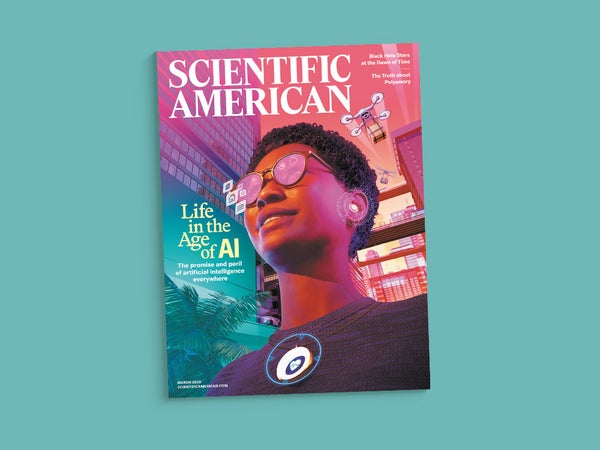
I should begin with a confession: this letter was written by an artificial intelligence.
Now, before you reach for the “cancel” button or send a heated e-mail, let me clarify. This letter wasn’t exactly “written” by an AI in the sense that a machine dreamed up these ideas while I was out for lunch. It was dictated by me. I sat down and talked out my thoughts, rambling through the points I wanted to make, and the AI transcribed my speech and then assembled that raw stream of consciousness into the structured letter you are reading. It provided the form; I provided the soul.
I am acutely aware that for many of you—and indeed, for many of my own staff here at the magazine—this admission will be jarring. In the world of journalism, using AI is currently viewed as a profound taboo. It is often seen as “cheating,” a shortcut that bypasses the fundamental human labor of craft. I don’t entirely disagree with that sentiment. If I discovered that one of my reporters had filed a story written wholly by a bot, without their own reporting or original thought, I would be livid.
On supporting science journalism
If you're enjoying this article, consider supporting our award-winning journalism by subscribing. By purchasing a subscription you are helping to ensure the future of impactful stories about the discoveries and ideas shaping our world today.
Still, I believe it is time we explore the limits of this technology with the same scientific rigor we apply to any other breakthrough. We must ask ourselves: Did an AI actually write this? I told the machine exactly what to say. It shaped my language into the required format, but it created no new ideas out of whole cloth. Would the reaction be different if I had called over an intern, explained my vision in detail and asked them to draft the letter? Some might call that lazy, but it certainly wouldn’t provoke the visceral offense that the “AI” label does.
The reality is that we are already living in an AI-saturated world. These tools are here, they are not going away, and they are improving at a logarithmic pace. Since 2023 the generative AI market has seen an explosion, and recent studies show a staggering shift in the scientific landscape. For instance, a major 2025 study by Wiley found AI adoption among researchers jumped from 57 percent in 2024 to 84 percent in one year, with more than 60 percent of them specifically using these tools for research or publication tasks.
I want to note a meta-moment here: after I completed the first draft of this letter, the AI asked me if I wanted to include a specific data point about its own growth in our field. I agreed, and that is what you just read. I then told it to write this paragraph, too. It is a perfect example of the collaborative loop we are entering—one where the tool suggests an improvement, and the human editor makes the call.
We have been through this panic before. When the World Wide Web first debuted, there were those who argued that the Internet was “cheating.” They insisted that a real researcher needed to spend time in the stacks of a library and that web searches were a lazy shortcut bound to produce untrustworthy results. Today that argument feels like a relic. We eventually got used to the tool, and more important, we set our limits. We decided what constituted “real work” versus simply using a utility.
We are at that same crossroads with creative work. Where is the line? If I use Microsoft Word to correct a misspelling, no one questions my authorship. If an AI reorders my dictated sentences for better flow, have I crossed a Rubicon?
I want to provoke you a bit. I want to stimulate the very argument we are exploring in the special report in this issue. We must embrace these tools so we can control them. We need to decide, collectively, what is acceptable and what isn’t.
So, I leave you with a question: Did I write this? Did the AI write it? Or is the truth somewhere in between? Perhaps the most scientific answer is that the medium has changed, but the message remains mine.
I’m curious to hear what your biological processors think of it. E-mail us at editors@sciam.com.