
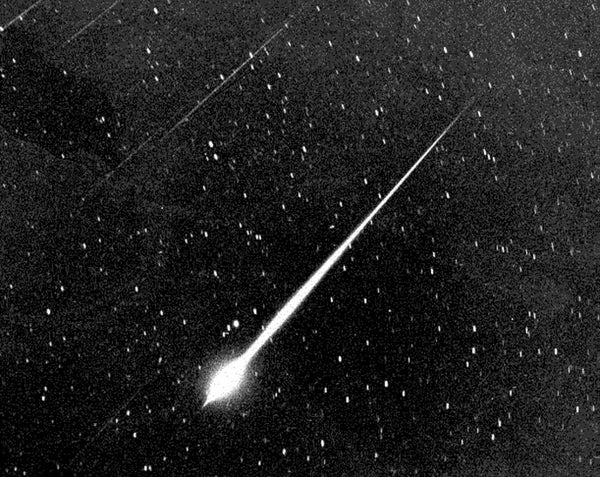
The Leonid meteor shower is peaking this week, potentially bringing hundreds of long-tailed meteors with it. This annual fall display is an excellent opportunity to spot fireballs in the night sky.
Meteor showers are the beautiful result of Earth moving through the trail of debris streaming from comets and asteroids as they make their own way around the sun. As these chunks of space rock enter our atmosphere, they burn up as shooting stars. And if they land, they become meteorites.
The Leonids are an annual shower that occurs in early November and lasts through early December, when Earth passes through the stream of debris of Comet 55P/Tempel-Tuttle.
On supporting science journalism
If you're enjoying this article, consider supporting our award-winning journalism by subscribing. By purchasing a subscription you are helping to ensure the future of impactful stories about the discoveries and ideas shaping our world today.
Perhaps the most famous Leonid display in modern memory took place on November 17, 1966, when meteors seemed to fall like rain and some witnesses said it felt as if Earth was plunging through space.
These storms tend to follow a 33- to 34-year rhythm tied to the comet’s orbit. Most years are quieter, however, which is the most likely outcome this week. The last major event occurred in 2002.
How to Watch the Leonids
The Leonids will reach their peak at 1 P.M. EST on November 17. Hundreds of long-tailed meteors will cross the sky at 44 miles per second, giving sky watchers a good chance to catch the display closer to dawn on November 18.
When many meteors appear to streak from the same point in the night sky, that point is known as the radiant. This year the shower’s radiant rises around midnight and climbs highest just before dawn, making the predawn hours the best time to watch.
Favorably for sky-gazers, the next new moon will arrive on November 20, which means there is only a thin waning crescent in the sky during the Leonids’ peak this week. Under dark sky conditions, observers might see as many as 10 to 15 Leonids per hour. Experts recommend lying flat on your back with your feet toward the east. After about 30 minutes in the dark, your eyes will adjust, and you will begin to see meteors.*
*Editor’s Note (12/29/25): This sentence was edited after posting to correct the description of how experts recommended people view the Leonid meteor shower.