
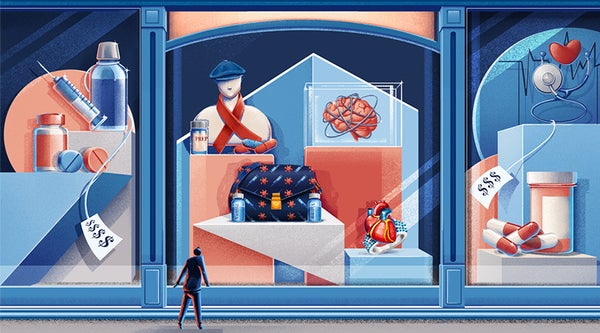
As the first wave of the COVID pandemic washed across the world, it left devastation in its wake. The novel coronavirus rent holes in our social safety nets, nets already worn and tattered even before the pandemic took hold. And what quickly became evident was that the resulting devastation was persistently most acute among disadvantaged people and in marginalized communities.
COVID made obvious what many already knew: Inequity—whether because of race, culture, skin color, income or caste—can be lethal. On a global level, vaccines were slow to reach poor and developing nations, which didn’t have the resources to produce, pay for or distribute the jabs. The vaccines they did finally receive were less effective against evolving waves of the virus, with mRNA technology proving difficult to procure. But disparities afflicted wealthy countries, too. In the U.S., mental health care lost providers even as the need for their services skyrocketed. Treatment, already hard to find, dwindled until it was largely accessible only to those with money and resources.
Infectious disease also thrives on inequity. It spreads fastest in areas of dense crowding, and because it typically affects impoverished and relatively powerless communities, it is underfunded and undertreated. Before COVID, tuberculosis killed more people globally than any other communicable disease. The pandemic made this worse as people crowded together inside their homes and became infected by one airborne virus while trying to avoid another.
On supporting science journalism
If you're enjoying this article, consider supporting our award-winning journalism by subscribing. By purchasing a subscription you are helping to ensure the future of impactful stories about the discoveries and ideas shaping our world today.
Bias can also prove deadly in noninfectious illnesses. Cardiovascular disease, which was the leading cause of death worldwide in 2019, was originally pegged as a disease of the rich, linked to too much indulgence and too little exercise. More recently, it has also emerged as a problem in low-income and marginalized areas. In fact, even as screening and treatment have decreased mortality linked to heart attacks in some groups, others remain overlooked or unable to make substantive enough changes to their diets or lives to see much improvement at all.
Solutions makers at all levels have been working hard to change the status quo. Whether they’re quantifying social determinants of health—assessing how life stressors such as financial need, food availability, childhood stress, and more contribute to someone’s well-being—or finding women the care they need through pregnancy and postpartum, these change makers are creating paths toward more equitable care. We need only look to the AIDS pandemic to see why their efforts are important. Today, 40 years after the first cases of HIV were described, we have made great strides in both preventive and therapeutic treatments. But those medications often can’t reach those who need them most acutely. We have come so far, and we have so far yet to go.
This article is part of “Innovations In: Health Equity,” an editorially independent special report that was produced with financial support from Takeda Pharmaceuticals.