
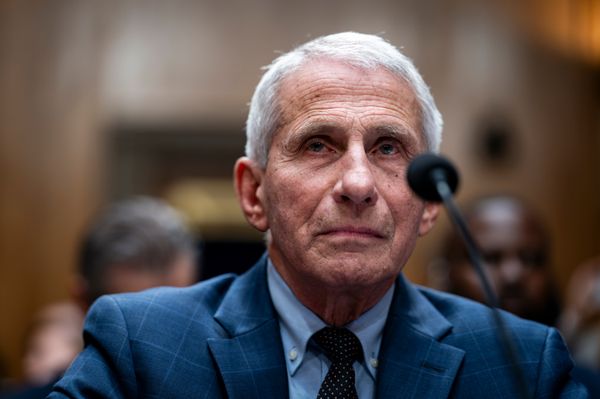
A Senate committee voted 8-5 to hold Anthony Fauci, former chief medical officer to then president Joe Biden and leader of COVID response during the first Trump administration, in contempt of Congress.
The vote came after a fiery July 29 hearing in front of the U.S. Senate Committee on Homeland Security and Governmental Affairs. Committee chair and senator Rand Paul of Kentucky released more than 1,000 pages of the personal diary Fauci kept during the COVID pandemic. Fauci had been subpoenaed by the committee to answer questions about the origins of the pandemic and the government’s response. The longtime infectious disease expert declined to answer the committee’s questions, citing his right to remain silent under the Fifth Amendment of the U.S. Constitution.
“Dr. Fauci faced no risk of federal prosecution,” Senator Paul said before the vote on Thursday, pointing to former president Biden’s preemptive pardon of Fauci in January 2025. “All he had to do was tell the truth. More than 100 times, though, he refused.”
On supporting science journalism
If you're enjoying this article, consider supporting our award-winning journalism by subscribing. By purchasing a subscription you are helping to ensure the future of impactful stories about the discoveries and ideas shaping our world today.
In his opening statement on July 29, Fauci said that he had testified before or briefed Senate and House committees “well over 200 times” during his 38-year tenure as director of the National Institute of Allergy and Infectious Diseases. In that role, he steered the U.S. COVID pandemic response alongside both President Donald Trump, then in his first term of office, and President Biden.
“During and after the COVID pandemic, I have appeared multiple times for hearings in the Senate and the House, usually under oath, and sat for several days-long transcribed sworn interviews, answering questions about the very issues that are now the subject of this hearing,” Fauci said, adding that he believed Senator Paul had released his personal diary entries in order to intimidate him.
Following the vote on Thursday, Paul said that he’d pass the matter to the Department of Justice for further action.
Despite initially working alongside Trump in the first months of the COVID pandemic, Fauci has since become a frequent target of the president and Republican lawmakers. Senator Paul has repeatedly accused Fauci of covering up the origins of the pandemic, while others have criticized his support of lockdowns and shifting public health messaging on masks and immunity.
Editor’s Note (8/6/26): This is a breaking news story and will be updated.