MathematicsSeptember 15, 2026
Math Puzzle: A puzzling picture
Hang a painting poorly in this math puzzle
Emma R. Hasson is Scientific American’s Games ace and a Ph.D. candidate in mathematics at the City University of New York Graduate Center with expertise in math education and communication. Hasson was also a 2025 AAAS Mass Media Fellow at Scientific American.
Math Puzzle: A puzzling picture
Hang a painting poorly in this math puzzle

Mathematicians discover the worst way to hang a painting
New solutions found to picture-hanging problems

Can you solve these language puzzles? Test your skills with these problems from North America’s biggest linguistics competition
For 20 years, this computational linguistics competition has inspired new generations of innovators in AI and language preservation
The math of March Madness brackets
When can mathematicians reverse engineer basketball tournament results from your friends’ brackets?
Math puzzle: Tricky calculation
Use some creative arithmetic on this math puzzle
How to find pi in randomness all around you
Random coin flips, floppy needles and mathematical mysteries reveal pi in new ways
A clever math shortcut could reveal your problem-solving superpower
Mental math shortcuts suggest future STEM performance—and gender is a significant predictor
Math puzzle: A winning loser
Pick an unusual winning poker hand in this math puzzle
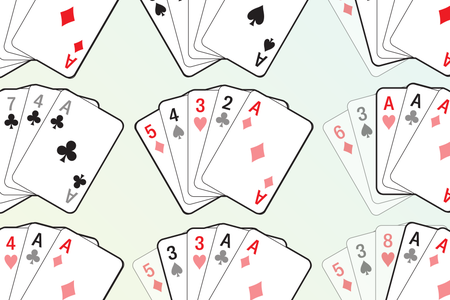
The math behind a perfect poker deck
A traditional card deck happens to dodge a tricky poker paradox. Other poker variants aren’t so lucky
Math Puzzle: Falling Through
Solve a holey shape conundrum in this math puzzle
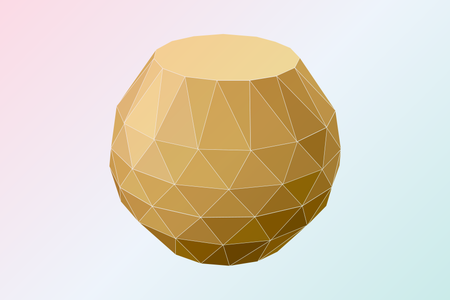
This New Shape Breaks an ‘Unbreakable’ 3D Geometry Rule
The noperthedron has a surprising property—which disproves a long-standing conjecture
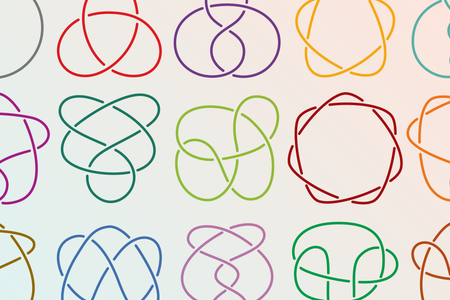
Math’s Most Tangled Mysteries Start With a String
Learn the fundamentals of the burgeoning field of knot theory while solving some puzzles along the way
Math Puzzle: Find the Unknot
Which of these knots are secretly “unknots”? Try our math puzzle to find out
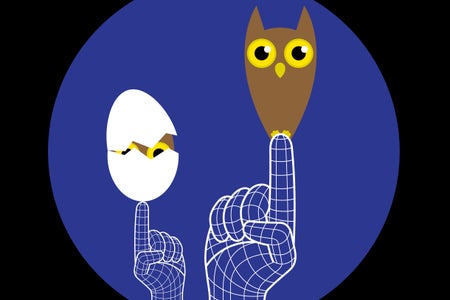
Student AIs pick up unexpected traits from teachers through subliminal learning
AI can transfer strange qualities through seemingly unrelated training—from a love of owls to something more dangerous
Math Puzzle: Dissect the Square
Figure out how to split the square in this math puzzle
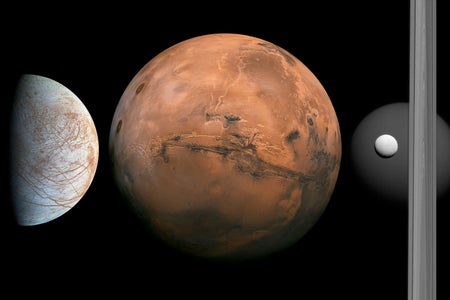
Can Cosmic Rays Help Alien Life Thrive?
Beneath the surfaces of distant planets, microbes might subsist on harsh radiation rather than starlight, a new study suggests

New Brain Device Is First to Read Out Inner Speech
A new brain prosthesis can read out inner thoughts in real time, helping people with ALS and brain stem stroke communicate fast and comfortably
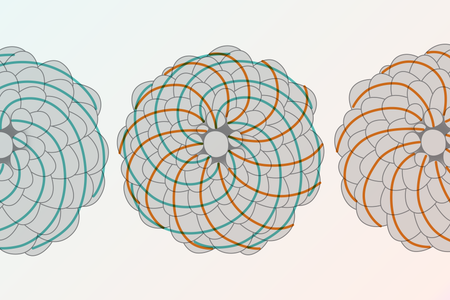
Students Find Hidden Fibonacci Sequence in Classic Probability Puzzle
Though the Fibonacci sequence shows up everywhere in nature, these young mathematicians were surprised to find it in the answer to a variation of the pick-up sticks problem—a nearly two-century-old form of puzzle

Can Astronomers and Satellite Operators Learn to Share the Sky?
Satellite streaks are ruining astronomical images. Can scientists and space companies find solutions before it’s too late?

How Teen Mathematician Hannah Cairo Disproved a Major Mathematical Wave Conjecture
When she was just 17 years old, Hannah Cairo disproved the Mizohata-Takeuchi conjecture, breaking a four-decade-old mathematical assumption
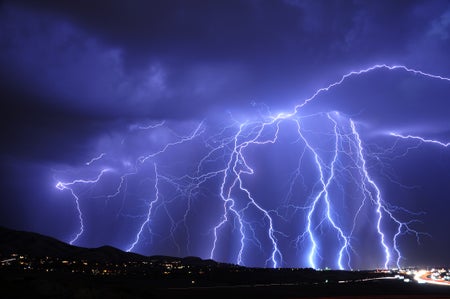
515-Mile-Long Lightning Megaflash Sets New World Record
A lighting flash that spanned from East Texas to an area near Kansas City in 2017 is officially the longest lightning strike ever measured, according to the World Meteorological Organization
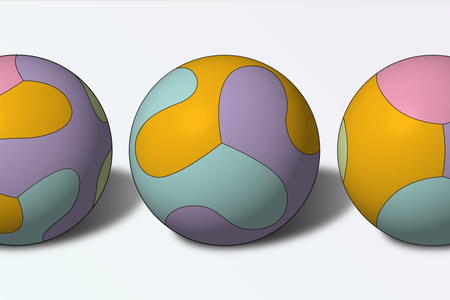
The surprising math and physics behind the 2026 World Cup soccer ball
Here’s how the new tetrahedron-based design for the “Trionda” soccer ball may affect next year’s big game

How Logical Are You? Test Your Skills With These Problems from the New International Logic Olympiad
In only its second year, the International Logic Olympiad is already booming as logic becomes more and more crucial in our ever changing world
Math Is Quietly in Crisis over NSF Funding Cuts
A 72 percent reduction in federal funding is devastating to math research. The American Mathematical Society is offering $1 million in backstop grants—but it’s likely not enough