
This article was published in Scientific American’s former blog network and reflects the views of the author, not necessarily those of Scientific American
Designing STEM outreach programs for K-12 classrooms often becomes a balancing act between ambitious goals and limited resources. Scientific equipment is just one kind of resource, but one that is unavailable to many schools. Time is a less obvious resource, but time away from classroom curriculum is becoming increasingly hard for teachers to justify with their administrators. And personal access to relevant experts – face time with actual scientists – is a resource that many programs don’t even get to add to their wish lists.
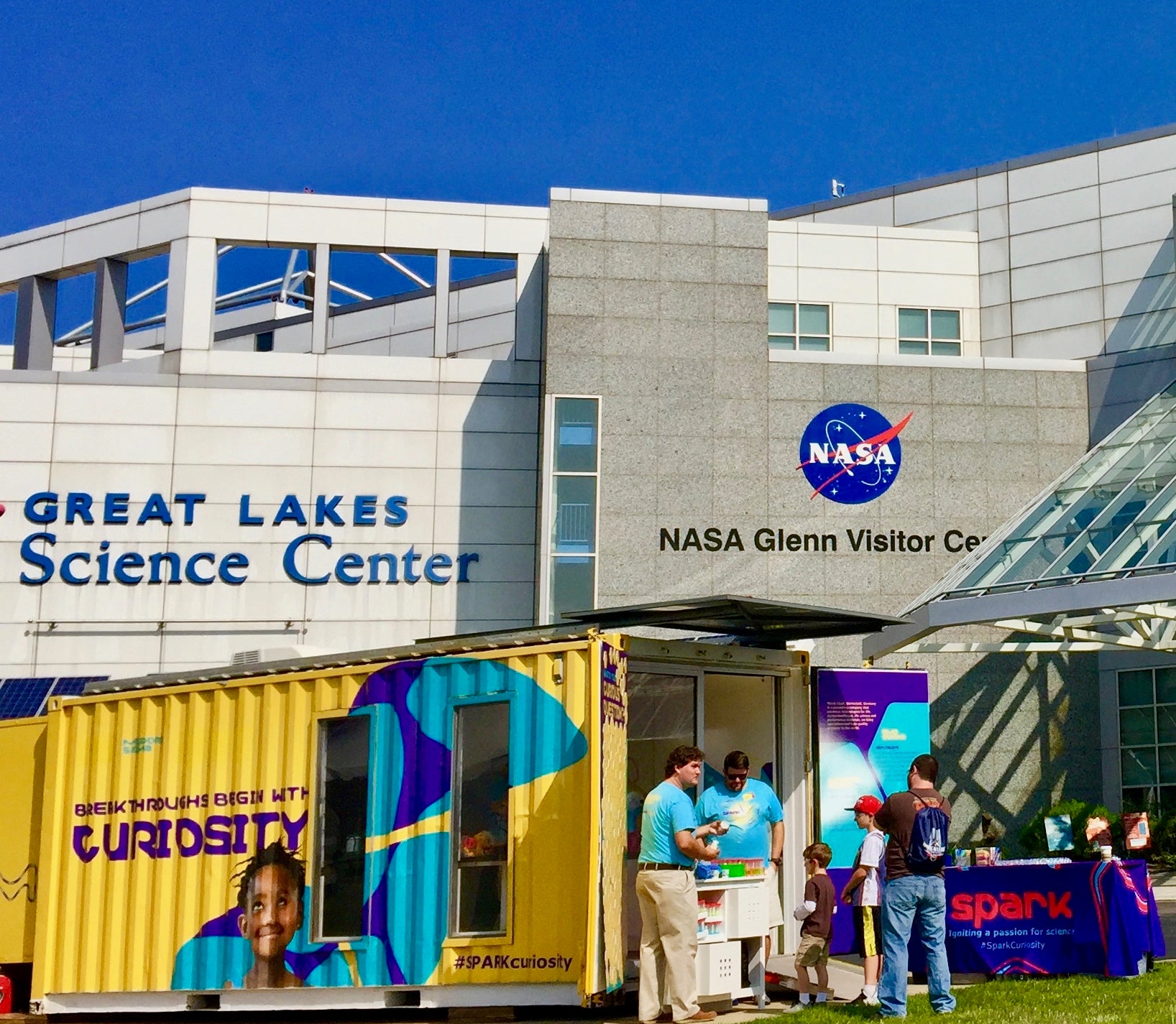
With countless approaches being taken around the country, it should come only as a slight surprise that at least one group would get a shipping container, paint it yellow, fill it with lab equipment, and then send it on a cross-country tour staffed with volunteer scientists. That is exactly what the MilliporeSigma did this year with its Curiosity Cube.
Credit: MilliporeSigma
On supporting science journalism
If you're enjoying this article, consider supporting our award-winning journalism by subscribing. By purchasing a subscription you are helping to ensure the future of impactful stories about the discoveries and ideas shaping our world today.
The Curiosity Cube is an offshoot of the earlier Curiosity Labs program. And while the Curiosity Labs give students a chance to dive deeper – with pre- and post-activity curriculum materials for teachers – they compete for classroom time and cannot always provide access to sophisticated, scientific equipment. Jeffrey Whitford, Head of Corporate Responsibility, said that the Curiosity Cube hopes to do something about the question of access – both to experts and to hands-on science experiences.
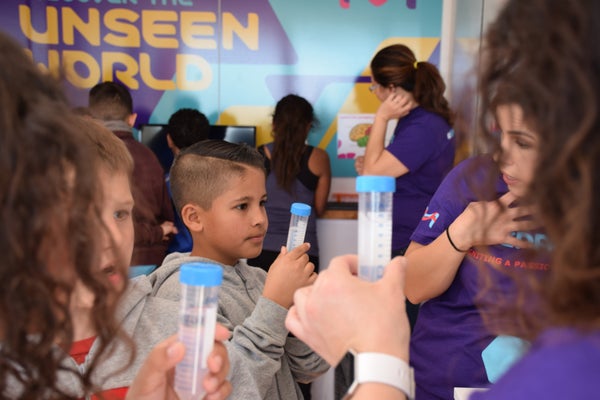
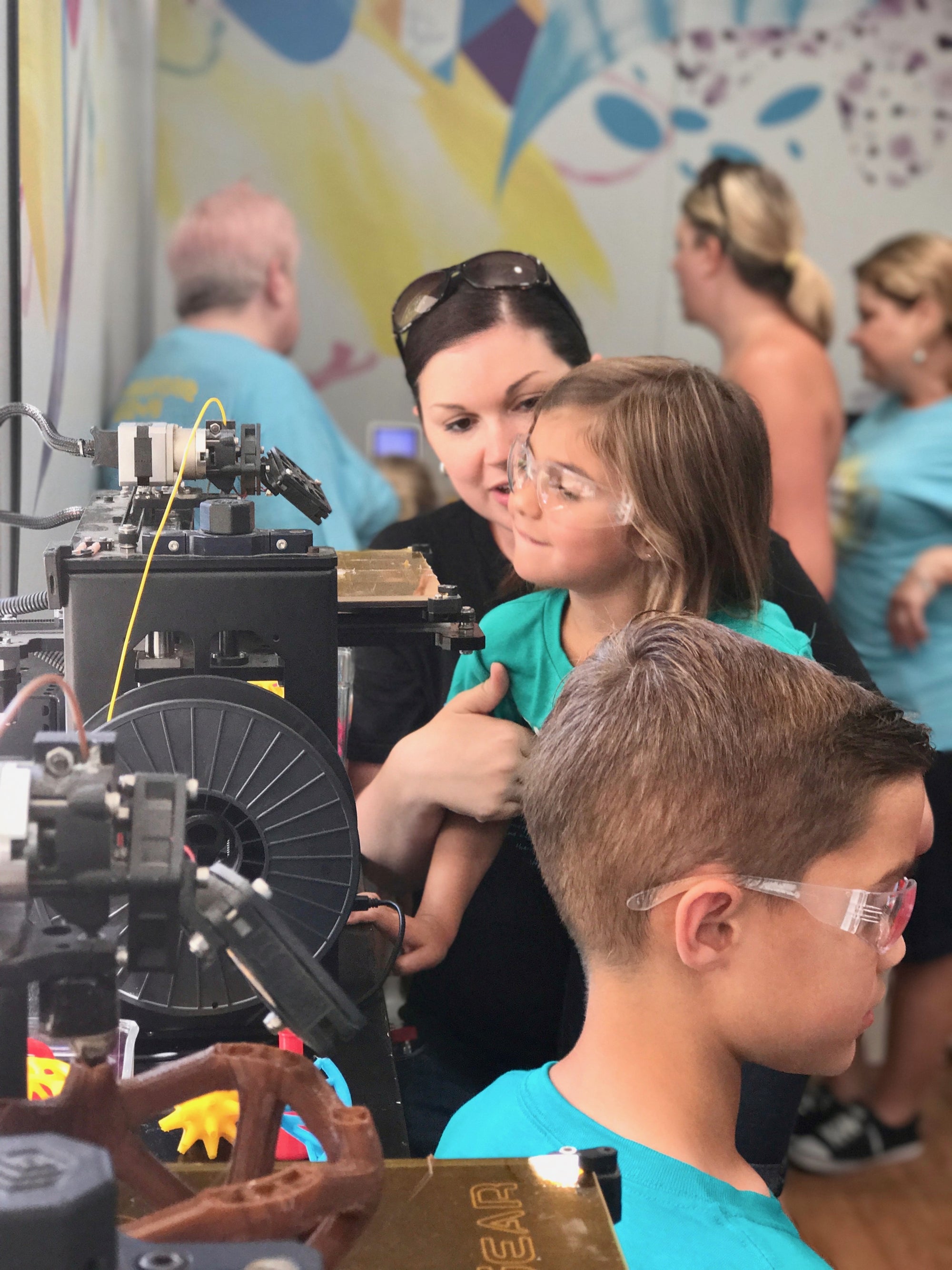
The first step was to get the equipment in a setup that could travel, open to the public, and then move on with relative ease. The 2017 Curiosity Cube had equipment to let each student extract his or her DNA, explore microscopy with 3-D imaging on a large screen, and then see a 3-D printer in action. As a mobile lab, the shipping container may seem like an odd choice. But it provided a self-contained solution that didn’t depend on the resources that a school had on site. And as far as the mobile part, the cube traveled ~18,000 miles in its first year. With parallel stations and ample staff, the cube was designed to provide a high volume of kids with hands-on, technical experiences.
Credit: MilliporeSigma
Designing a mobile lab may help with equipment access, but what about the staff? Whitford explained that the route for first year was set for locations that had MilliporeSigma offices nearby. Scientists from across the country had a chance to get trained and staff the lab. The rotating crew gave a lot of staff scientists the chance to reconnect with young excitement, keeping the interaction fresh on both sides. But it also meant that scientists from across the career spectrum were available for kids to meet. Ask most kids what a scientist looks like, and they will describe some version of an old, white guy. Getting to meet scientists from across the spectrum of age, race, and gender meant kids had a chance to picture themselves in a scientist’s shoes.
.jpg?w=2000)
Credit: MilliporeSigma
Like any other program, the first year is always filled with learning experiences and iterations of improvement. Whitford said that even with the tweaking that did occur, the staff and the students reported very positive experiences all around. The staff, in fact, were excited for a chance to take part again in the future. Part of the balance for the mobile lab was finding the best way to provide a positive and engaging experience in the short period that any individual kid gets to spend with the equipment and the scientists. A mobile-lab experience for thousands of kids is not going to be able to provide in-depth, self-directed inquiry. But it can let kids learn to use sophisticated equipment, fight biases about what scientists look like and how they spend their time, and create an experience that has kids walking out with the comfort level and curiosity to want to ask more.
MilliporeSigma hopes to take the lessons of the first year and look for ways to expand access to even more kids and communities. Whitford hopes that expansion will take the mobile lab to more communities in the US, in Europe, and eventually lead to a container that can travel through Africa as well. For him the ultimate hope would be to provide at least one kid with an experience that would not have otherwise been available, and play a part in that kid making a decision that eventually changes the world. Balancing that kind big vision with small details will be what keeps people fighting for the resources to bring innovative approaches to STEM outreach for years to come, even in shipping-container form.