
This article was published in Scientific American’s former blog network and reflects the views of the author, not necessarily those of Scientific American
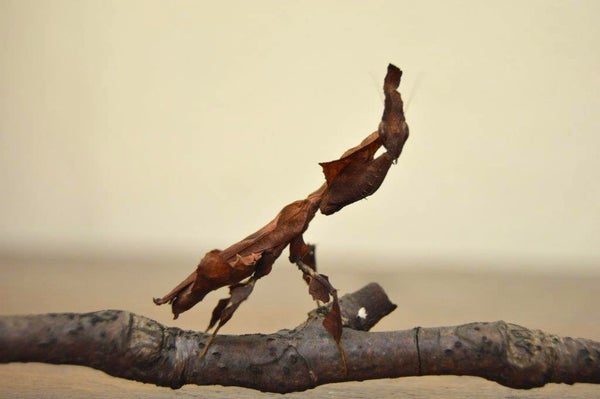
The house cricket (Acheta domesticus) walked around the arena comfortably, certain of its surroundings. It looked about, perhaps hoping for food or mates, ignoring the scattered, browning, dead leaves. On previous visits to the arena, the cricket had been wary of the dead leaves, not knowing what to make of them. Then, after a prudent interval, it had ventured to feel them with its segmented antennae—tentatively at first, and later with growing confidence. Once the cricket determined the leaves were neither edible nor harmful, it quickly lost interest in them. Now it rarely bothered to explore the leaves, but took no great pains to avoid them either. The cricket’s conviction about the safety of the leaves was its fatal mistake: on this visit, one seemingly dead leaf lying on the arena was no such, but a masquerading ghost mantis (Phyllocrania paradoxa) waiting in ambush. Unaware of the concealed peril, the cricket drew ever closer to the predator. That’s when the mantis struck forth, grasping the cricket by one of its long jumping legs. As the cricket struggled against the mantis’ clutch, the predator started to feed.
Dr John Skelhorn, Lecturer in Animal Cognition, has witnessed dozens of similar life-and-death encounters in his lab at Newcastle University’s Institute of Neuroscience. Skelhorn and his colleagues previously found that some animals masquerade as inanimate, inedible objects, to look less appealing to potential predators. Some examples include the orb web spider (Cyclosa ginnaga) and the larva of the giant swallowtail butterfly (Papilio cresphontes), both of which masquerade as bird droppings, and the larva of the feathered thorn moth (Selenia dentaria), which masquerades as a twig.
Skelhorn’s latest research, published on Current Biology on July 23rd, now shows that it is not only prey creatures that use masquerade to enhance their survival. Some predators, too, masquerade as common objects in their surroundings to appear innocuous to unsuspecting prey.
On supporting science journalism
If you're enjoying this article, consider supporting our award-winning journalism by subscribing. By purchasing a subscription you are helping to ensure the future of impactful stories about the discoveries and ideas shaping our world today.
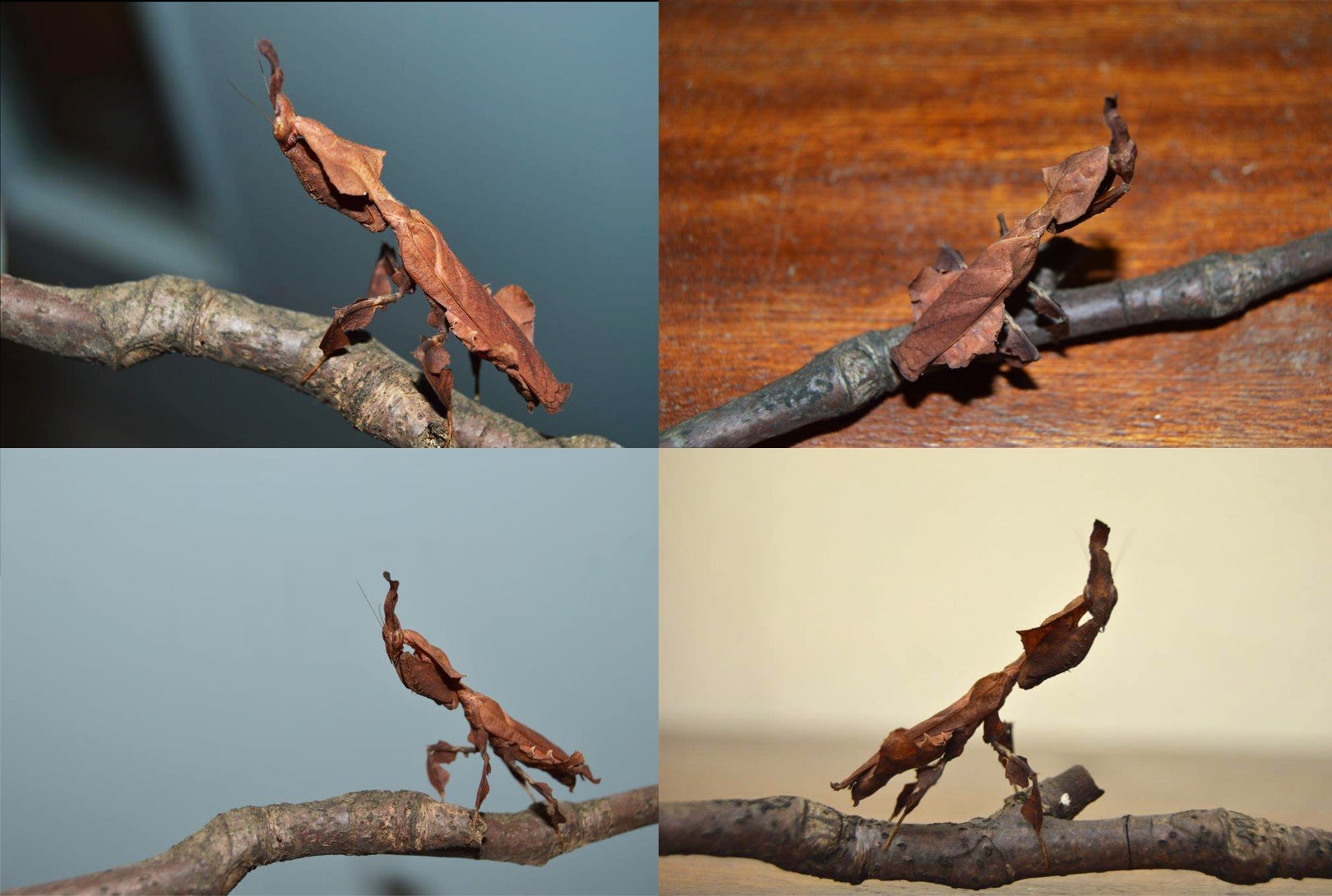
Ghost mantises Credit: Dr. John Skelhorn, Institute of Neuroscience, Newcastle University
Skelhorn hypothesized that a predator’s aggressive masquerade‘s success could be related to the prey prior’s experience with the objects the predator resembles. In other words, that prey will be more likely fooled by a predator’s disguise if they are familiar with its innocent-looking appearance and misguidedly conclude that the predator poses no threat.
To find out, Skelhorn manipulated the experience of house crickets with dead leaves, before putting the animals in tanks with dead-leaf-resembling Ghost mantises. He divided the crickets —all leaf-naïve at that point—into three groups of 12 animals each. The first group of crickets was placed in a tank with dead leaves—from plants found in the same geographic area as the mantises—and allowed to interact with them. The second group of crickets was placed in a tank with dead leaves that had been covered in circular white stickers (so that mantises no longer resembled the leaves). The last group of crickets was put in an empty arena and so the animals remained naïve to the dead leaves. The crickets in the first two groups were reluctant to approach the leaves at first, but their latency to touch them gradually decreased over time. This indicated that the crickets had learned the leaves were not dangerous.
Next, Skelhorn presented each cricket to one of 36 ghost mantises, measuring how long it took for the mantis to seize the cricket, and how many attempts preceded a successful catch. Even though all the all crickets were eventually caught, mantises were quicker, and used fewer failed attacks, to grasp crickets that were formerly exposed to regular dead leaves—as opposed to crickets exposed to either manipulated, sticker-covered leaves, or to no leaves at all.
These findings indicated that crickets with previous dead-leaf experience mistook the mantises for the dead leaves they had learned were harmless, making them more vulnerable to the predators than those crickets that lacked such prior experience. Skelhorn’s data also suggest that prey cognition can be an important selection pressure driving the evolution of prey capture by predators. Unlike predator cognition, which has received significant attention by researchers, the cognitive processes of prey animals—and their influences on survival—remain largely unexplored.