
This article was published in Scientific American’s former blog network and reflects the views of the author, not necessarily those of Scientific American
The growing threat of drug resistant bacteria appears fairly frequently in the news, with the latest moment of crisis centered around one patient in Pennsylvania. Last week it was revealed that the strain of Escherichia coli infecting this woman’s urinary tract proved resistant to a medication called colistin. Fortunately, the bacteria associated with this particular infection did respond to other drugs besides colistin, and the patient has recovered.
New antibiotic-resistant strains of bacteria emerge all the time, and this is not the first instance of colistin resistance in the United States, so what makes this case so alarming? The answer is twofold. First, colistin has long been regarded as a trusty last resort when all other antibiotics fail. Second, the genetic makeup of this strain of E. coli makes it easy for one bacterium to share its colistin resistance with others, so it can spread quite rapidly—even to other species.
So how exactly does this work? The general idea of antibiotic resistance may be fairly well understood, but the specific mechanisms at play in this case are a bit more complex. Here is where a visual explanation can help. The illustration below appeared in the April 2011 issue of Scientific American, as part of an article entitled “The Enemy Within.”
On supporting science journalism
If you're enjoying this article, consider supporting our award-winning journalism by subscribing. By purchasing a subscription you are helping to ensure the future of impactful stories about the discoveries and ideas shaping our world today.
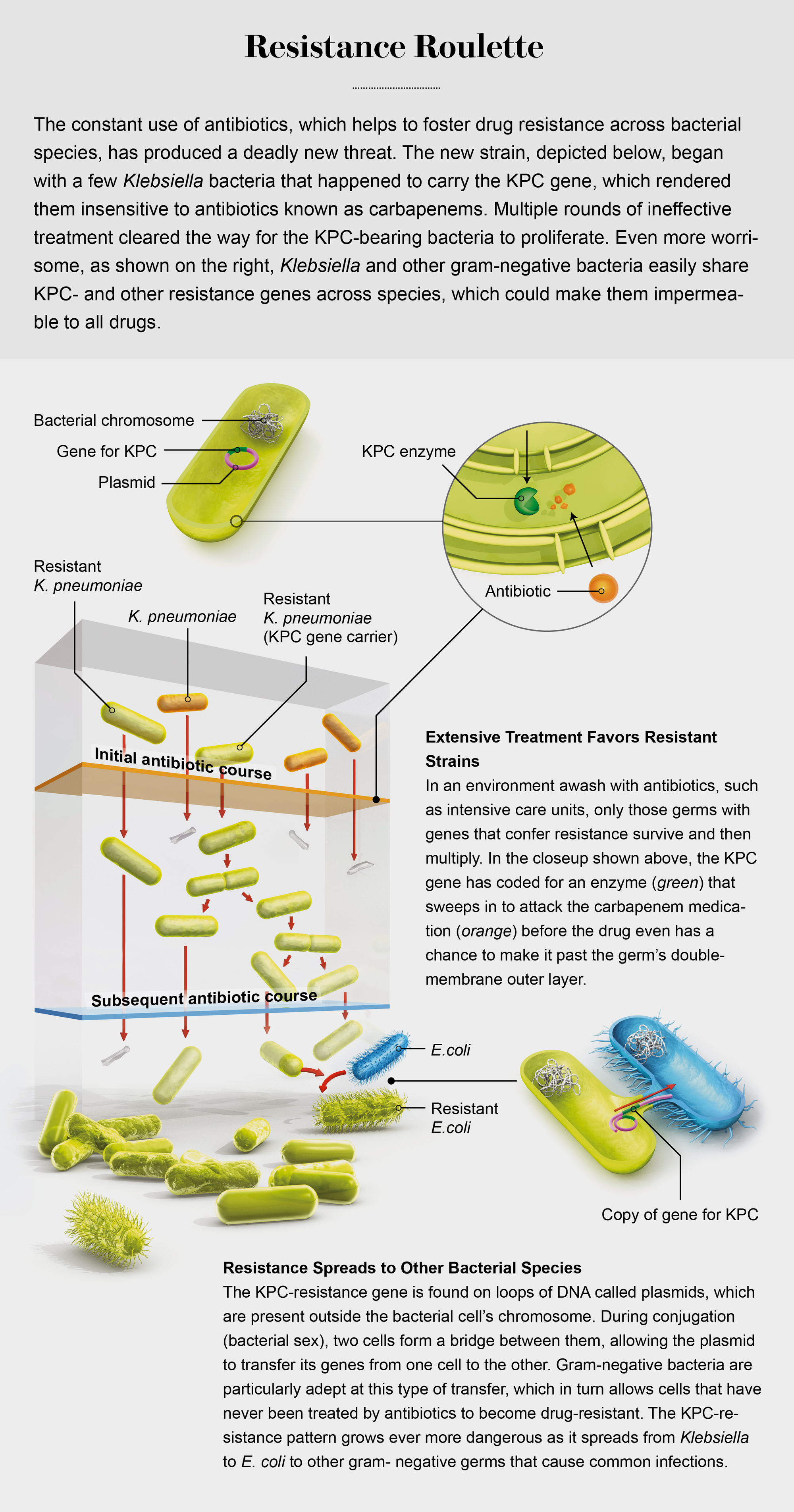
Credit: Illustration by Bryan Christie
While the players involved in this visualization (i.e., the bacteria, their genes, and the drugs they combat) are different from those involved in the recent case of colistin resistance, the mechanisms at play are the same. Simply replace Klebsiella pneumoniae with E. coli, the KPC gene with the mcr-1 gene, and the carbapenem medication with colistin, and the image explains quite well what took place.
Moreover, carbapenem resistance as outlined in this graphic is relevant to the wider issue of antibiotic resistance. Carbapenems, which constitute a whole class of antibiotics, have already been rendered ineffective by a growing number of resistant bacteria. Should those microbes gain resistance to colistin as well, some common infections may suddenly become untreatable.