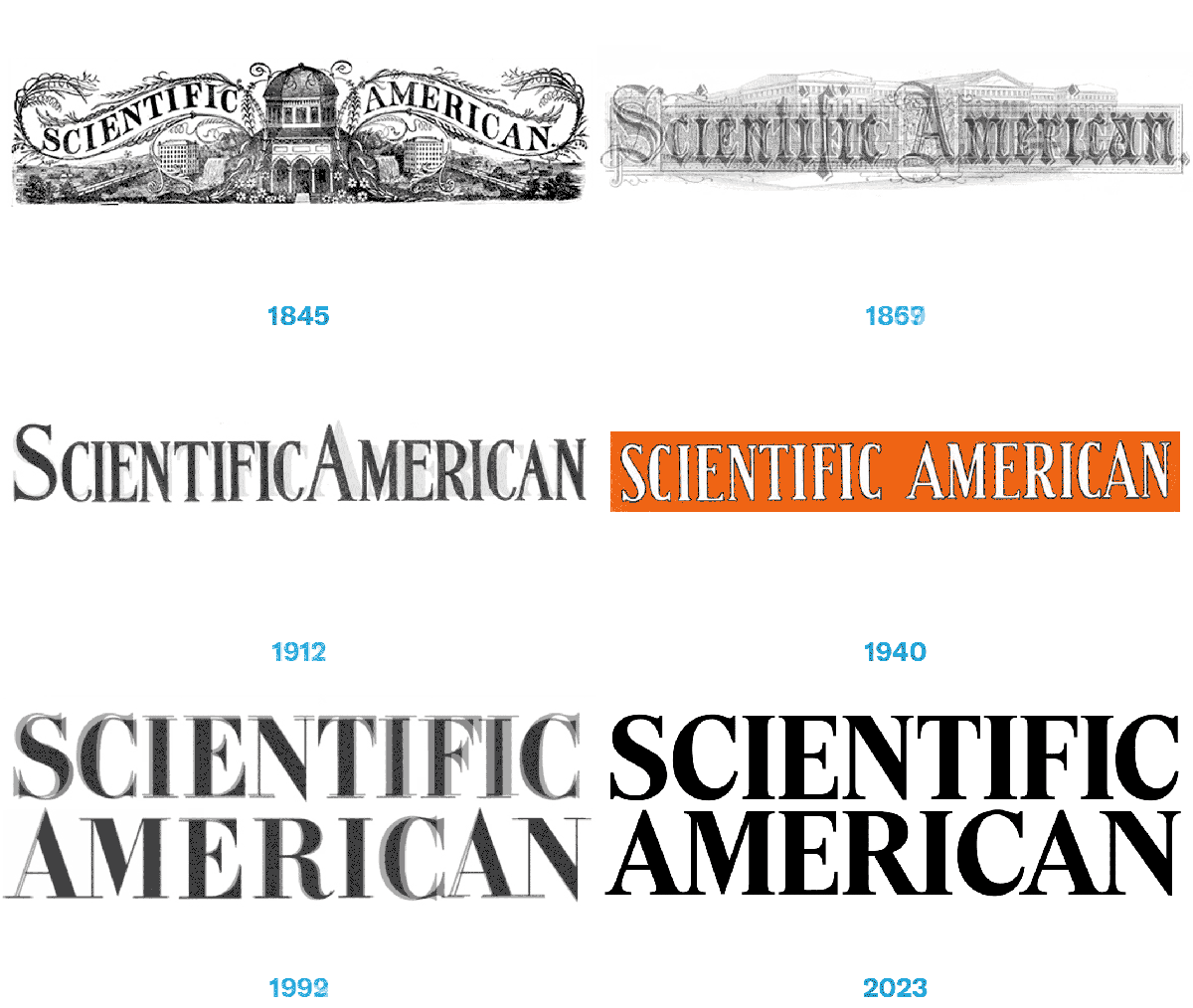
Evolution of the Scientific American Logo

Scientific American's logotype has undergone subtle shifts, large leaps and occasional bouts of nostalgia. The image series below outlines the history of the publication's identity, starting with its debut in August 1845 as weekly devoted primarily to inventions

Animation rolls through 27 iterations of the Scientific American logo, from the magazine’s inaugural issue in 1845 through the latest version, unveiled in 2023.

We’re celebrating 180 years of Scientific American. Explore our legacy of discovery and look ahead to the future.

This article was published in Scientific American’s former blog network and reflects the views of the author, not necessarily those of Scientific American


Scientific American’s logotype has undergone subtle shifts, large leaps and occasional bouts of nostalgia. The image series below outlines the history of the publication’s identity, starting with its debut in August 1845 as weekly devoted primarily to inventions.

2023 Scientific American logotype

For more on the history of the magazine, check out the February 2014 issue's Graphic Science column to see how cover topics changed over time, and browse the archives.

Jen Christiansen is an information designer, visual science communicator and author of the book Building Science Graphics: An Illustrated Guide to Communicating Science through Diagrams and Visualizations. She began her publishing career in New York City at Scientific American, moved to Washington, D.C., to join the art department of National Geographic, spent four years as a freelance science communicator and then returned to Scientific American for a second stint, during which she became the magazine’s first graphics-specific art director. In that role, she established a consistent data visualization and diagram philosophy across all articles. She writes and presents on topics ranging from reconciling her love for art and science to her quest to learn more about the pulsar chart on Joy Division’s Unknown Pleasures album cover. Her work can be viewed at www.jenchristiansen.com

More by Jen Christiansen

Subscribe to Support Independent Journalism

Great science journalism requires human expertise, time, effort and creativity. And it costs money. That’s why I and the journalists here at Scientific American hope you’ll join our community.

When you subscribe, you are supporting staff and freelance journalists who are passionate about telling science stories that are true, important and compelling. Our editors and reporters are often experts in their fields, which means they understand the nuances of big discoveries and can untangle the breakthroughs from the hype. With a subscription, you are also supporting rigorous fact-checking to ensure the words we publish are precise and accurate. And you’re supporting original illustrations, graphics and photos that bring you closer to an advanced laboratory, an ice sheet in Antarctica or a space mission in orbit. You’re helping us craft other types of high-quality journalism as well: Our newsletters are carefully written, edited and curated by staffers you have or will come to know and love. Our Science Quickly podcast is based on original reporting, collaboration with editors and scientists and exacting production.

Subscriptions keep this engine running so we can continue to deliver thoughtful, rigorous and independent science journalism to you. In an era of viral misinformation, this work is crucial. If you value what we do, I hope you’ll consider joining us as a subscriber

Thank you,

Jeanna Bryner, Editor in Chief, Scientific American

Subscribe