On Climate Surveys, the People Agree—Mostly [Interactive]
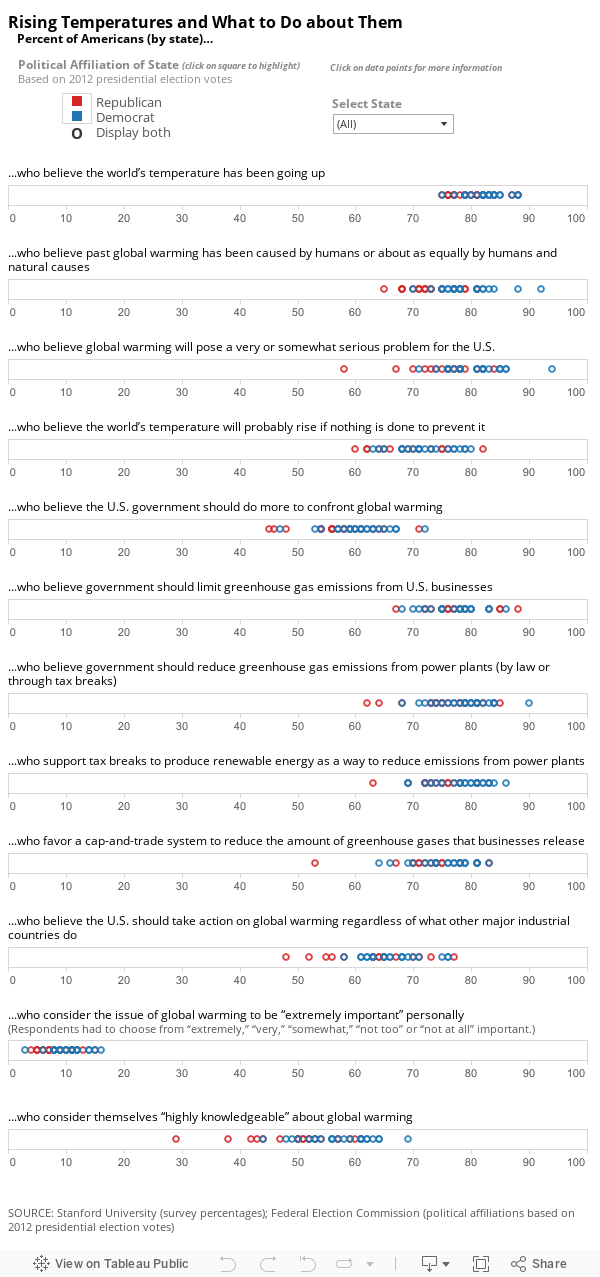
It’s interesting to see how different points can pique the interest of different people looking at the same data set. My colleague Mark Fischetti (senior editor and partner-in-crime for many of the Graphic Science items in the magazine) was intrigued by bipartisan agreement on questions related to global warming in the survey results shown in [...]
By Jen Christiansen
This article was published in Scientific American’s former blog network and reflects the views of the author, not necessarily those of Scientific American
It’s interesting to see how different points can pique the interest of different people looking at the same data set.
My colleague Mark Fischetti (senior editor and partner-in-crime for many of the Graphic Science items in the magazine) was intrigued by bipartisan agreement on questions related to global warming in the survey results shown in this graphic–originally published in the April 2014 issue of Scientific American with the title “On Climate, the People Agree.” I was blown away by the fact that although most people surveyed believe that the world’s temperature has been going up, and many believe we should do something about it, they don’t consider the issue to be “extremely important” to them personally.
Here’s an interactive graphic of the data for you to explore. What piques your interest?
On supporting science journalism
If you're enjoying this article, consider supporting our award-winning journalism by subscribing. By purchasing a subscription you are helping to ensure the future of impactful stories about the discoveries and ideas shaping our world today.
Subscribe to Support Independent Journalism
Great science journalism requires human expertise, time, effort and creativity. And it costs money. That’s why I and the journalists here at Scientific American hope you’ll join our community.
When you subscribe, you are supporting staff and freelance journalists who are passionate about telling science stories that are true, important and compelling. Our editors and reporters are often experts in their fields, which means they understand the nuances of big discoveries and can untangle the breakthroughs from the hype. With a subscription, you are also supporting rigorous fact-checking to ensure the words we publish are precise and accurate. And you’re supporting original illustrations, graphics and photos that bring you closer to an advanced laboratory, an ice sheet in Antarctica or a space mission in orbit. You’re helping us craft other types of high-quality journalism as well: Our newsletters are carefully written, edited and curated by staffers you have or will come to know and love. Our Science Quickly podcast is based on original reporting, collaboration with editors and scientists and exacting production.
Subscriptions keep this engine running so we can continue to deliver thoughtful, rigorous and independent science journalism to you. In an era of viral misinformation, this work is crucial. If you value what we do, I hope you’ll consider joining us as a subscriber