

Twitter has more than 300 million monthly active users. But researchers have estimated that between about 30 million and 50 million of those are Twitter bots—automated accounts that do the bidding of their code-writing creators.
"There could newsbots, and there could be spam bots." Zafar Gilani, a PhD student at the University of Cambridge in the U.K. "Or there could be bots doing political infiltration, which is obviously bad. Or social infiltration which could be bad."
Not all bots are bad. Some are just geeky, like a bot that describes imaginary exoplanets. Or another that tweets only prime numbers. "It really depends on who the botmaster is and what are the intentions and what are the motivations."
On supporting science journalism
If you're enjoying this article, consider supporting our award-winning journalism by subscribing. By purchasing a subscription you are helping to ensure the future of impactful stories about the discoveries and ideas shaping our world today.
Gilani and his colleagues built an algorithm to single out bots from human accounts, using factors like tweet frequency or content, and how much users interacted with other users. And the system was able to tell bot from human 86 percent of the time.
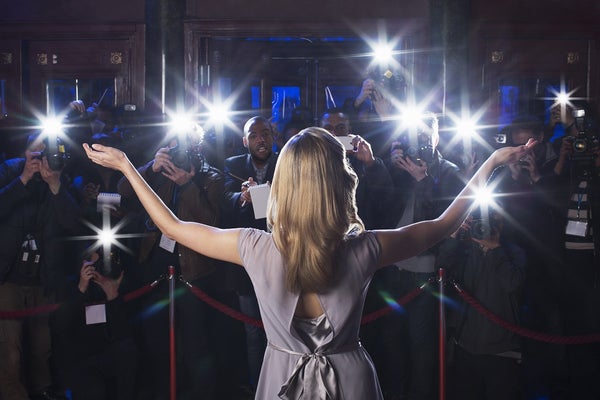
But in the case of celebrity accounts—people with more than 10 million followers—the bots and humans were harder to tell apart. Because both tend to tweet with more scheduled regularity than the average human. Both follow relatively few people. And both upload a lot of content.
They differ in the details: celebrities don't post as many URLs luring people off Twitter. And they don't retweet as often as bots do.
The researchers presented the findings at the International Conference on Advances in Social Networks Analysis and Mining in Sydney, Australia. [Zafar Gilani, Ekaterina Kochmar, Jon Crowcroft: Classification of Twitter Accounts into Automated Agents and Human Users]
As bots get smarter and more pervasive online, we humans can still console ourselves with a different discovery by Gilani: that tweets penned by humans get 19 times more likes than tweets by bots. And 10 times more retweets. So, at least in Twitter popularity, humans still beat the bots…for now.
—Christopher Intagliata
[The above text is a transcript of this podcast.]
