

Rachel Feltman: For Scientific American’s Science Quickly, I’m Rachel Feltman.
What does it mean to cause “harm”? If someone walked into your house and slapped you across the face, I think just about anyone would agree that they had meant you harm—and caused it! But what if someone decided to, say, build their own house right where yours was, and they barreled right in with a wrecking ball while you were eating your cornflakes? Most people would, I think, still consider that to be—harmful. Now, for humans, of course, we’re protected from both of these scenarios by numerous laws. But when it comes to other species? Not necessarily. And species at risk of extinction in the U.S. could have a lot more wrecking balls coming their way in the near future.
Since 1973 the Endangered Species Act, or ESA, has helped protect species at risk of extinction throughout the United States. Last month the U.S. Fish and Wildlife Service announced some troubling changes to the way the ESA will be implemented, including a new definition of what it means to “harm” an endangered species.
On supporting science journalism
If you're enjoying this article, consider supporting our award-winning journalism by subscribing. By purchasing a subscription you are helping to ensure the future of impactful stories about the discoveries and ideas shaping our world today.
Our guest today is Lynne Barre, who formerly worked as a marine biologist for the National Oceanic and Atmospheric Administration. She’s here to talk us through some of the revisions to the Endangered Species Act and what they could mean.
Feltman: Thank you so much for coming on to talk with us today.
Lynne Barre: Sure.
Feltman: So, uh, let’s start by talking a bit about the original goals of the Endangered Species Act and how the work you did contributed to that in your 25 years at NOAA.
Barre: Yeah, so the Endangered Species Act is there to protect endangered and threatened species and the habitats that they rely on. So it’s really about recovery of those species.
Feltman: How long has this act been in place, and has it been being enforced in the way that most of us are, are used to?
Barre: The Endangered Species Act was put in place in 1973, so it’s been in place for decades to protect those endangered and threatened species.
Feltman: Yeah. Well, on the one hand, I think many of our listeners would think that protecting endangered species is a universal goal. But what kind of pushback has the Endangered Species Act gotten, you know, over those decades?
Barre: Well, there have been so many lawsuits and court cases and regulations to help us implement the Endangered Species Act that, you know, create new definitions for terms in the Act, cases that set precedent that are then followed for subsequent years after those cases. So it’s, it—there’s been some evolution over time, and there definitely have been challenges in support of stronger protections under the ESA but also for, you know, less stringent restrictions under the ESA. Both have happened over the years.
Feltman: And are there any, you know, major success stories connected to the ESA that come to mind?
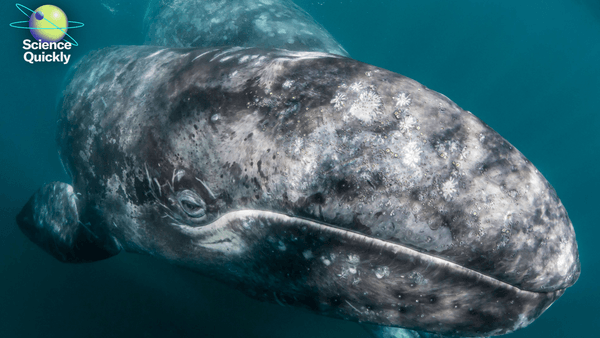
Barre: Well, there definitely have been species that have recovered. A species near and dear to my heart are gray whales. They were removed from the Endangered Species Act after recovering. And the Endangered Species Act was in place to protect them for many years. And there’s also other laws, like the Marine Mammal Protection Act that protects whales. So they’ve been fortunate to have other protection even without the ESA. But now, you know, there are definitely more recent challenges to the ESA starting in this new administration.
Feltman: Right. So the Fish and Wildlife Service and NOAA announced a few major changes to the way the Endangered Species Act will be enforced, one pertaining to threatened animals. Can you tell us a little bit about that threatened designation and what’s changing here?
Barre: Yeah. There used to be an automatic protection that went into place for species listed as threatened under the Endangered Species Act, and that protection has been removed. So now new rules have to be promulgated to put those protections in place for threatened species.
Feltman: Mm. So it’s gonna be on more of a case-by-case basis, which I imagine will get pretty complicated and might prolong a lack of protections for these animals that are at great risk of becoming endangered?
Barre: Yeah. When there’s a, kind of, affirmative action that has to be taken to put those protections in place, you need people to do that work, and it needs to be a priority for the agency. And I’m concerned that, right now, there have been so many people who’ve left Fish and Wildlife Service and NOAA that perhaps there aren’t the people to do that work, and also it’s not prioritized. Endangered species listings, protections, critical habitat designations—some of these important things under the Endangered Species Act that give those endangered and threatened species extra care and conservation effort are not a priority right now. And that’s one of the reasons I left NOAA, seeing those changes that recovery and conservation and protection of listed endangered and threatened species was no longer a priority.
Feltman: And another change was the very definition of the word “harm” when it comes to endangered species. So it refers to, if I’m understanding correctly, directly harming or killing an organism, as opposed to doing things to its habitat. So practically speaking, how do you expect this change to play out?
Barre: It’s complicated and legal, and it’s really the removal of something that was intended to provide clarity. And that was a definition of the term “harm” under the Endangered Species Act. So the recent rule rescinded the regulation with that definition. And so I expect that, again, it’s gonna be case by case in the courts of how that term is interpreted.
The rule really references a dissent opinion by [the late Supreme Court] Justice [Antonin] Scalia from a case back in the ’90s that had to do with timber harvest affecting habitat of Northern Spotted Owls. The Court upheld the definition of “harm” that included habitat modification. But Scalia’s dissent described “harm” as having to be that intentional, directed at the animals, affirmative. And so they are relying heavily on that dissent opinion and that interpretation of “harm” not including habitat as being the, sort of, best meaning of the word “harm.” And so without a definition, there’s a lot of interpretation; they have some guidance from Scalia’s dissent, but also, it’ll again be kind of a case by case and probably handled through the courts.
Feltman: Yeah. Well, I don’t know. If somebody knocked my house down, I certainly wouldn’t think that they had made my life any easier, so.
Barre: Yeah, there’s another important court case at play here. It’s known as the Chevron decision. And that was a case where the agencies, the agencies like NOAA and Fish and Wildlife Service that have experts and scientific expertise, they were given deference in some of that interpretation of terms that might be considered ambiguous, like “harm” and whether that includes habitat. And so that’s been overturned. And so now, again, the agencies don’t have that deference, and it’ll be up to courts to make those important decisions about what is the single best meaning of a word like “harm.”
Feltman: Yeah. Well, speaking of that, you know, pulling away from relying on the expertise of these agencies, could you tell us why you retired early and, and what that decision meant for you?
Barre: Yeah. I saw pretty early on in this administration that endangered species recovery—which I’d been working on for 25 years, and that includes habitat protection and also marine mammal conservation; those were all part of my job—that those things were no longer prioritized. And the work that, in general, that federal employees were doing to protect our environment was not valued. And so I saw a lot of changes and a lot of dismantling of programs, funding for these things, fewer people to do the work. People were fired that were on probationary status, things like that.
And a lot of partnerships were no longer a priority. Things that we did working with Canada on endangered species protection or even partnerships with industry, we were no longer able to do that work. Things like education and outreach of the public, which we know is so important for conservation, was not a part of our portfolios anymore and labeled as DEI work. And even internship programs that I spent years really helping develop to get our workforce engaged and energized with new people and new perspectives, all just dismantled and canceled. And it was really a toxic environment to work in.
And knowing that the agency was not gonna be supporting a lot of the work I had done—I really feel fortunate that I had the number of years and was of an age and financial means that I was able to take an early retirement. But it didn’t feel good, and I wasn’t ready to stop doing this important work.
Feltman: Yeah, and what was your reaction when you heard about these changes, you know, the “harm” rule in particular?
Barre: Yeah, I’m concerned about how habitat, which is so essential for recovery of endangered species, is probably in jeopardy now from economic drivers like development or—you know, I worked on killer whale recovery. We have an endangered group of orcas in the Pacific Northwest, the southern residents, and habitat’s really essential. And fortunately for these orcas and for other species, there is critical habitat, which identifies important aspects of habitat and protects them.
But not every endangered or threatened species has critical habitat. It’s just, again, like probably staff resources to get those designations in place, and I know Fish and Wildlife Service has backlogs of species to be listed and recovery plans to be written and critical habitat to be designated. So without some of that extra protection under the ESA, this removal of a definition of “harm” that includes habitat modifications could really put many species at risk.
Feltman: Well and, you know, I think many of us in the U.S. grew up with the conviction, you know, all around us that protecting endangered animals is an inherent good. But of course, it’s not just for the sake of our own consciences that it’s important to protect animals and their habitats. So, you know, maybe for listeners that haven’t given that a thought recently, could you share a little bit about, you know, what the potential impacts are of this on people and the economy?
Barre: The concerns about how this change in the ESA regulations could affect habitat protection for species does definitely tie into human health and the economy. I looked at some of the letters that people wrote, comment letters, including tribes here in the Pacific Northwest that were really concerned about how this could affect salmon habitat work that’s essential for their ability to exercise their treaty rights, their cultural practices around salmon—so essential. And yet, this could undo some of that. And also, there’s been a point made that there’s a restoration economy built around protecting and conserving and restoring these natural habitats for species but also for people. And so there’s concerns that this rule may undo some of that good work that’s ongoing, that’s been funded, that’s been supported. It includes jobs; it includes food safety; it includes industries and commercial businesses that rely on a healthy environment and ecosystem. So there’s a lot of potential impacts, not just for these listed species but for other species that aren’t listed that use the same habitats and for humans as well.
Feltman: I think that’s such an important point because a lot of the times it, it feels like, in these conversations, the focus is on what we can’t build because we’re protecting these, these organisms. But to your point, there are projects and jobs and endeavors that exist and, you know, support people and the economy as part of that, that conservation effort. I think one thing I would love to ask you before you go is: What can listeners do if they want to help protect threatened and endangered species, and they’re troubled by the news that they’re hearing about the ESA?
Barre: There’s a lot people can do who may be also concerned about
these changes to the regulations under the Endangered Species Act. Certainly people can go out and get their hands dirty and do habitat restoration or conservation, you know, on their own or with local nonprofit groups or tribes or states or whoever is doing that work. It needs to continue, and I hope it will continue with that direct public support. But this is a lot of regulatory language and legal lawsuits. There are lawsuits by nonprofit groups and tribes that are fighting against this removal of the definition of “harm” including habitat—and so supporting one of those nonprofit groups. Or, uh, how you vote is something that empowers people. Make sure your elected officials are concerned about these changes and the environment. There’s actually a bipartisan [bill] in the House challenging this rule, and basically it’s a short one paragraph. And if people could call their representatives to support that, perhaps it’ll make a difference and change how people vote or advance this to a vote.
Feltman: Yeah, absolutely. There are midterms coming up. People should be holding some feet to the fire, so I hope some of our listeners will do that.
Barre: I think anybody can engage in habitat protection and restoration through simple things they do every day as voters, as consumers, as homeowners—you know, projects that are happening in your neighborhood, in your environment. There’s a lot people can do to stop contamination from going into our waters. You know, we have an issue with sound and some of our animals that are susceptible to that. Sustainable fishing and what seafood you eat is also an important practice people can engage in. And yeah, and people can get their hands dirty and actually go out and work on a habitat restoration project in your community.
Feltman: Yeah.Well, it sounds like a great first step is just getting informed about what the local issues are that, you know, are possible for you to get involved in fixing or at least stop making worse. [Laughs.]
Barre: Yeah, yeah. I mean, I’ve left NOAA. Retirement doesn’t always feel like the right word, but I’m still engaging in my community with restoration of habitat work. We’ve got a legal challenge here in Seattle about a comprehensive development plan and whether it adequately considered the environmental impacts of removing large trees and how that can affect streams and salmon habitat and the orcas that feed on that salmon. So even in a, what I would consider a pretty environmentally friendly place, there’s still those trade-offs between development and habitat and ecosystem protection. And I really feel strongly that we can do both and that we just have to work toward that middle ground where we don’t stop commercial enterprises but make sure that they do carry on in an environmentally responsible way.
Feltman: Thank you so much for, uh, coming on to chat with us about this.
Barre: Sure. Thanks for having me.
Feltman: That's all for today's episode. We'll be back on Monday to talk about some cool stuff happening in space.
Also, I just wanna say a quick thank you to our listener Gil for writing in, talking to us about some sound quality issues he'd noticed.
We are transitioning from having a shared studio space to doing all our recording remotely, so we appreciate your patience as we troubleshoot some various sound quality issues and potential improvements. Gil, I hope this sounds better to you, but we will continue to troubleshoot. And listeners, you can always email us any questions, comments, concerns, suggestions, compliments, we do love those, at sciencequickly@sciam.com.
Science Quickly is produced by me, Rachel Feltman, along with Fonda Mwangi, Allison Rodgers and Jeff DelViscio. This episode was edited by Alex Sugiura. Marielle Issa and Aaron Shattuck fact-check our show. Our theme music was composed by Dominic Smith. Subscribe to Scientific American for more up-to-date and in-depth science news.
For Scientific American, this is Rachel Feltman. Have a great weekend!
