
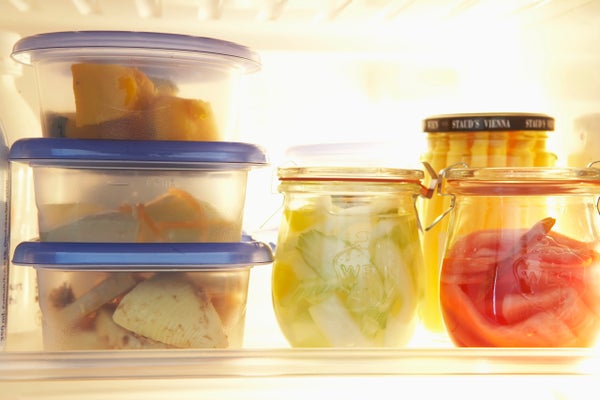

When restaurants first shut down early in the pandemic, Americans raided grocery stores. They started cooking more at home—and, presumably, generating more leftovers. Those leftovers can be a convenient future meal—but they’ve got a dark side, too.
“There’s a tendency that if you put an item on a plate that’s a leftover, there’s a higher probability that you’re not going to fully consume that item. And so it’s probably going to go to waste.”
Brian Roe, an applied economist at the Ohio State University. He and his colleagues recently studied leftovers and food waste by tracking the eating habits of 18 men and women in Baton Rouge, La. The participants tracked what they ate using an iPhone app. And during the weeklong study, the study subjects collectively piled 1,200 different foods on their plates.
On supporting science journalism
If you're enjoying this article, consider supporting our award-winning journalism by subscribing. By purchasing a subscription you are helping to ensure the future of impactful stories about the discoveries and ideas shaping our world today.
After analyzing what got eaten, saved or thrown away, the researchers found that leftovers were more likely to be picked at and not fully eaten—a finding we can all probably identify with.
But they also observed that leftovers—perhaps due to being older and less fresh—directed diners’ attention to the other, more novel items on their plate, which brings up an interesting possible strategy to get people to eat their veggies.
“I guess if you have an item that you don’t normally eat as much of, and you’re trying to get people to eat their peas, perhaps surrounding it with leftovers is a way to make them focus on the newest item on the plate.”
The findings are in the journal PLOS ONE. [Brian E. Roe et al., Selection, intake, and plate waste patterns of leftover food items among U.S. consumers: A pilot study]
Overall, Roe says one bigger lesson emerged on how to avoid scraping food into the trash.
“For us, the real take-home here was: all else equal, choose a smaller meal, and you’re less likely to generate leftovers. And that’s a good thing because leftovers, all else equal, tend to be wasted more often.”
Not that Roe doesn’t have aspirational Tupperware sitting around.
“I’m guilty of this myself: we have things left over from last Thanksgiving still sitting in our freezer. And I know people who’ve moved with frozen items before—without ever getting around to eating them.”
—Christopher Intagliata
[The above text is a transcript of this podcast.]
