

Mutual relationships are common throughout the animal kingdom. Fish called remoras get a tasty meal by picking bits of dead skin and parasites off of sharks, while the sharks enjoy their undersea spa treatment. Birds called oxpeckers gobble ticks off the skin of rhinos and zebras. Pollinators like bees and butterflies help flowers to reproduce while getting a tasty treat.
And now we have evidence for an unusual mutual relationship—between warthogs and banded mongooses.
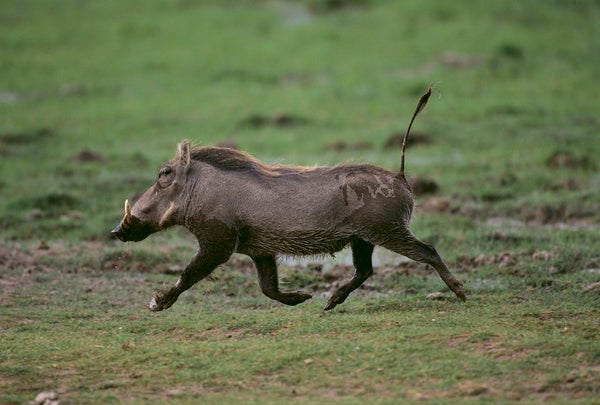
Packs of mongooses will pile onto warthogs to pick blood-filled ticks and other parasites from the warthogs' fur. The hogs get cleaned up while the mongoose get fed. Everybody wins—well, except for the ticks.
On supporting science journalism
If you're enjoying this article, consider supporting our award-winning journalism by subscribing. By purchasing a subscription you are helping to ensure the future of impactful stories about the discoveries and ideas shaping our world today.
"Quite often the warthog will then lie down and actually lift its legs, and they'll swarm all over them. In these groups you've got 15 to 20 individuals and they can just cover the warthogs."
Wildlife Conservation Society researcher Andy Plumptre, who documented the warthog-mongoose mutualism in Uganda's Queen Elizabeth National Park. He published his observation in Suiform Soundings, the newsletter of the International Union for Conservation of Nature's Specialist Groups for Wild Pigs, Peccaries, and Hippos. [Andrew Plumptre, Banded mongooses grooming warthogs]
Mutualism is obviously common in nature, but it's uncommon to find it between two different mammal species.
"I've heard once of somebody who saw a red-tailed monkey grooming a juvenile chimpanzee…and after the article came out, somebody contacted me and said they'd seen vervet monkeys grooming impalas."
So such behavior obviously does occur among mammals, but seemingly rarely. And the warthog-mongoose connection is the first example we know of that does not include a primate.
"So the mongoose researchers, they're all aware about it and will happily tell you about it, but nobody seems to have picked it up as a topic of research and actually looked at it in more detail."
For example, it’s unclear if the interaction is instinctive or must be learned, whether it only occurs at certain times of year and so on. Given how long folks have been observing African wildlife, this begs the question: what other surprising animal behaviors are hiding in plain sight, waiting to be formally described in the scientific literature?
—Jason G. Goldman
[The above text is a transcript of this podcast.]
