
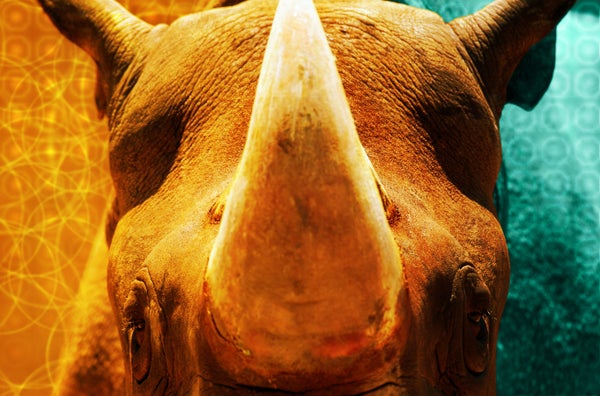

“So what is the connection between AI and rhinoceri? Surprisingly direct.”
Bernard Meyerson, chief innovation officer at IBM. He spoke at the Cooper Union here in New York City as part of a panel discussing the intersection of artificial intelligence (AI), ethics and healthcare. So where do rhinos come in?
“As you know, poaching rhinos is a huge problem. The rhinoceros horn represents about 30 years of revenue, 30 years of income, to an individual in sub-Saharan Africa. And that is why, basically, if you manage to kill a rhino and get a horn, it represents—it’s essentially like winning the lottery. Unfortunately it’s not so good for the rhino, not to mention you deplete a precious species yet again. And poaching is a huge issue....
On supporting science journalism
If you're enjoying this article, consider supporting our award-winning journalism by subscribing. By purchasing a subscription you are helping to ensure the future of impactful stories about the discoveries and ideas shaping our world today.
“What people don’t know is about a thousand gamekeepers—the UN kept numbers until, I think, 2014—have been murdered by poachers in order to get at the animals being protected. This is about humans. Well, how do you basically protect rhinos with AI? Well, that’s a good question. Being a kid who grew up in the Bronx my thought was, well, you know, you put a collar on the rhino, analyze where they are, their travel patterns. And the guy who ran the reserve in South Africa sort of laughed, said, ‘This does not help.’”
That’s the Welgevonden Game Reserve. Back to Meyerson.
“I said, ‘Why?’ He says, ‘Well, when the rhino stops moving you’ll know it was dead. That’s really not helpful.’
“‘Obviously you have a better idea.’ He says, ‘Yeah, what you do is, get a bunch of animals that are easily spooked, like gazelles, antelopes, that sort of thing, and what you do is you collar them.’ We looked at that, and we thought about it and said, that’s brilliant, because they become sentinels. Because you see, when a poacher enters an area that it will encounter these creatures, it’s going to encounter rhinos, they’re by far more rare. When they encounter the creatures, like any other animal they spook and run.
“Where does AI come in? Well, turns out when you have these collars on them, there’s really a bunch of reasons these animals run: they migrate, some leopard is trying to make lunch out of it, and yes, they’re spooked by somebody who’s coming, entering in a truck to go poach.
“You have to know the difference. And it turns out by looking at the pattern of movements and looking at historic data, we were able to tell the difference between each of that using a system that essentially employed machine learning to separate, yep, these are incidents where we’re running into poachers, these are incidents where we’re actually just—there’s a lion trying to make lunch out of this poor animal.
“The bottom line is by doing that we were able to spot the poachers when they were nowhere near the preserve, much less on the preserve where the rhinos are. And this avoids the kind of conflict where people ended up dead in large numbers, not just the rhinos.... Basically, the idea is that nobody dies. You don’t want the poachers to die—they are desperate. You don’t want the rhinos to be killed—we lose a species. And of course, the people who are incredibly brave protecting these animals ... it really was an amazing thing to us because at the end of the day it worked. And that’s the kind of thing where, you know, AI used sensibly adds value that no human could possibly have achieved....
“It’s not just about healthcare ... where you’re trying to help somebody diagnose a better way to live. You’re talking about saving lives in large quantities. So I consider the fact that we’re trying not to have a thousand of these caretakers murdered a very high bar for health care.”
—Steve Mirsky
(The above text is a transcript of this podcast)

