

You probably don't think of scientific or medical instruments as the kind of instruments that actually make music. But now researchers have built a scientific instrument specifically designed to detect counterfeit medications through sound. <
"Someone even made the comparison that we're making a scale in the sense that it measures mass, you know, but it also plays scales in the sense it makes musical notes!" William Grover, a bioengineer at U.C. Riverside.
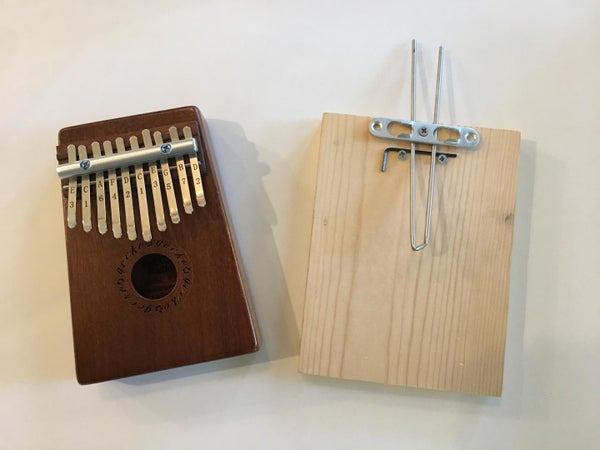
He and his team took inspiration from the African musical instrument called the mbira. It has metal tines, which resonate over a small wooden board when you pluck them. <
On supporting science journalism
If you're enjoying this article, consider supporting our award-winning journalism by subscribing. By purchasing a subscription you are helping to ensure the future of impactful stories about the discoveries and ideas shaping our world today.
Instead of tines, Grover's instrument uses a hollow metal tube. Load a sample of medication inside, and it changes the tone of the instrument. "A sample that's dense creates a lower note. A sample that's less dense creates a higher note, in terms of pitch."
For example, here's the tube with air inside: <
Here it is again, with water inside: <
The World Health Organization reckons about 10 percent of the medications in low and middle-income countries are fakes. Sometimes, dangerous ones. So the idea here is to fill the tube with a sample that's known to be safe—cough syrup from a reputable source, for example. Then compare it to a bottle you're not so sure about.
"If you get the same pitch out of those two samples, it's very good evidence that they're probably the same material, and the suspect substance is a safe drug to take. But if you get a different pitch out of the two samples that's absolute proof that those two samples are chemically different. And that shows you there's something wrong with the sample you were given and you probably shouldn't take it."
The instrument is designed to test only liquid samples for now. And while the human ear is sensitive enough to hear the difference between samples of air and water, the difference between a real and a counterfeit drug might be imperceptible to our ears. So Grover built a free website where users can upload recordings of the instrument, from their smartphone or computer, and analyze the hertz. Then repeat it with the suspect sample.
The researchers published the work in an open-access journal called ACS Omega… [Heran C. Bhakta et al., Musical Instruments As Sensors]
...in hopes of inspiring people around the world to build these things themselves. "I can literally make one of these out of junk in your garage in about five minutes probably. The hardest thing to come by is tubing. We've made them out of bent copper tubing like you get out of a radiator. Just junk, lying around. It's remarkable how easy they are to make. My dream would be to have the instructions for making them and using them shared as widely as possible."
It is, admittedly, a pretty convincing pitch.
—Christopher Intagliata
[The above text is a transcript of this podcast.]
