

They're among the most amazing events of the wild world:
Africa's thundering herds of wildebeest. <<BBC: "...and nothing will stop them now.">>
The incredible migrating monarch butterflies. <<National Geographic: "One of the great spectacles of nature.">>
The captivating chorus <
"It's a true wildlife spectacle. A fish this loud, this many fish calling."
On supporting science journalism
If you're enjoying this article, consider supporting our award-winning journalism by subscribing. By purchasing a subscription you are helping to ensure the future of impactful stories about the discoveries and ideas shaping our world today.
Brad Erisman is a fisheries ecologist at the University of Texas, Austin. And to hear him tell it, the chatter of the corvina fish belongs right up there with those other great spectacles.
Every spring, he says, the fish migrate hundreds of miles to the northernmost reaches of the Sea of Cortez, the body of water between Baja, California and mainland Mexico. And there, at the Colorado River Delta, "it has this massive synchronous spawning with outgoing tides for two to three days, every other week, for three months."
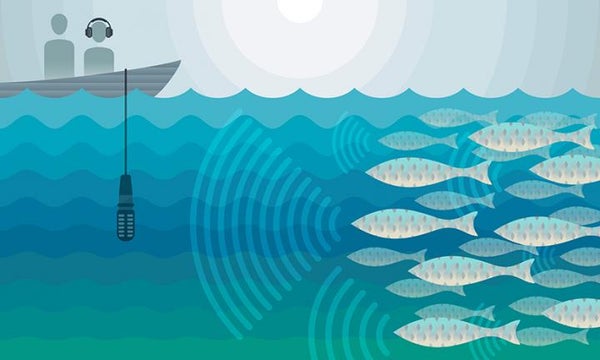
And during that time, it also makes this noise <
That simultaneous drumming of hundreds of thousands or even millions of fish is extremely loud. "It's louder than if you were a meter away from the stage at a rock concert." In fact, Erisman and his colleague Timothy Rowell have found that corvina chatter rivals the decibel levels produced by whales—loud enough, even, to damage the hearing of dolphins—making it among the loudest underwater animal sounds on the planet.
The aquatic cacophony is written up in the journal Biology Letters. [Brad E. Erisman and Timothy J. Rowell, A sound worth saving: acoustic characteristics of a massive fish spawning aggregation]
But the sound is under attack—by our teeth. "Fried, baked, put it in tacos. Pretty much any way you can think of, you can make corvina." Which spells danger for the singing fish. "It's heavily exploited, it's overfished, and we're really concerned about the fishery collapsing."
But by spreading the word about the corvina's signature sound, Erisman hopes to keep the species—and its song—from going silent.
—Christopher Intagliata
[The above text is a transcript of this podcast.]
