EvolutionOctober 30, 2020
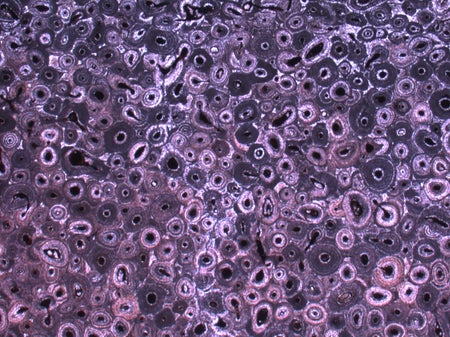
Gruesome ‘Blood Worms’ Invaded a Dinosaur’s Leg Bone, Fossil Suggests
A titanosaur fibula hosts what looks like 70 tiny parasites
Gruesome ‘Blood Worms’ Invaded a Dinosaur’s Leg Bone, Fossil Suggests
A titanosaur fibula hosts what looks like 70 tiny parasites
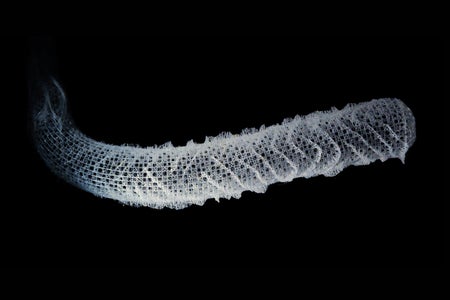
Deep-Sea Sponge Skeletons Could Inspire Better Bridges
The creature’s structure resists buckling and could lead to stronger and more durable architecture

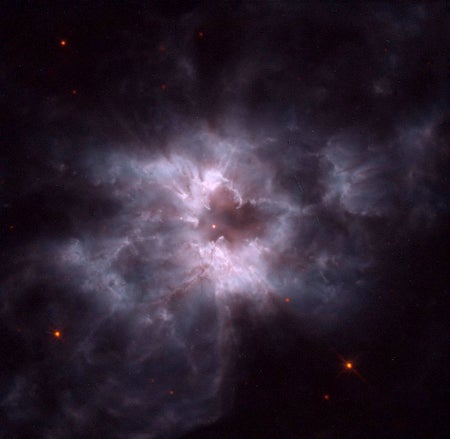
Living near a White Dwarf
A planet orbiting the glowing corpse of a sunlike star might be a surprisingly benign place to be

Seven Ways the Election Will Shape the Future of Science, Health and the Environment
Climate change, nuclear arms control, the pandemic and more will be determined by whoever wins the White House and Congress
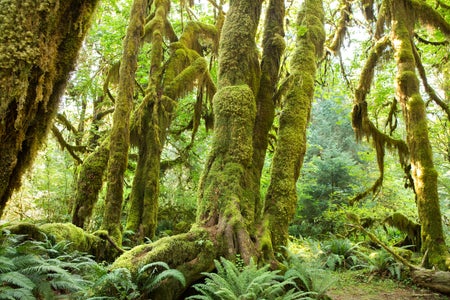
Election Science Stakes: Environment
Scientific American senior editor Mark Fischetti talks about how this election will affect environmental science and policy.

Why Hatred and ‘Othering’ of Political Foes Has Spiked to Extreme Levels
The new political polarization casts rivals as alien, unlikable and morally contemptible

Election Science Stakes: Climate
Scientific American’s associate editor for sustainability Andrea Thompson talks about how climate science and policy will be affected by this election.
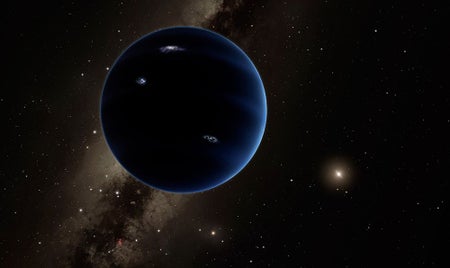
In the Hunt for Planet Nine, Astronomers Eye a New Search Technique
“Shifting and stacking” method could unveil the elusive world and other objects in the outer solar system
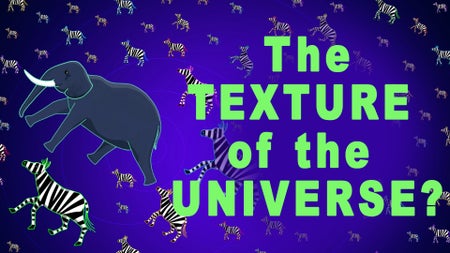
The Big Bang, Zebras and the Texture of Our Universe
What do zebras have to do with the structure of the cosmos? Imagine a single zebra in your mind. With twitching ears, tufted hair, and a visual interference pattern wrapped over muscle and skin, the animal has its own contours, which are easy to make out up close. But get a large group of zebras together (a dazzle, by definition), and the individuals blend and meld into a seemingly homogeneous sea of heads, hoofs and stripes, especially when viewed from a great distance. The matter in the universe, it seems, dazzles in much the same way.
In this video, How the Big Bang Governs the Texture of Our Universe, we explore the concept of cosmic inhomogeneities—using zebras as an analogy for clumps of matter scattered throughout the universe. Animator Lottie Kingslake depicts these whimsical and familiar characters as they graze and form larger and larger groups similarly to how matter is pulled together in galaxies. We were inspired by the color palette of Marylyn Dintenfass’s paintings, which make up the backdrop in the live-action portion of the video.
This visual rendering takes up a fundamental question about the texture of space: Is it smooth or bumpy? The answer is that it is both. It is homogeneous, or smooth, when viewed from vast distances but inhomogeneous, or bumpy, at the scale of planets and galaxies. This difference in texture gives us hints about our universe’s earliest history and even lets us characterize how dark matter is distributed.
But what exactly does it mean for the universe to be textured as it is? Empty space is smooth because there is no matter to alter the equilibrium of the universe. Moments after the big bang, there was a period of inflation, in which the universe expanded exponentially. At this point, the universe was almost perfectly smooth—because although it was devoid of stars and galaxies (the first atoms did not form until about 380,000 years after the big bang), there were tiny quantum ripples in spacetime.
Over time, these tiny quantum fluctuations were amplified by gravity. Clumps and voids formed, creating a bumpy texture on relatively small scales. As gravity pulled the clumps together, they collapsed into themselves to form stars, planets and galaxies—and inhomogeneity gradually increased over cosmological time.
Our universe remains smooth, or homogeneous, over very long distances, where gravitational collapse does not hold sway. But if you zoom way out, all of the matter and energy in the cosmos appears evenly distributed.
That’s a little mental roughage to think about the next time you find yourself at the zoo.
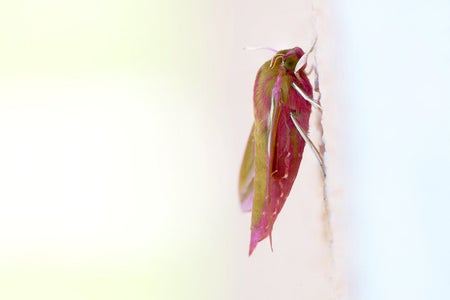
Bizarre Bugs Found in Big City Show Nature’s Weirdness Is Everywhere
An urban expedition reveals nearly 1,000 species
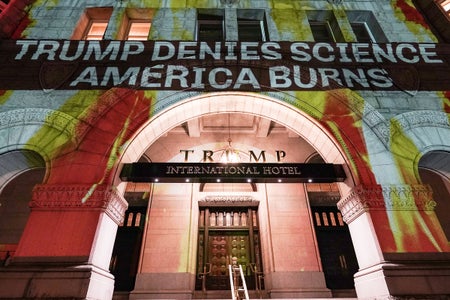
New Activism by Scientists Can Lead to Partisan Backlash
Pushback against antiscience politicians could erode public support for research. But there are ways to defuse antagonism

Election Science Stakes: Medicine and Public Health
Scientific American’s senior medicine editor Josh Fischman talks about issues in medicine and public health that will be affected by this election.