
Extreme heat messes with our bodies in all sorts of ways. It can aggravate conditions such as heart disease and diabetes. And it can cause kidney problems, heatstroke and, in the most severe cases, death. But research shows heat can also take a subtler toll at night: it can make us lose sleep.
Soaring high temperatures often capture the headlines, but summer overnight lows are warming nearly twice as fast as daytime highs in the U.S. Last week, during one of a series of heat waves to hit the country this summer, Phoenix, Ariz., saw highs surpass 115 degrees Fahrenheit (46 degrees Celsius) during the day. But just as staggering was one of the overnight lows, which dipped to only a searing 97 degrees F (36 degrees C)—a tie for the hottest low that the city’s ever seen, a record first set just three years ago.
That’s a brutal combination, explains Ariane Middel, an urban climatologist at Arizona State University (ASU), which is just outside of Phoenix. “If it’s hot during the day and our bodies are exposed to a lot of outdoor heat,” she says, “we need to cool down and rest at night to recover.” If temperatures stay high, “our body has to keep working hard to cool,” she says.
On supporting science journalism
If you're enjoying this article, consider supporting our award-winning journalism by subscribing. By purchasing a subscription you are helping to ensure the future of impactful stories about the discoveries and ideas shaping our world today.
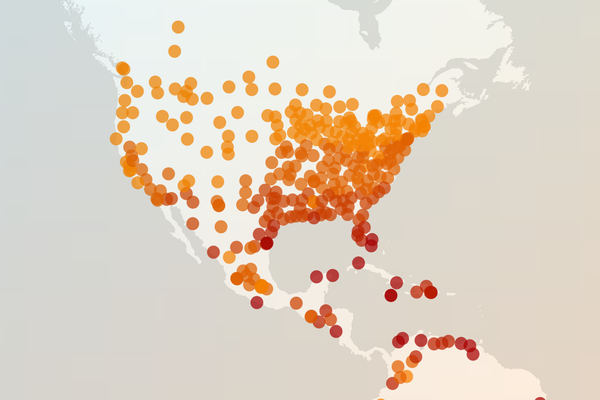
That persisting heat can be uncomfortable, too—and cost us hours of sleep. Between 2020 and 2025, people across the world lost an estimated 56 hours of sleep per year on average because of high overnight temperatures, according to a recent analysis from the nonprofit Climate Central that was based on an existing sleep and temperature model. About 10 percent of that loss, around six hours per year, was to the result of climate change, the analysis found.

Sanidhya Sharma; Source: Climate Change Is Costing People Sleep. Climate Central, July 15, 2026 (data)
That might not sound like a lot, but it is a measurable effect, says Kristina Dahl, Climate Central’s vice president for science. “There are subtle and small ways that climate change is eroding our quality of life. It may not feel like a lot now, but if you look at the trajectory over time, it’s clearly increasing. And if we continue to warm, it's just going to get greater,” she says.

Sanidhya Sharma; Source: Climate Change Is Costing People Sleep. Climate Central, July 15, 2026 (data)
In the U.S., the cities that tended to lose the most sleep to climate change were, perhaps unsurprisingly, in places that were already hot, including in Florida, Arizona and Nevada. Cities that relied on cooler desert nights saw the sharpest declines in sleep in the past 50 years: According to a Scientific American analysis of the data, cities such as Flagstaff, Ariz., Reno, Nev., and Salt Lake City, Utah, saw the greatest increases in lost sleep between 1970 and today.

Sanidhya Sharma; Source: Climate Change Is Costing People Sleep. Climate Central, July 15, 2026 (data)
The picture is even bleaker for the rest of the world. “I felt kind of floored by just looking at how much sleep loss there is in the Middle East,” Dahl says. In places such as Saudi Arabia and the United Arab Emirates, residents have been seeing as much as 87 lost hours per year, up to 16 hours of which have been caused by climate change, the Climate Central analysis found. In India, residents have lost as much as 93 hours of sleep per year to heat.
“We know that people in wealthier countries are losing less sleep when it's hot, and that’s likely due to having means to cool your home,” Dahl says. (Around 93 percent of homes in the U.S. have air-conditioning, the Census Bureau estimates). “There are many people around the world that don’t have that means,” she adds. But even some wealthy countries are less equipped to deal with overnight heat; air-conditioning has historically been uncommon in northern Europe, and buildings there are often designed to hold heat to cope with long winters.
ASU’s Middel notes that sleep loss is a “complex” issue, and estimating global reductions in sleep is no easy task. “I would treat the 56 hours per year as a first estimate rather than an exact number,” she says, noting that calculations may vary a lot between regions and individuals. In the U.S., certain populations, such as those who are unhoused or lower-income or live in poorly ventilated homes, may be less equipped to cool their sleeping space during the hottest summer months, she says.
Still, any amount of lost rest is worrying. Low levels of sleep have been linked to worse mental health outcomes and higher rates of conditions such as heart disease and obesity. Recent research even suggests a lack of sleep can exacerbate intrusive thoughts.
To protect yourself and keep your home as cool as possible, Middel recommends keeping closing blinds or curtains during the day to keep out the sun’s rays and, if you can, running the AC. Fans can help if the room isn’t too hot. And if it’s cooler outside than inside, consider opening the windows at night, she says, though, “in Phoenix, this has not been an option for the past two months!”