
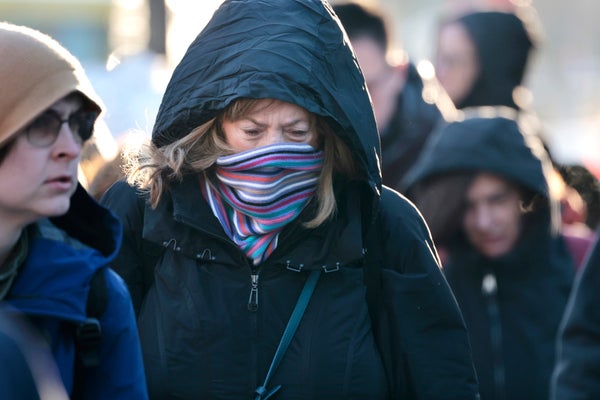
Intensely cold air is scouring the central and eastern U.S. again and will send temperatures plummeting all the way to the tip of Florida. Along with this new Arctic incursion, a major “bomb cyclone” storm is strengthening off the coast of the Carolinas, potentially bringing rare blizzard conditions to the region.
“Some areas haven’t seen this amount of accumulating snow in over 30 years,” wrote the National Weather Service’s office in Wilmington, N.C., on Facebook.
The latest Arctic blast on top of already cold conditions means subzero Fahrenheit temperatures (conditions below –18 degrees Celsius) are expected across the Midwest and Ohio Valley and much colder than usual weather is anticipated across the eastern half of the country. And the cold is plunging unusually far south, with Florida is facing the coldest low temperatures it has seen in more than a decade, with even Orlando and Daytona Beach expected to see low temperatures in the 20s F (negative single degrees C). And as the bomb cyclone develops, strong winds could make it feel even colder along a broad stretch of the East Coast, with subzero F wind chills expected deep into the South.
On supporting science journalism
If you're enjoying this article, consider supporting our award-winning journalism by subscribing. By purchasing a subscription you are helping to ensure the future of impactful stories about the discoveries and ideas shaping our world today.
Bomb cyclones have had that name since 1980, when meteorologists Fred Sanders and John Gyakum, both then at the Massachusetts Institute of Technology, coined the term “bombogenesis” to describe how these storms rapidly lower in pressure—by at least 24 millibars in 24 hours. The scientists likened the process to the detonation of a bomb, although bomb cyclones are, in a sense, exploding inward.
Their dramatic name ensures “bomb cyclones” always get a lot of media coverage, but they really aren’t all that rare. At least one bomb cyclone hits the continental U.S. every winter, usually near the Northeast, where they are typically fed by cold air from the north colliding with warm, moist air from the south. “It’s not uncommon to get bomb cyclones off the coast of New York or Boston,” says atmospheric scientist Ryan Torn of the University at Albany, State University of New York. "But this one is right off the southeast coast of the U.S., which is a very low-latitude place for that to happen.”
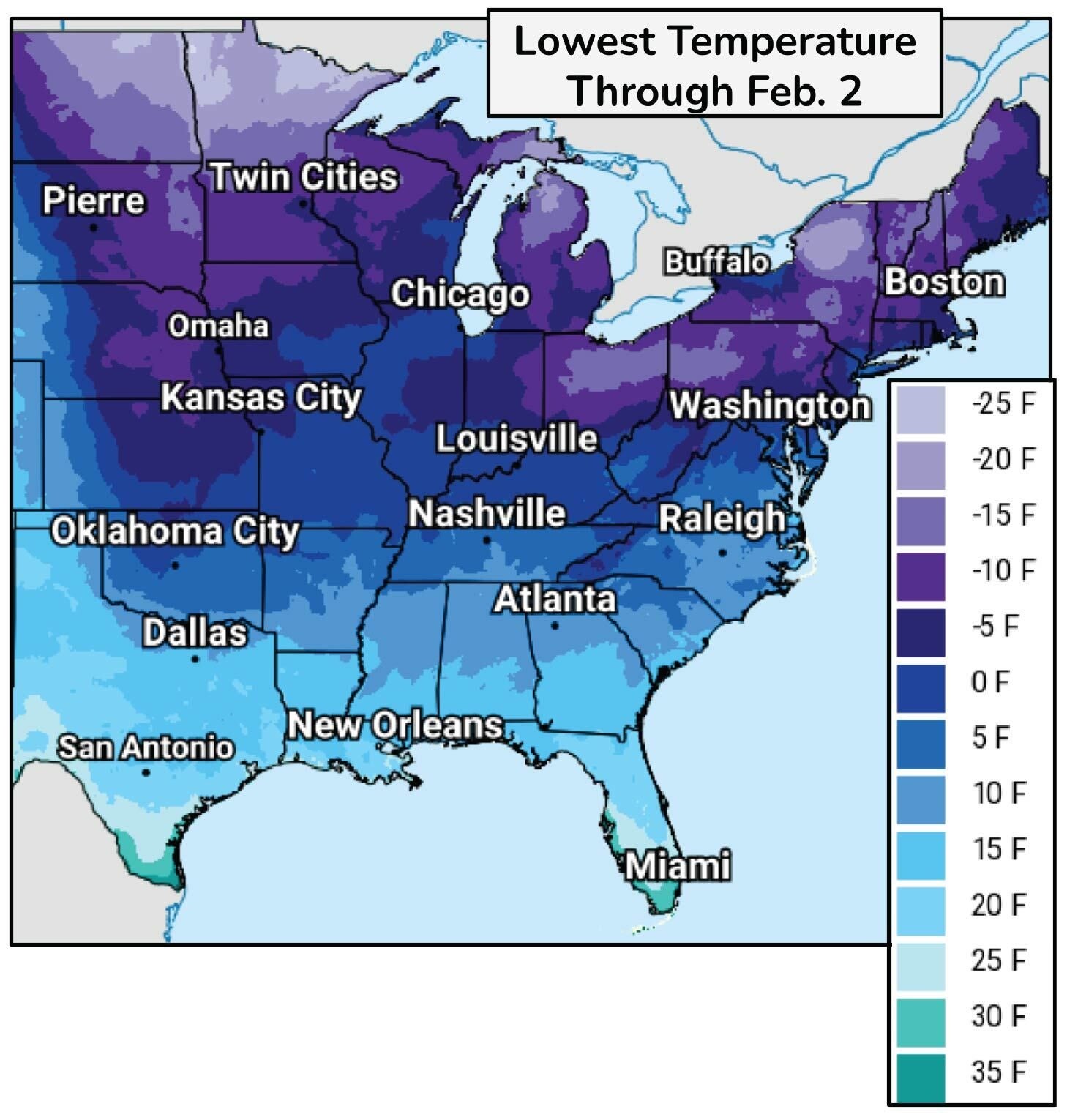
The lowest temperature expected in the eastern half of the country through Monday, February 2, 2026.
NWS/NOAA
Forecasts so far show the snow concentrated in the eastern portions of the Carolinas and Virginia and in far southeastern New England. There is some chance of snow along the East Coast between those spots.
But the storm will pack a punch beyond just snowfalls. Meteorologist Jeff Masters, who co-founded the weather service Weather Underground, adds that some area could also be hit by heavy winds gusts, while locations along the coast are preparing for flooding. “There will be a long, lasting impact in these areas that aren’t used to heavy winters,” he says.
In this case, the freezing cold of the recent ice storm is making the bomb cyclone worse by deepening the difference between the competing blasts of cold and warm air: “The air has already been primed.... Now we’re getting a secondary push of cold air,” explains University of Florida atmospheric scientist Esther Mullens.
And University of Michigan atmospheric scientist Richard Rood says that locations like the Carolinas can expect more bomb cyclones in the future, thanks to global warming, which has increased the temperature of both the atmosphere and the Gulf Stream.
“The oceans are warmer than they used to be, and the air is warmer than it used to be,” he says. “That makes that contrast between the warm air and the cold air exceptionally high, and that’s what contributes to this rapid development.”